Climate Shift Index Alert•August 18, 2026
Climate change is fueling extreme rainfall and flooding hitting communities across the U.S.
Aug. 18, 2026
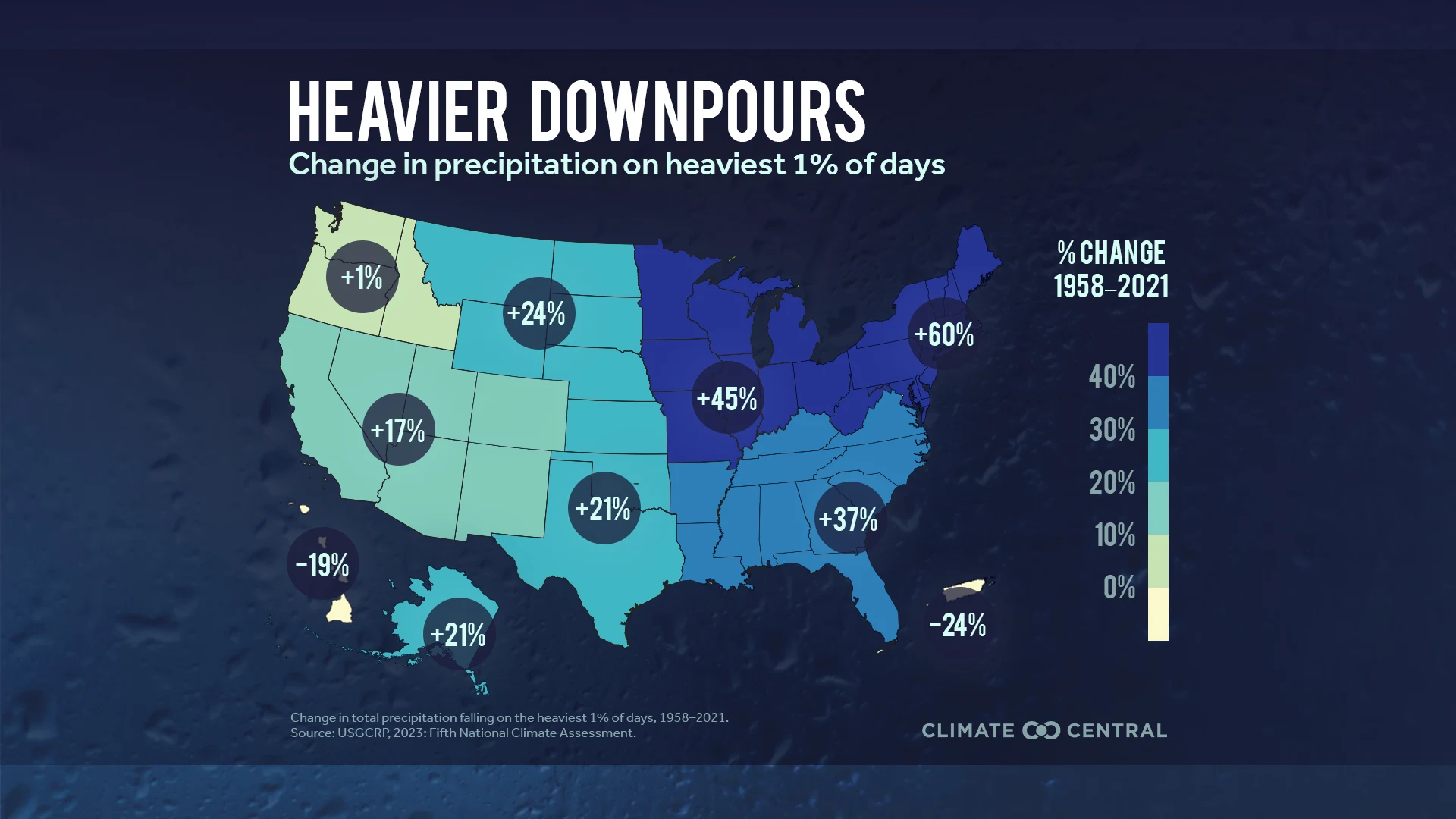
Climate change is supercharging the water cycle, bringing heavier rainfall extremes and higher flood risk across the United States. A warmer atmosphere holds more moisture, increasing the odds of heavier downpours and flash flooding. Over the past two weeks, multiple communities have been impacted by repeated thunderstorms tied to a stalled front, trapped beneath a heat dome. Meanwhile, Hawaii experienced flooding from a tropical system boosted by unusually warm ocean waters.
Kauai, Hawaii: Hurricane Lala
On Aug. 15, Lala strengthened to a Category 1 hurricane as it approached the southern coast of the Big Island. Five places in Hawaii received 35 inches or more of rain, with 48 inches reported in Kapalua, Maui County.
Lala tracked over moderate to strong marine heat wave conditions as a tropical storm, with sea surface temperatures running 2°F to 4°F (1°C to 2°C) above normal. Climate Shift Index: Ocean values show that this unusual Pacific warmth was more than 100 times more likely due to human-caused climate change, and in some areas, up to 400 times more likely.
Columbus, Ohio
A stalled weather front allowed for repeated rounds of multi-day thunderstorms, starting on Aug. 11. Five to six inches of rain fell over the following week, with eight to 10 inches reported east of Columbus.
A strong subtropical high over the Southeast maintained a persistent clockwise circulation that transported moisture from the Gulf of Mexico into the Ohio Valley, where sea surface temperature anomalies were running roughly 2°F to 5°F (1°C to 3°C) above normal. Climate Shift Index: Ocean values show this unusual warmth was more than 100 times more likely due to human-caused climate change, and, in some areas, over 800 times more likely.
Hourly rainfall rates in Columbus have increased 19% since the early 1970s.
Franklin County already faces annual average flood losses of $20 million or more.
Indianapolis, Indiana
A sustained, multi-round weather event resulted in widespread flooding across the state. A derecho — sometimes called an “inland hurricane” — kicked off the event on Aug. 11 as severe thunderstorms swept across Indiana. Then a squall line on Aug. 12 brought heavy rain, triggering major river flooding. Additional, repeated rounds of heavy rain on Aug. 15 and 16 caused severe flooding in Indianapolis as the White River reached historic highs. Seven to 11 inches of rain fell across parts of the state.
A deep southerly flow transported moisture from the Gulf of Mexico, where sea surface temperatures were running 2°F to 5°F (1°C to 3°C) above average, toward Indiana. Climate Shift Index: Ocean values show that this ocean warmth was more than 100 times more likely due to human-caused climate change, and in some areas, more than 800 times more likely.
Hourly rainfall rates in Indianapolis have increased by 15% since the early 1970s.
Marion County already faces annual average flood losses of $20 million or more.
Delaware, Henry, and Shelby counties — also impacted by flooding over the past week — face estimated inland flood losses of $1 million to $10 million annually.
Charleston, West Virginia
As the broader, flood-prone weather pattern shifted east into the Appalachians, rounds of heavy rain and thunderstorms began in the early hours of Aug. 16. That rainfall continued at times through Aug. 17.
A strong subtropical high over the Southeast maintained a persistent clockwise circulation that transported moisture from the Gulf of Mexico into the Ohio Valley. Sea surface temperatures were roughly 2°F to 5°F (1°C to 3°C) above average. Climate Shift Index: Ocean values show that this warmth was more than 100 times more likely due to human-caused climate change, and locally, more than 800 times more likely.
Hourly rainfall rates in Charleston have increased 17% since the early 1970s.
Kanawha County already faces annual average flood losses of $20 million or more.
For more information on the Climate Shift Index: Ocean, refer to the FAQs.
To request an interview with a Climate Central scientist, please contact Abbie Veitch at aveitch@climatecentral.com.