Climate Shift Index Alert•November 23, 2026
How climate change fueled the active 2026 Pacific hurricane season
November 23, 2026
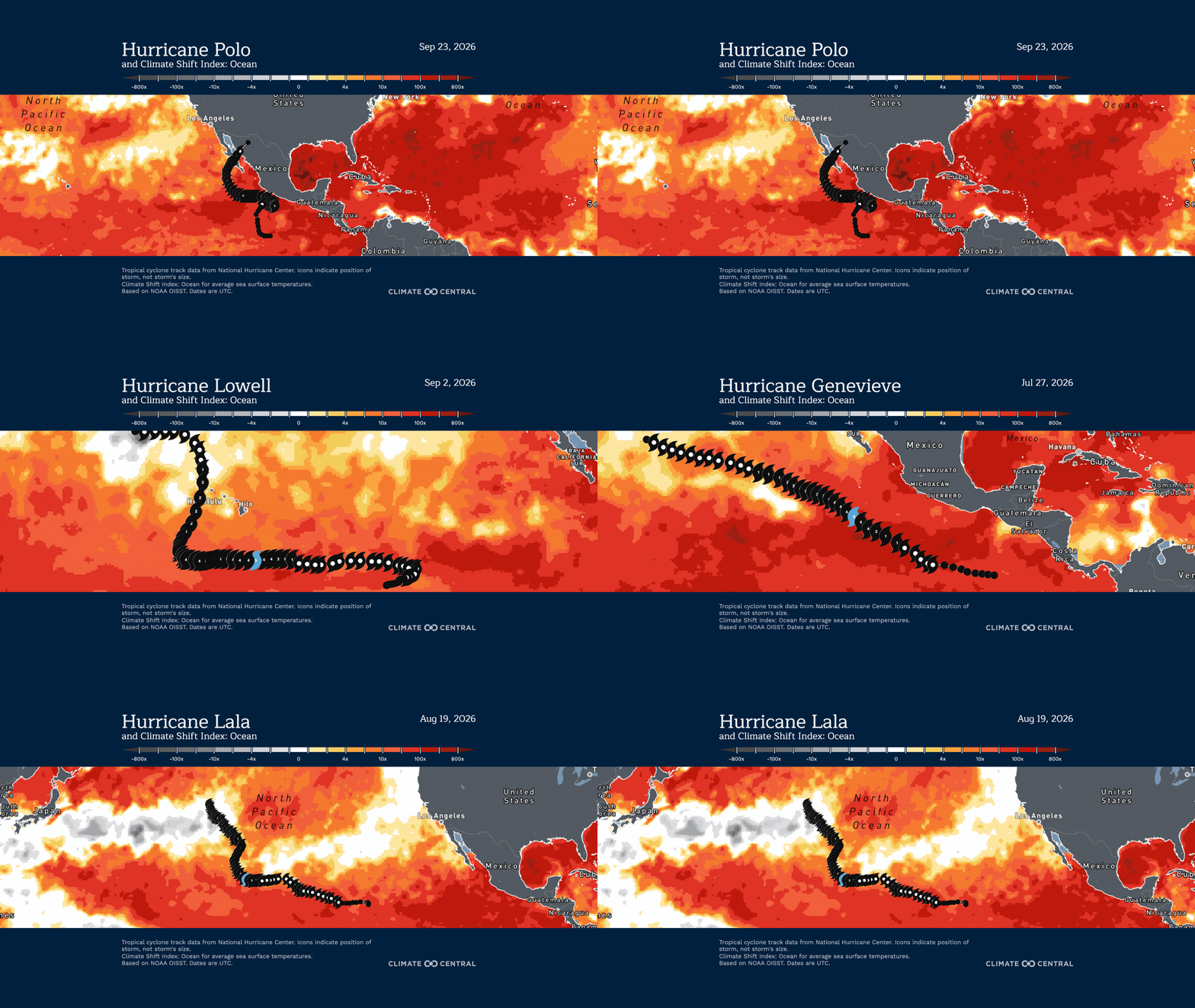
Unlike the quiet North Atlantic, the Pacific Ocean was especially active during the 2026 hurricane season, which runs from June 1 to November 30. As of November 20, the Pacific had 20 named storms — five more than average — and eight major hurricanes, four more than average. Accumulated cyclone energy (ACE), a measure of the combined strength and duration of tropical cyclones over a season, reached 129% of its climatological average.
While many of these storms did not have major impacts on land, most had one thing in common: They developed over unusually warm ocean waters, driven by a combination of human-caused climate change and El Niño. The Pacific experienced a record-breaking marine heat wave (MHW) over the past few months, covering as much as 50% of the basin.
Warm ocean waters provide the energy that fuels tropical cyclones, helping storms strengthen and, under the right conditions, intensify rapidly. During the 2026 Pacific hurricane season, climate change further elevated already warm ocean temperatures, increasing the amount of unusually warm water available to fuel storms.
Several major tropical cyclones were particularly affected by these record-breaking warm waters. Here is a look at four impactful storms — Genevieve, Lala, Lowell, and Polo.
Genevieve
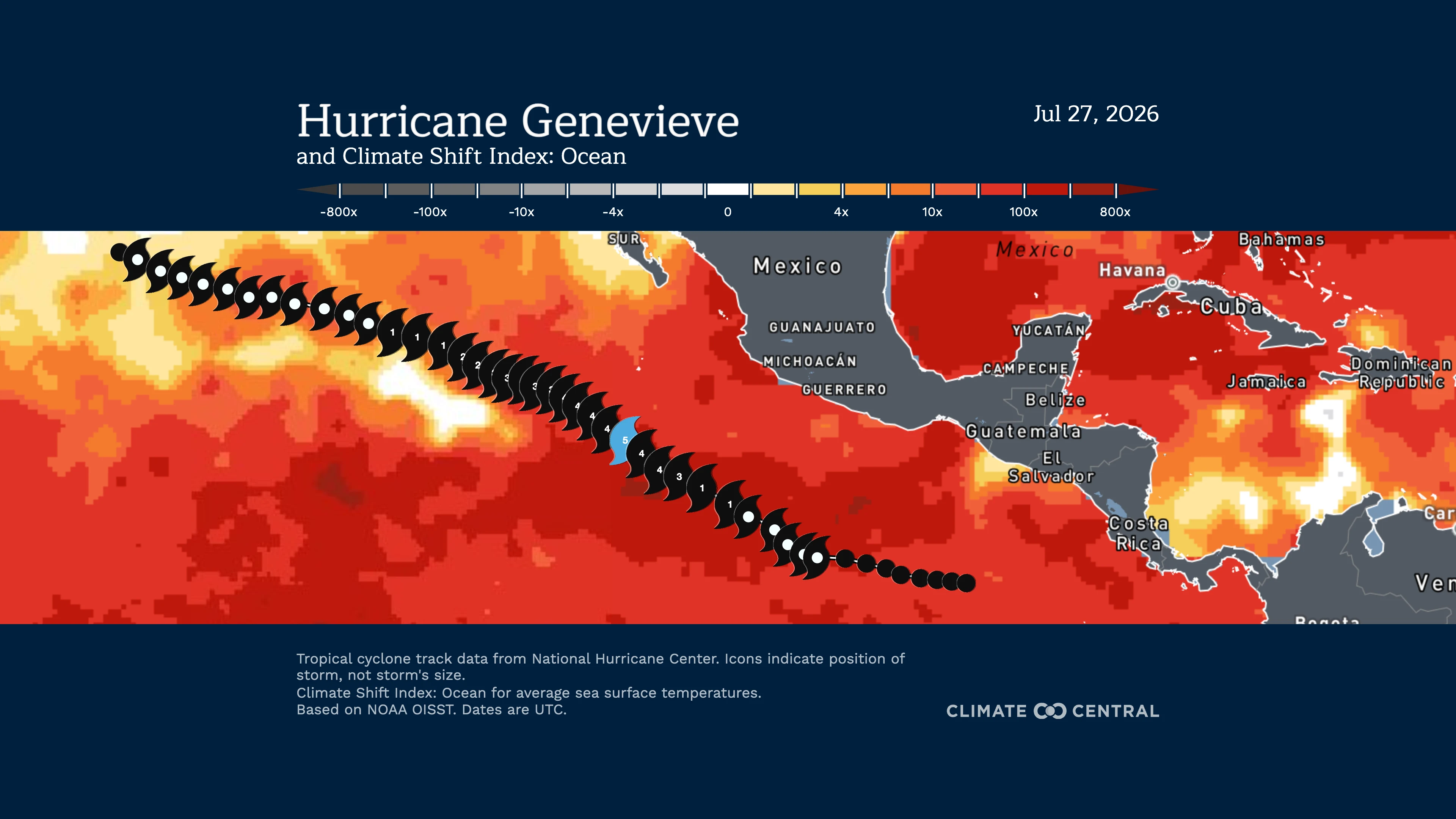
Genevieve became the eastern Pacific’s first Category 5 hurricane since 2024 on July 27, reaching sustained winds of 160 mph while remaining offshore from Mexico. Although it never made landfall, the storm generated dangerous surf and rip currents along Mexico’s Pacific coast, and large swells reached Southern California.
Early in its track, Genevieve traveled over waters with temperatures made 100 to 400 times more likely by human-caused climate change.
Sea surface temperatures during this time reached 29.9°C (85.8°F), which is 1.2°C to 1.4°C (2.2°F to 2.5°F) above average.
Genevieve spent 85% of its track over an MHW, and 80% of that marine heat wave exposure was attributable to human-caused climate change.
Lala
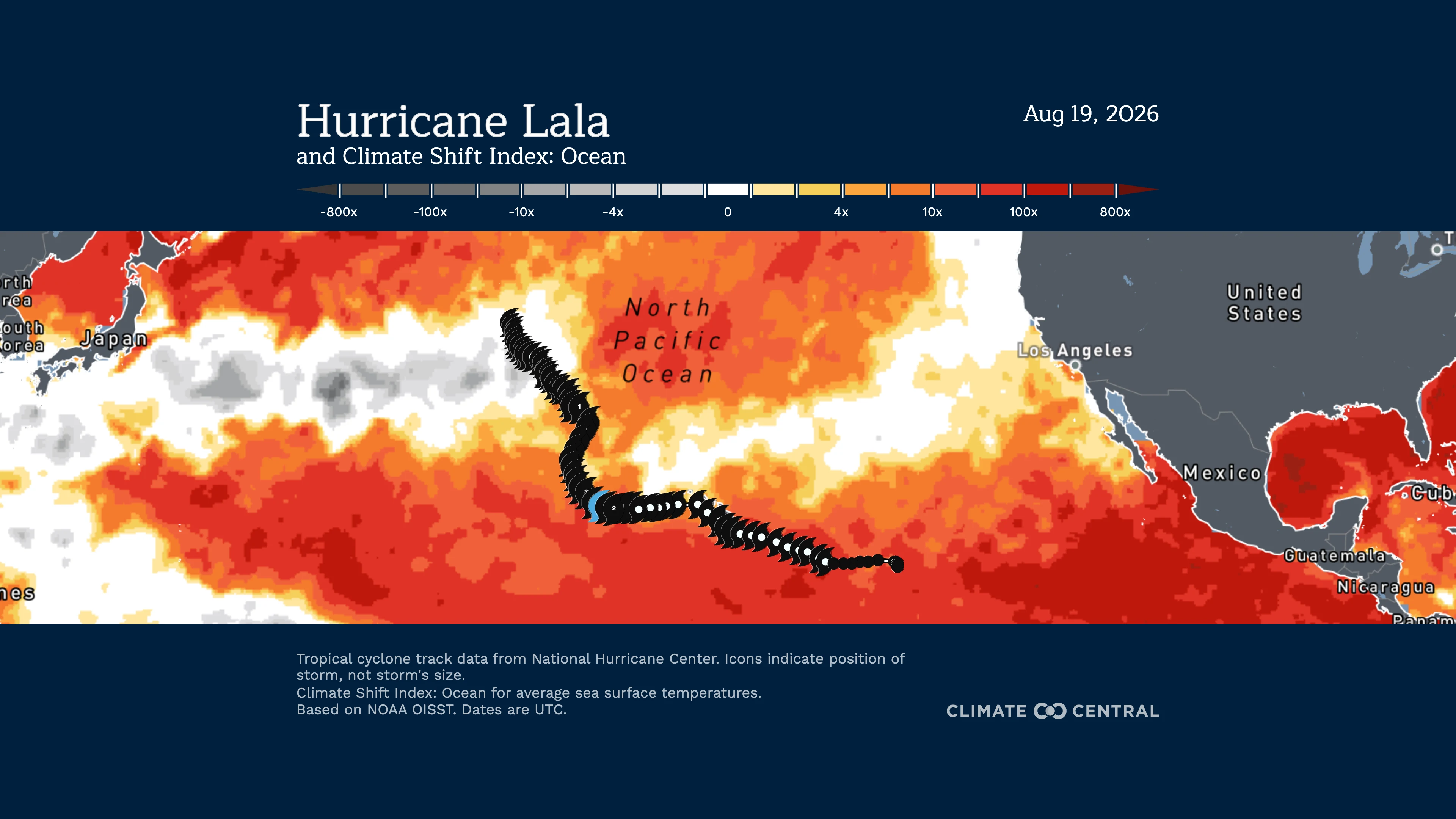
On August 15, Category 1 Hurricane Lala passed just south of Hawaii’s Big Island, bringing torrential rainfall and damaging winds across the state. Catastrophic flooding in the Kau District washed out roads and damaged homes. Maui and Oahu also experienced significant flooding.
As Lala passed the Hawaiian Islands, it traveled over waters with elevated temperatures, approximately two to 30 times more likely due to human-caused climate change.
Sea surface temperatures along this portion of the track ranged from 27°C to 27.7°C (80.6°F to 81.9°F), up to 1.4°C (2.5°F) above average.
Lala spent 50% of its track over a marine heat wave (MHW) and 94% of that marine heat wave exposure was attributable to human-caused climate change.
Lowell
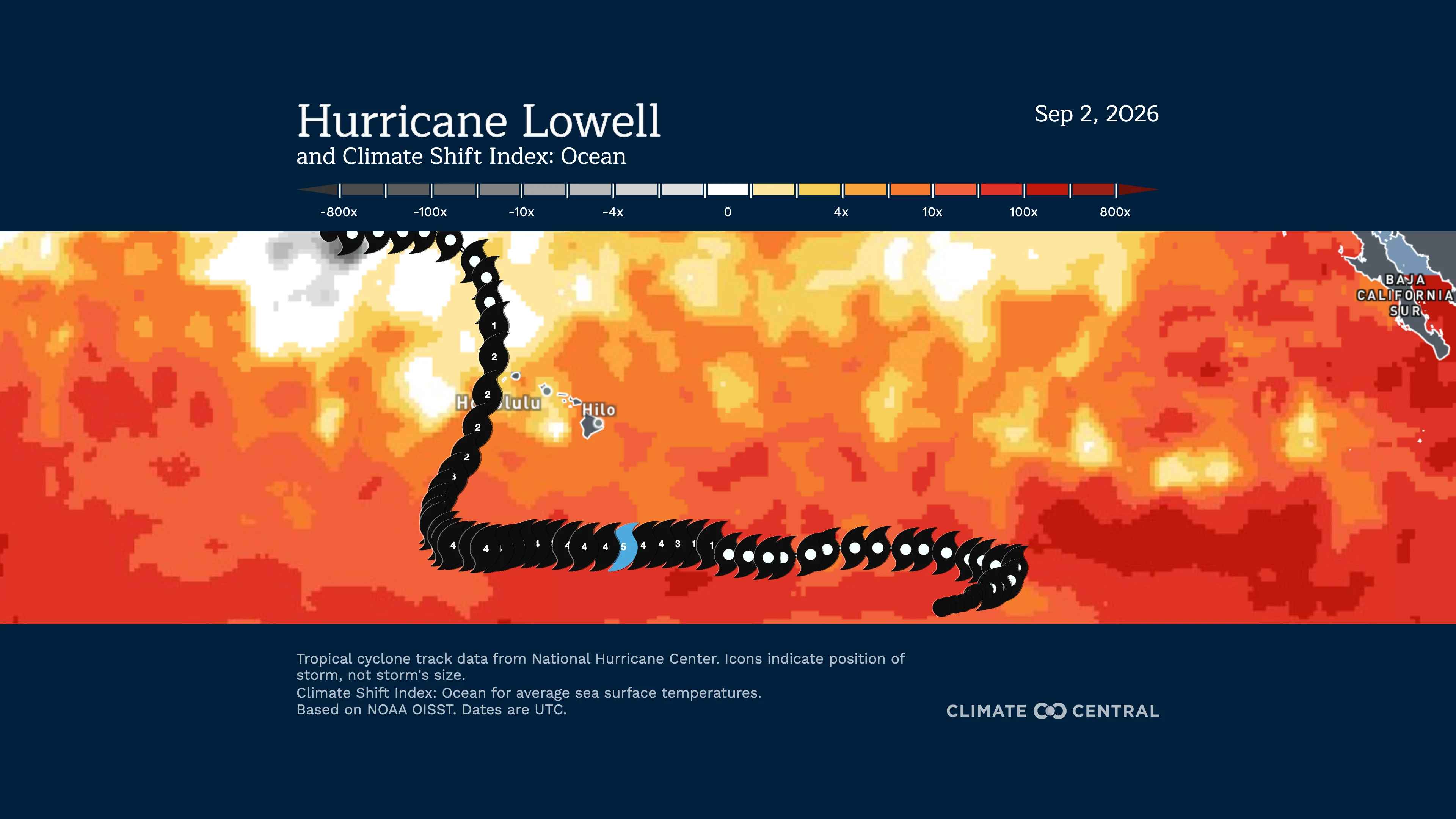
After reaching Category 5 strength over the Pacific, Lowell weakened to a Category 2 before passing just west of Niihau, Hawaii, on September 7. Strong winds and heavy rainfall caused flooding and damage on Kauai, leaving roughly 90% of the island’s utility customers without power.
As Lowell tracked westward, it traveled over waters with elevated temperatures, made approximately six to 60 times more likely by human-caused climate change.
Along this portion of its track, sea surface temperatures reached 29.1°C (84.4°F), which is up to 1.1°C (2°F) above average.
Lowell spent 64% of its track over an MHW, and all of that marine heat wave exposure (100%) was attributable to human-caused climate change.
Polo
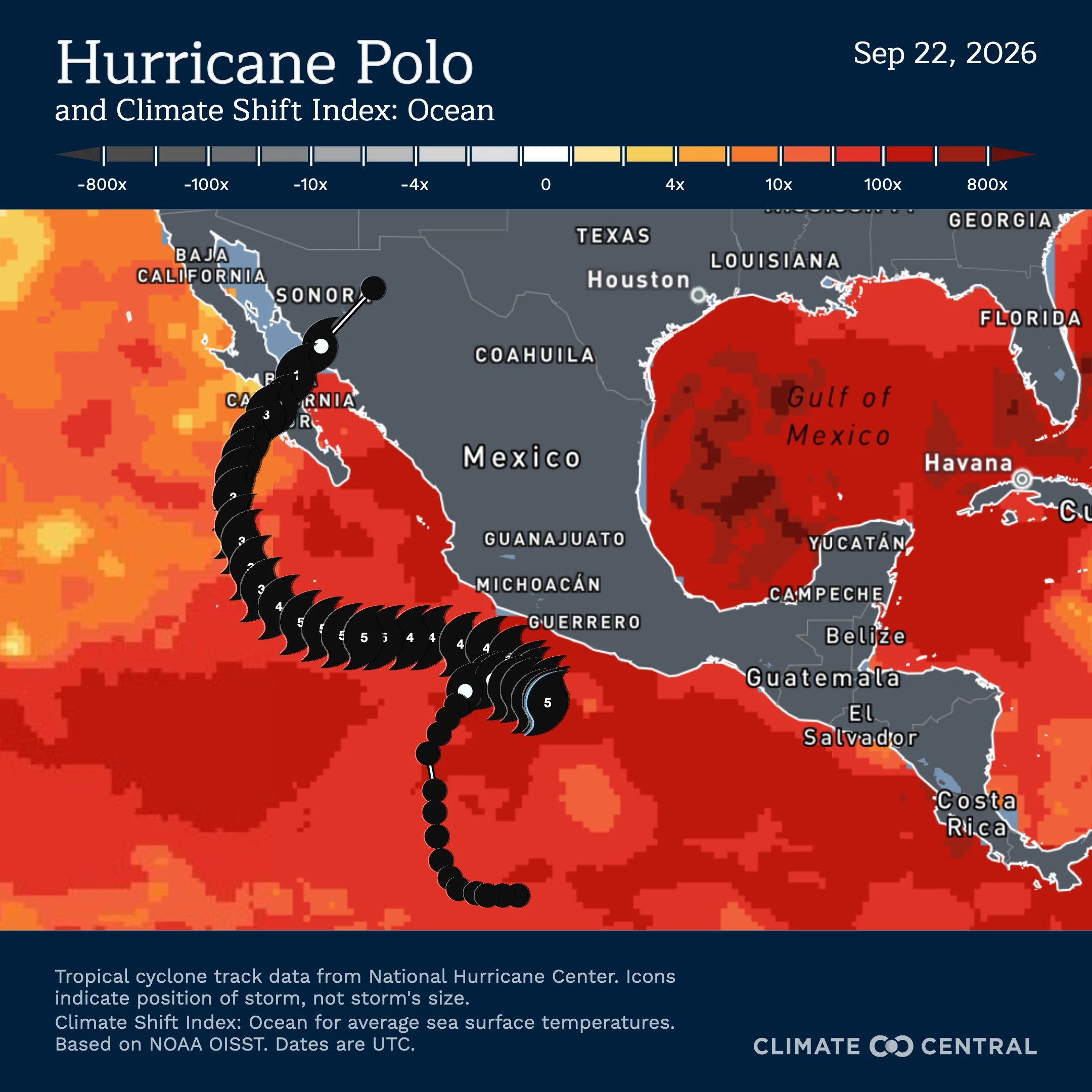
Polo made landfall twice in Mexico in late September, first in Baja California Sur on September 28 before crossing the Gulf of California and reaching Sonora the following day. After reaching Category 5 strength, Polo brought damaging winds and flooding to Mexico, with remnant moisture also contributing to heavy rainfall and flash flooding across the southwestern United States.
Early in its track southwest of Mexico, Polo traveled over waters with elevated temperatures, made up to 200 times more likely by climate change. As it approached Baja California Sur, temperatures were made approximately two to eight times more likely.
Sea surface temperatures along the earlier portion of the track ranged from 29°C to 31°C (84.2°F to 87.8°F), approximately 1.1°C to 1.6°C (2°F to 2.9°F) above average. As Polo approached Baja California Sur, temperatures were cooler at 27°C to 29°C (80.6°F to 84.2°F), but were even more unusual for the season, at more than 3°C above average in some areas.
Polo spent 95% of its track over a MHW, and 71% of that marine heat wave exposure was attributable to human-caused climate change.
What do experts say?
Dr. Daniel Gilford, Climate Scientist at Climate Central, said:
“The eastern Pacific roared to life with record-breaking hurricane activity this year, drawing on extra fuel and increased atmospheric moisture from human-caused climate change. Storms supercharged by the climate-warmed ocean lashed Hawaii and the Mexican and Southwest U.S. coasts, causing damaging waters and winds, and threatening these coastal communities with unprecedented frequency. But events like these will continue to become more common and more intense if carbon pollution continues to warm our climate.”
For more information on the Climate Shift Index: Ocean, refer to the FAQs.
To request an interview with a Climate Central scientist, please contact Abbie Veitch at aveitch@climatecentral.com.