
Climate Matters•July 1, 2026•Reuse this content
July 4th: The Hottest Month Is Getting Hotter After 250 Years of Climate Change
KEY FACTS
July is the hottest month for most of the U.S. and it’s getting hotter as the planet warms.
Since 1970, July has warmed in 94% of 243 U.S. cities analyzed — by 2.6°F on average.
Free graphics show July temperature trends and records for the hottest and coolest July 4th in each city.
The United States celebrates its 250th anniversary this July 4. The nation's history has unfolded during a period of unprecedented and accelerating global climate change.
Climate change poses growing risks, but there are many opportunities to reduce heat-trapping pollution and progress toward a safer future.
This Climate Matters analysis is based on open-access data from the National Oceanic and Atmospheric Administration (NOAA). See Methodology for details.
VISUALS
Loading visual assets...
LEARN MORE
FULL REPORT
The hottest month is getting hotter
July is here and so is the heat — including a dangerous heat wave fueled by climate change, affecting much of the eastern U.S. through the Fourth of July holiday weekend.
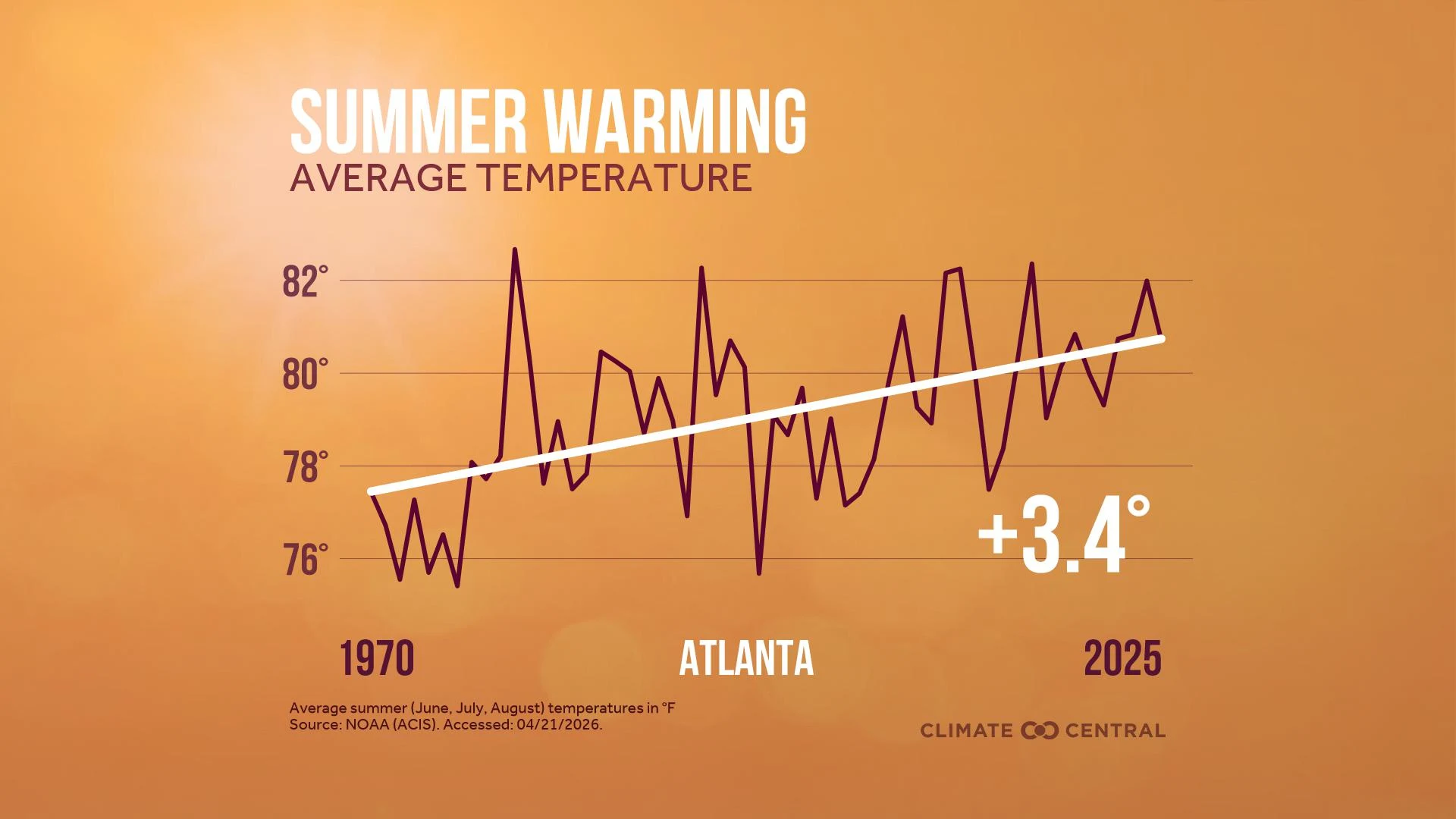
July is typically the hottest month of the year for most of the U.S. and it’s getting hotter as summers heat up across the country, driven by heat-trapping pollution.
Loading visual assets...
Climate Central analyzed July temperature data from 1970 to 2025 for 243 U.S. cities, finding that:
July average temperatures have warmed in 94% (229) of the cities analyzed.
Across those 229 cities, July temperatures have increased on average by 2.6°F since 1970.
On average, cities across the Northwest (4.9°F), Southwest (3.5°F), and Northeast (3.1°F) have experienced the highest rates of July warming since 1970.
Free graphics show July temperature trends and the hottest and coolest July 4th on record in each of the 243 cities analyzed.
July warming since 1970 is part of a longer warming trend leading to more peak summer heat — the deadliest weather-related hazard in the U.S.
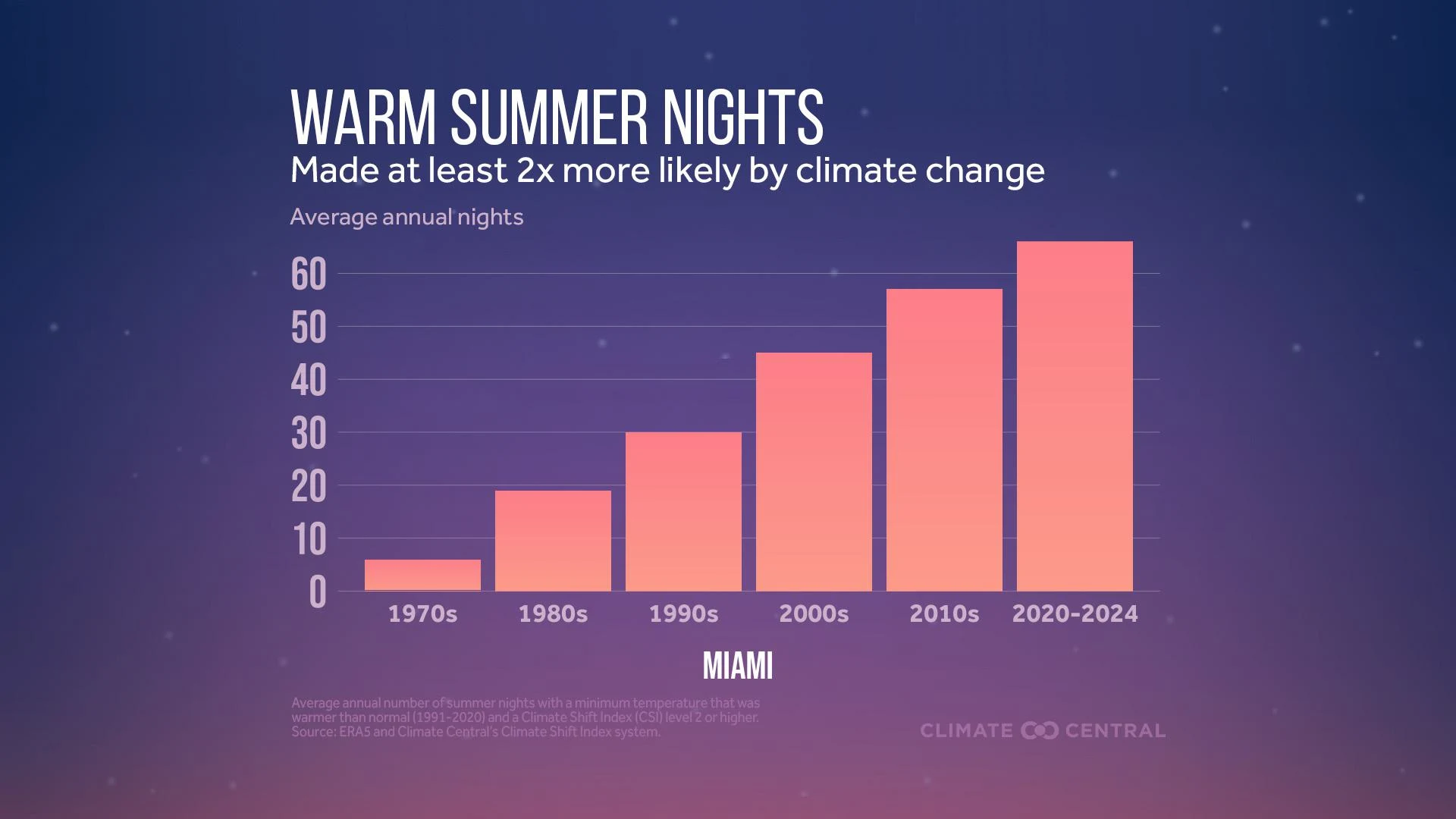
Recent analysis shows that climate change is also fueling a rise in sweltering summer nights in nearly every major U.S. city. These warm nights increase health risks during peak summer heat — especially when humidity is high.
Loading visual assets...
The United States at 250: How the climate has changed since 1776
The United States celebrates its 250th anniversary this July 4. The nation's history has unfolded during a period of unprecedented and accelerating global climate change.
The nation was founded in 1776 in a relatively stable climate before the peak of the Industrial Revolution when factories, transportation, and eventually electricity generation were powered by the surging use of coal, oil, and gas.
Burning these fossil fuels led to remarkable economic growth while also releasing heat-trapping greenhouse gases that have accumulated in the atmosphere and transformed the climate.
Today, concentrations of these gases have risen to levels unprecedented in at least 800,000 years and the world is warming at a pace unlike any experienced in modern human history.
Human activities have warmed the planet by about 1.2°C (2.2°F) above pre-industrial levels, fueling more extreme heat, drought, wildfires, heavy rainfall, stronger storms, and rising seas.
Carbon dioxide (CO₂) is responsible for about three-quarters of all human-caused greenhouse gas emissions and has contributed the most to long-term warming.
Global CO₂ emissions and temperatures have both risen sharply since 1776, and atmospheric CO₂ levels reached yet another record high in May 2026.
The U.S. has contributed more cumulative CO₂ emissions than any other country.
Loading visual assets...
As a result of this pollution, the planet has warmed faster over the past 50 years than at any time in at least the last 2,000 years.
A new global gridded dataset now extends observational records of surface air temperatures back to 1781. This data allows us to look at 240 years of temperature change and reveals accelerating warming across the U.S., particularly during the last four decades.
Progress toward a cooler, safer future
The rapid climate change experienced over the last 250 years poses growing risks to human health, ecosystems, agriculture, the economy, and more.
The good news is that there are many options to cut heat-trapping pollution from energy, transportation, agriculture, and more.
Every tenth of a degree of avoided warming counts toward a safer future for younger generations.
Despite significant headwinds, the U.S. clean energy transition is still progressing, albeit not quickly enough to lead to a stable, safer climate.
Accelerating recent progress in the manufacture and deployment of the following pollution-reducing technologies can reduce our reliance on planet-warming fossil fuels and ensure a cooler, safer future:
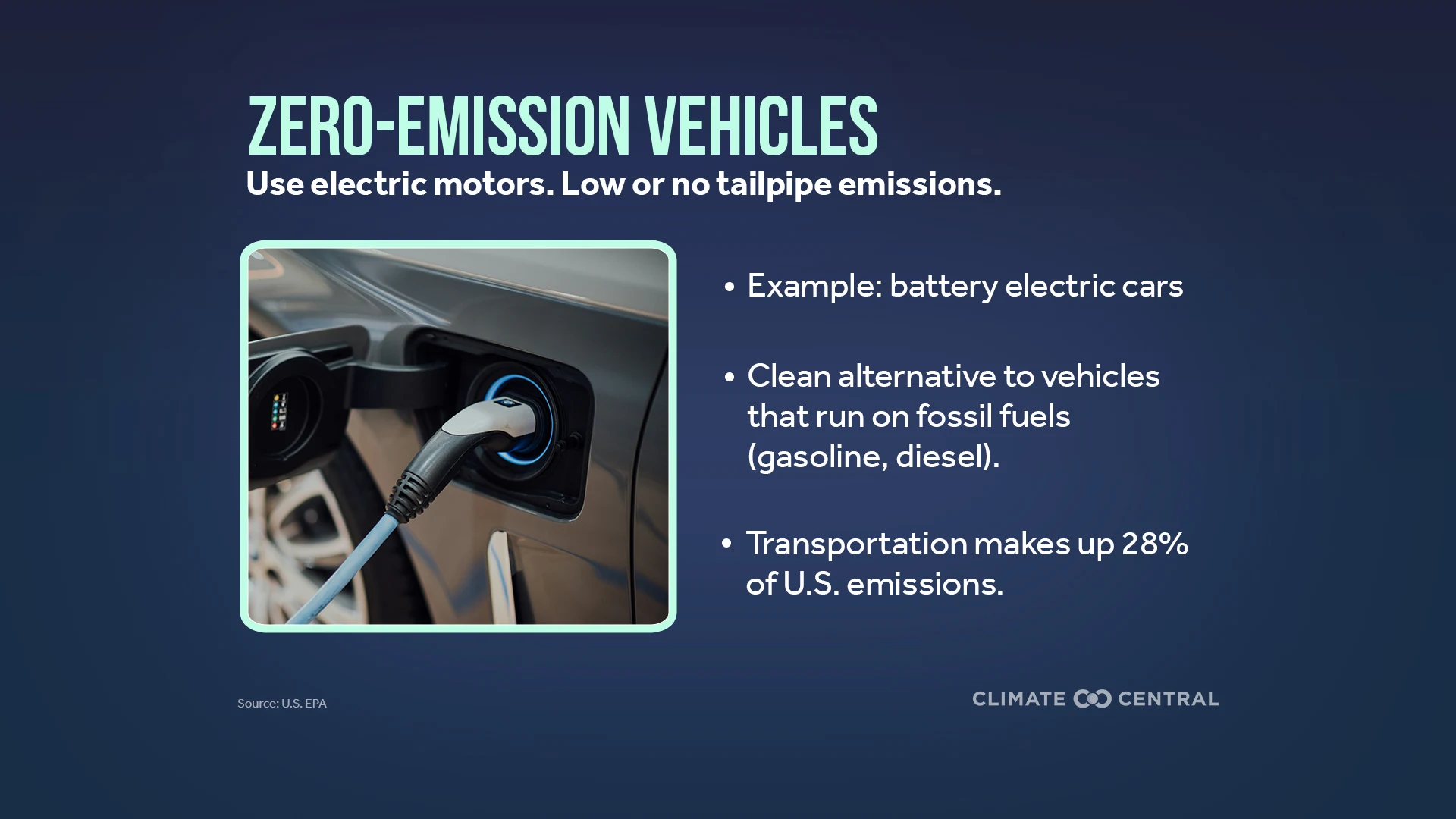
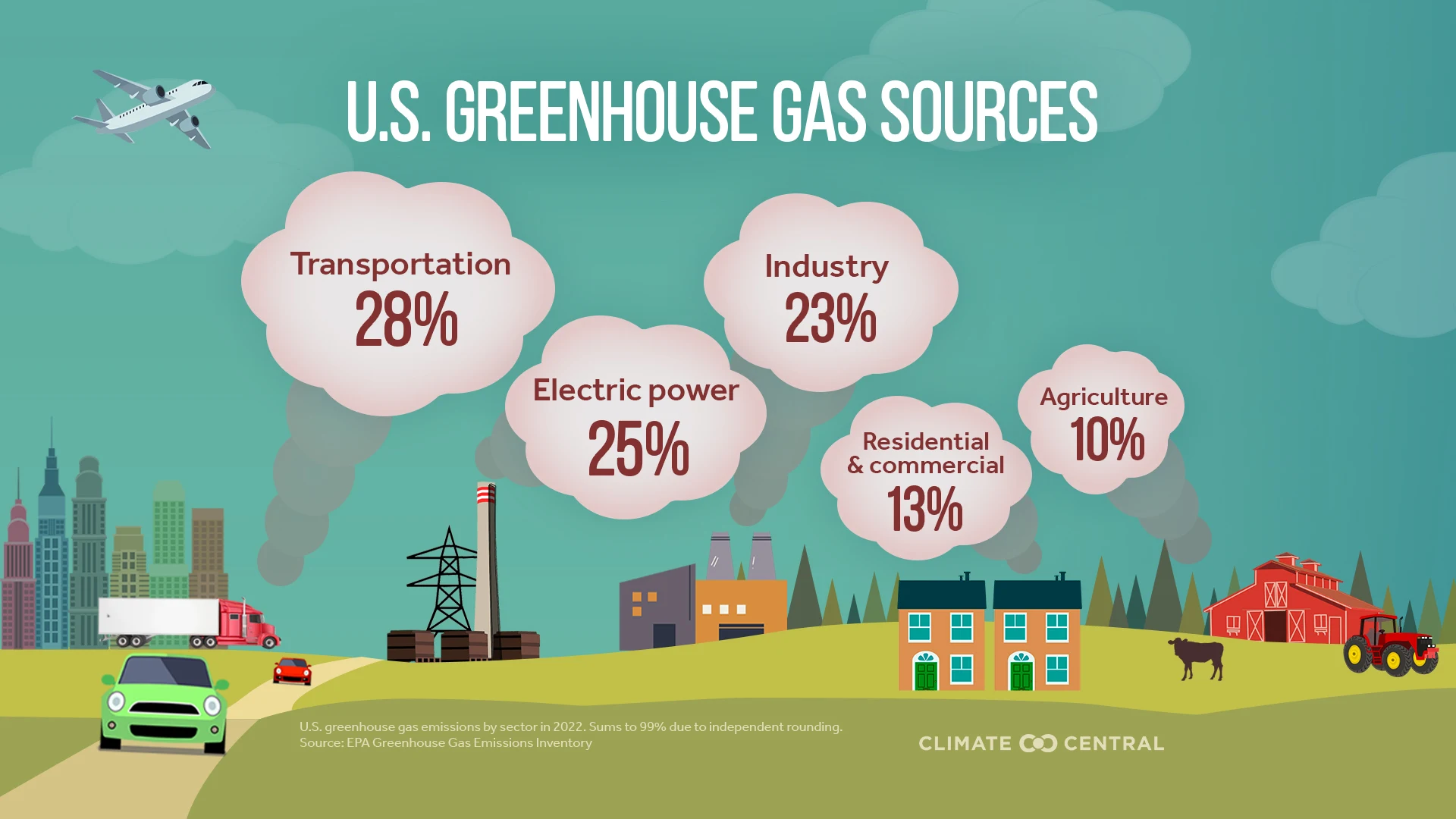
Zero-emission vehicles: These vehicles use electric motors and have low or no tailpipe emissions of heat-trapping gases. Transportation is the leading source of heat-trapping pollution in 20 states, and accounts for 28% of total U.S. greenhouse gas emissions.
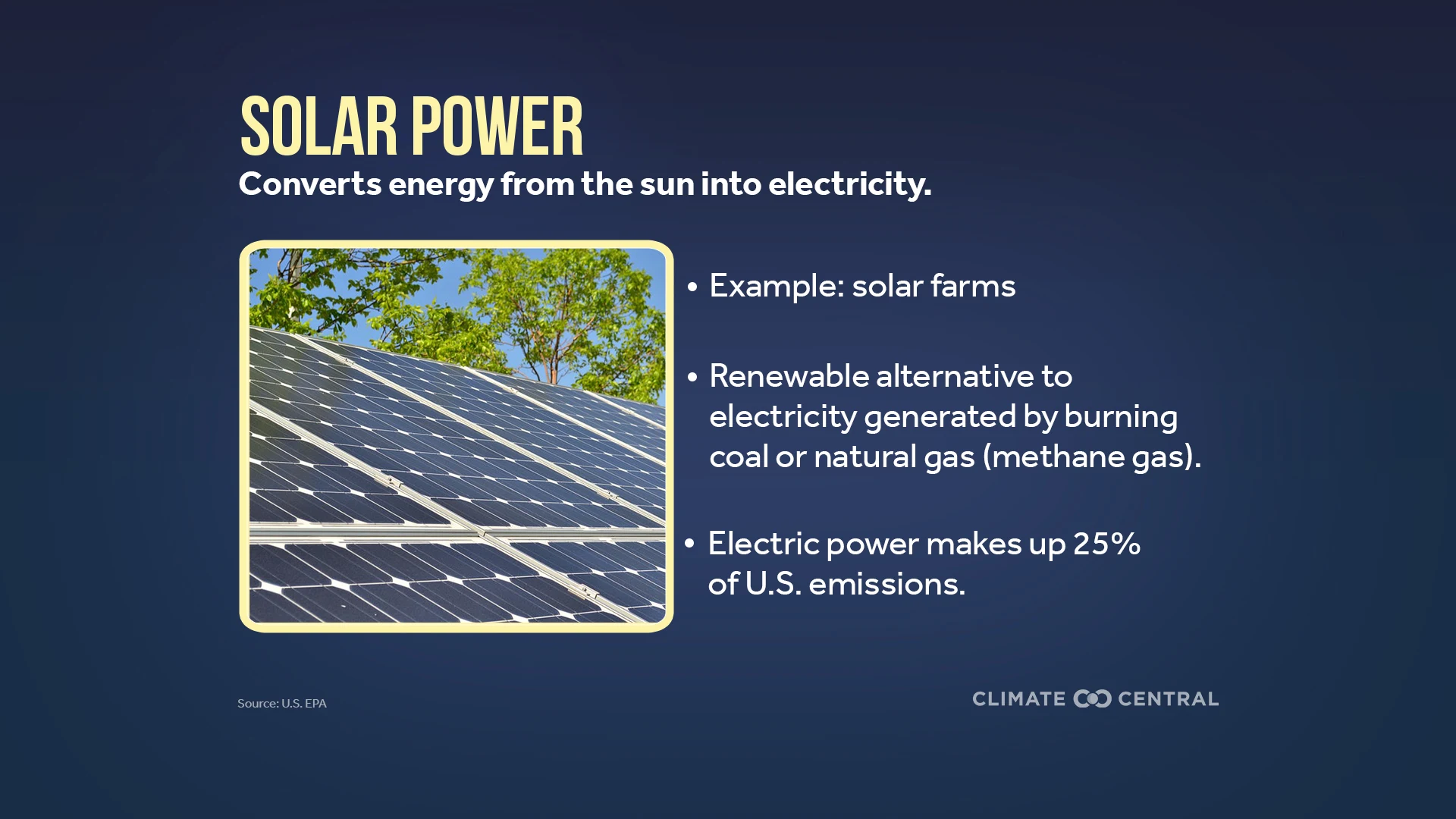
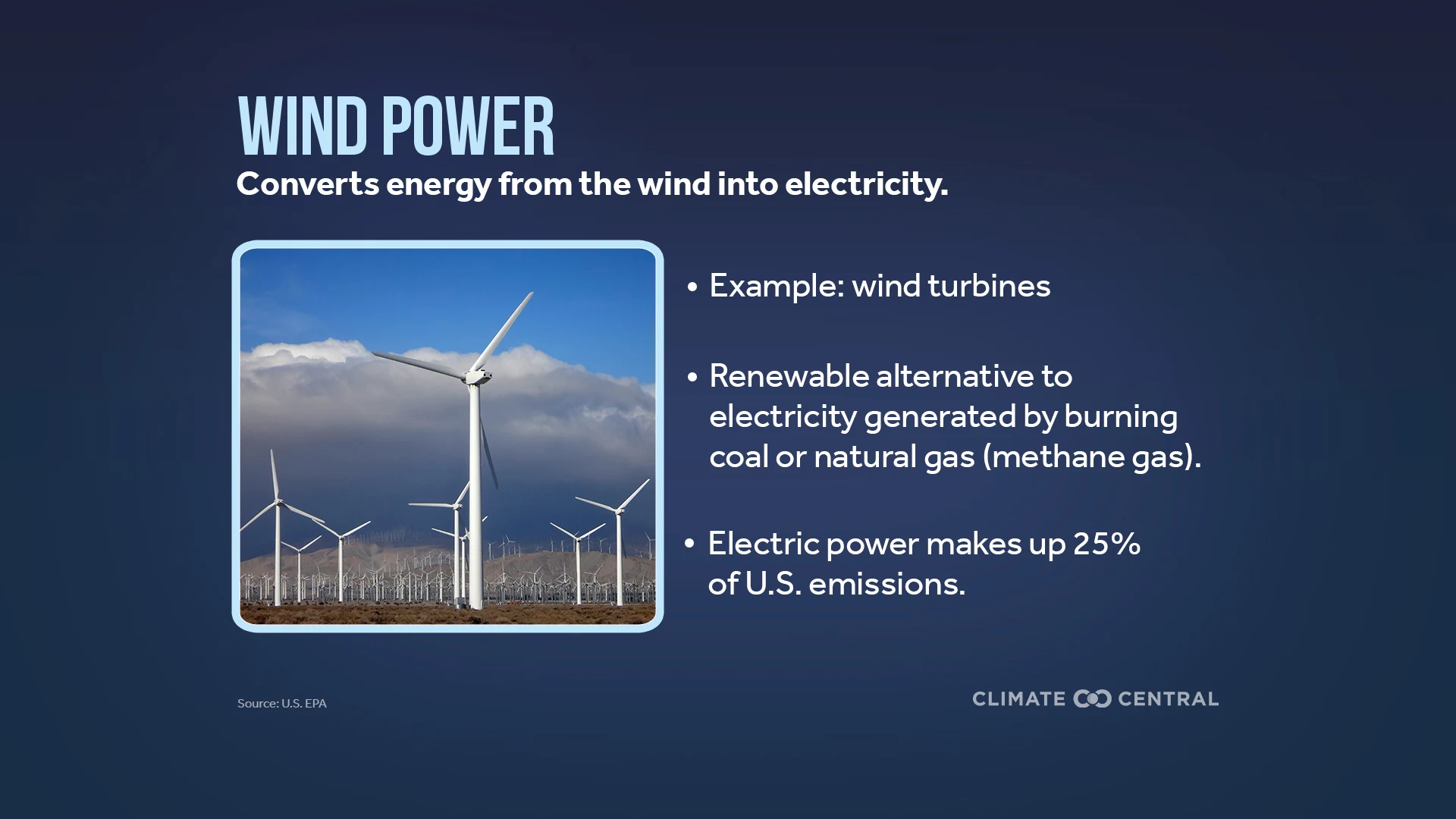
Solar and wind power: Solar panels and wind turbines convert energy from the sun and wind into electricity, providing a clean, renewable alternative to electricity generated by burning fossil fuels such as coal or natural gas (methane gas). Electric power is the leading source of heat-trapping pollution in 17 states, and accounts for 25% of U.S. greenhouse gas emissions.
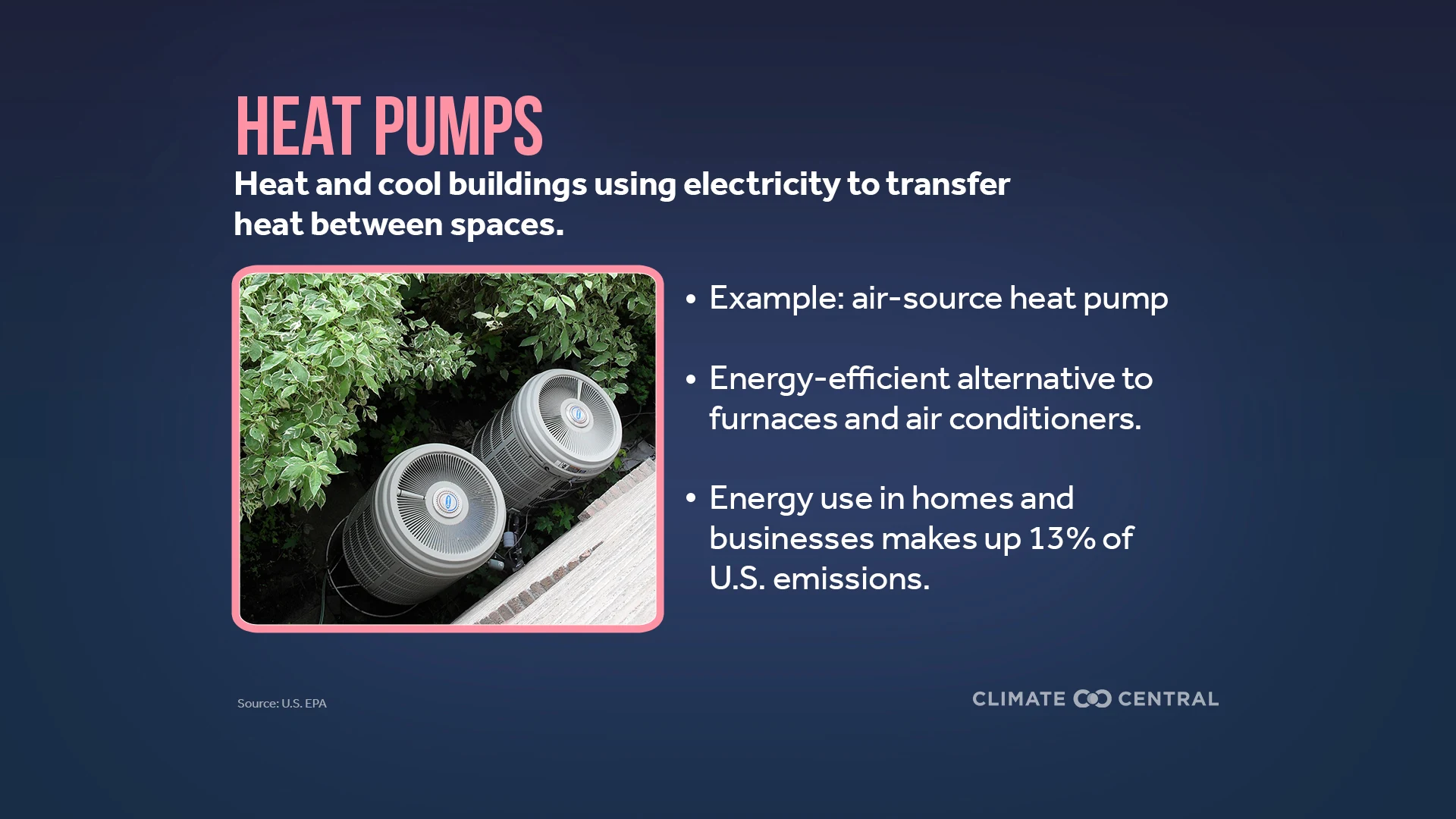
Heat pumps: These devices heat and cool buildings using electricity to transfer heat between indoor and outdoor spaces. Heat pumps are an energy-efficient alternative to furnaces and air conditioners. Energy use in homes and commercial buildings makes up 13% of U.S. emissions.
RELATED RESOURCES
LOCAL STORY ANGLES
Is climate change influencing daily heat extremes in your local area?
Climate Central’s Climate Shift Index system provides tools, data, custom maps, and local alerts to answer this question in real-time. Here are three ways to use the Climate Shift Index this summer:
Use the tools. Climate Central’s Climate Shift Index map tools — which now include both temperature and humid heat — shows which parts of the world are experiencing high Climate Shift Index levels, every day.
Access KML files to create custom Climate Shift Index maps. Fill out this form to receive CSI maps in KML format, and create custom Climate Shift Index maps.
Sign up for alerts. Sign up here to receive custom email alerts when strong Climate Shift Index levels are detected in your local area.
How is extreme heat affecting public health in your local area?
The National Integrated Heat Health Information System’s HEAT.gov site is a hub for information to support heat resilience in the U.S. Check out HeatRisk, an interactive map tool from the National Weather Service now available for the contiguous U.S. This color-numeric index shows current and forecast risk of daily local heat-related impacts. The CDC’s Heat and Health Tracker maps daily rates of heat-related illnesses across the U.S.
What local measures are in place to protect people from heat?
The EPA maintains a Heat Island Community Actions Database of measures that communities are taking to mitigate local heat island effects. Reports from NOAA’s urban heat island mapping campaigns cover local risk reduction and adaptation strategies in 60+ U.S. cities. Track local climate-related hazards, including extreme heat, using the Climate Mapping for Resilience and Adaptation Portal, which also includes federal resources for long-term resilience planning. The NIHHIS provides heat preparedness and planning resources, including many resources in Spanish.
CONTACT EXPERTS
To request an interview with a Climate Central expert about this analysis, please contact Abbie Veitch, aveitch@climatecentral.org.
FIND EXPERTS
Submit a request to SciLine from the American Association for the Advancement of Science or to the Climate Data Concierge from Columbia University. These free services rapidly connect journalists to relevant scientific experts.
Browse maps of climate experts and services at regional NOAA, USDA, and Department of the Interior offices.
Explore databases such as 500 Women Scientists, BIPOC Climate and Energy Justice PhDs, and Diverse Sources to find and amplify diverse expert voices.
Reach out to your State Climate Office or the nearest Land-Grant University to connect with scientists, educators, and extension staff in your local area.
METHODOLOGY
Trends in July average temperatures from 1970 to 2025 were calculated using data obtained from the Applied Climate Information System, which is developed, maintained, and operated by NOAA’s Regional Climate Centers. Local July 4th climate extremes are based on each weather station’s period of record.
Climate Central's local analyses include 247 U.S. weather stations. For reported data summaries of historical (1970-2025) observed July warming trends based on linear regression, however, only 243 stations are included due to data completeness measures that were not met by four stations: Clarksburg, WV; Hazard, KY; Jefferson City, MO; and Twin Falls, ID.
Climate Matters © 2026 by Climate Central is licensed under CC BY 4.0
This license grants permission to use, distribute, and reproduce all text, graphics, and multimedia content published on this page in any medium, provided that Climate Central is credited per the CC BY 4.0 license.
Permission to use data and other materials published on this page is granted for non-commercial uses, commercial news purposes, and educational purposes as governed by Climate Central's Terms of Use.