
![ATT: CSI: Humid Heat Tool [Updated: May 2026]](https://images.ctfassets.net/cxgxgstp8r5d/aa455S7tVmeO1VHJEScAG/79cd1e1d3c6f61e04dc2042835fe1de0/Screenshot_2026-05-11_at_2.28.56_PM.png?w=2048&q=85&fm=webp)
Climate Matters•May 13, 2026•Reuse this content
Humid Heat: A Growing Health Risk in a Warming Climate
KEY FACTS
The combination of extreme heat and humidity is dangerous and becoming more common in our warming climate.
Humid heat can compromise the body’s main cooling mechanism (sweating) and lead to a range of serious and even fatal heat-related illnesses.
Climate Central’s new Climate Shift Index: Humid Heat tool calculates the influence of climate change on dangerous humid heat every day, around the globe.
Dangerous humid heat corresponds to daily maximum wet-bulb temperatures of 25°C (77°F) or higher. Many people are at risk of experiencing heat-related illness under these conditions, particularly older adults and those without access to cooling.
In the U.S, the South and Southeast regions face the highest burden of dangerous humid heat. Some areas of the Gulf Coast currently experience more than 100 such days annually, on average.
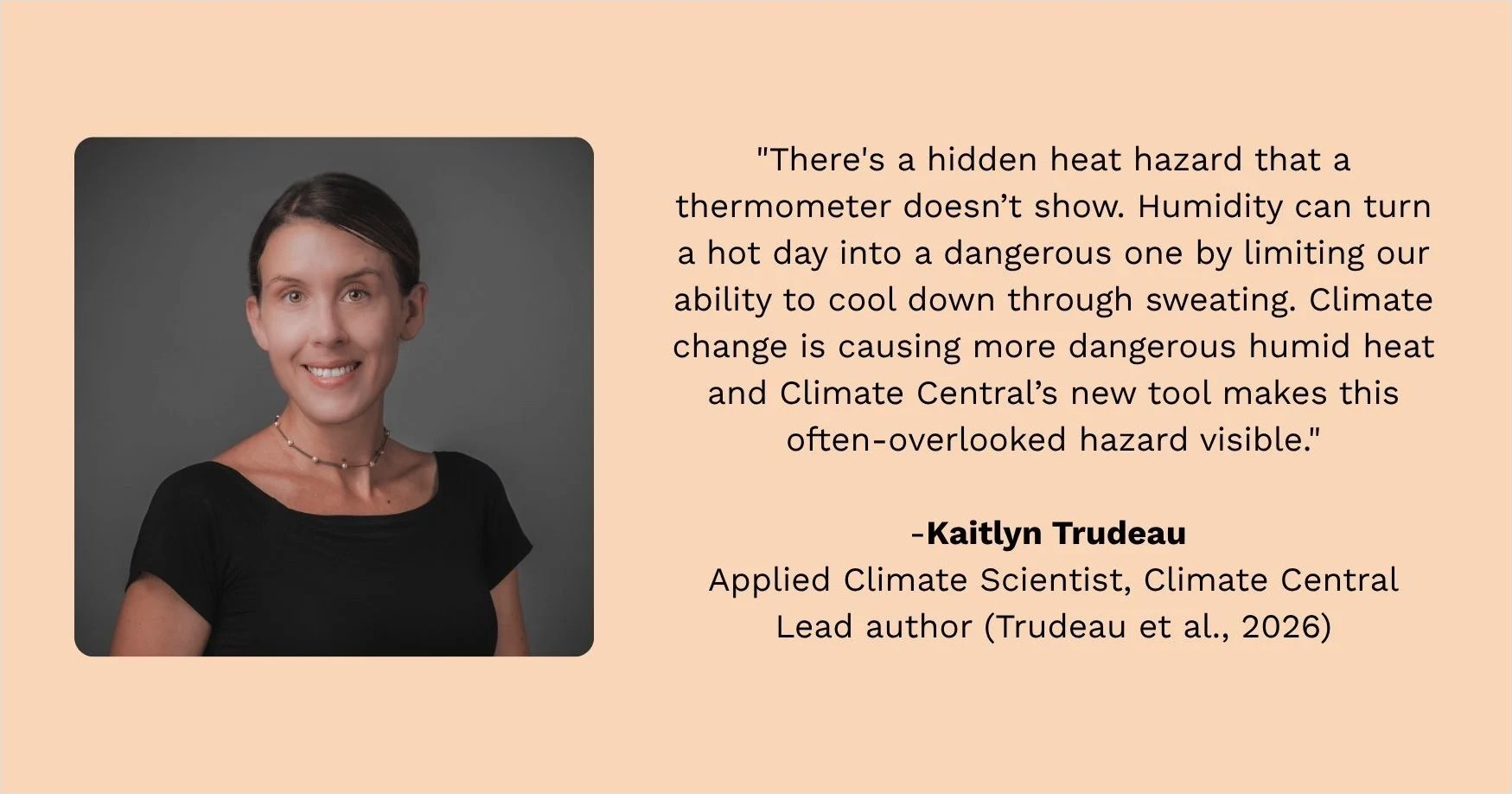
Humid heat: a growing health risk
Extreme heat —the deadliest weather-related hazard in the U.S. — is becoming more frequent and intense in our warming climate. Extreme heat is even more dangerous when combined with high humidity.
Humid heat — the combination of high temperatures and humidity — can compromise the body’s main cooling mechanism (sweating) and lead to a range of serious and even fatal heat-related illnesses.
Understanding how climate change is affecting dangerous humid heat can help communities prepare for rising health risks as the climate warms.
Climate Central’s new Climate Shift Index: Humid Heat tool does just this — it calculates the influence of climate change on dangerous humid heat around the globe, every day.
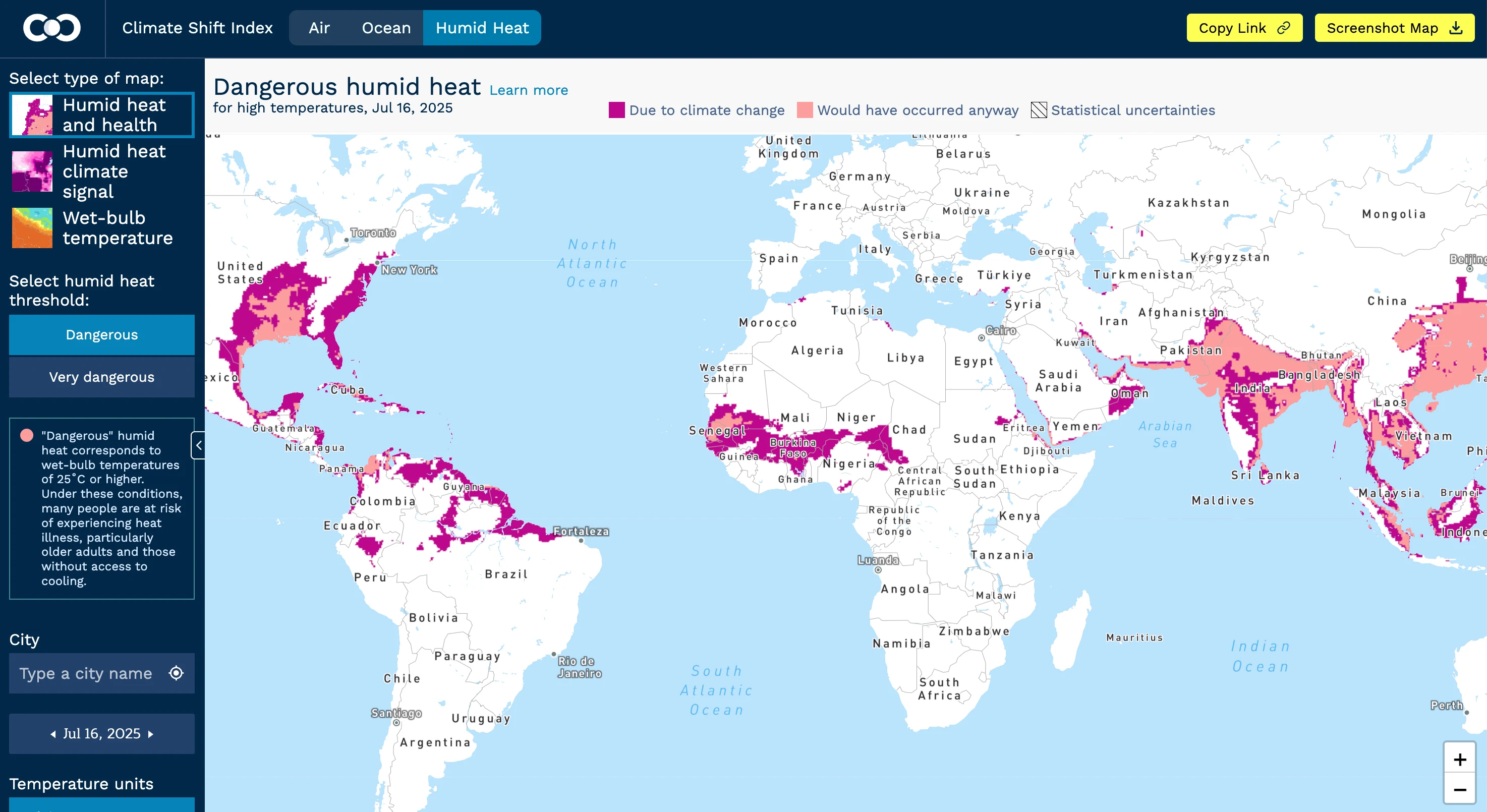
Here’s how to use Climate Shift Index: Humid Heat
Use the tool to explore data showing which parts of the world are experiencing dangerous humid heat due to human-caused climate change — every day.
Share custom maps. Use yellow buttons in the tool’s top right corner to share a direct link to a custom map or download the current map view as a sharable image.
Watch the webinar. Climate Central’s May 12 webinar recording introduces this tool, explains the science behind it, and discusses the health implications with a medical expert and a journalist.
Read the FAQs. Review common questions and answers on the science behind the Climate Shift Index: Humid Heat and guidance on using the tool in climate reporting.
Go deeper. Read Climate Central’s new peer-reviewed study to understand the methods and see how they were applied to several case studies.
This brief explains why humid heat is a serious health issue and how climate change makes it worse. These resources can be paired with real-time data from the Climate Shift Index: Humid Heat tool to tell the humid heat story.
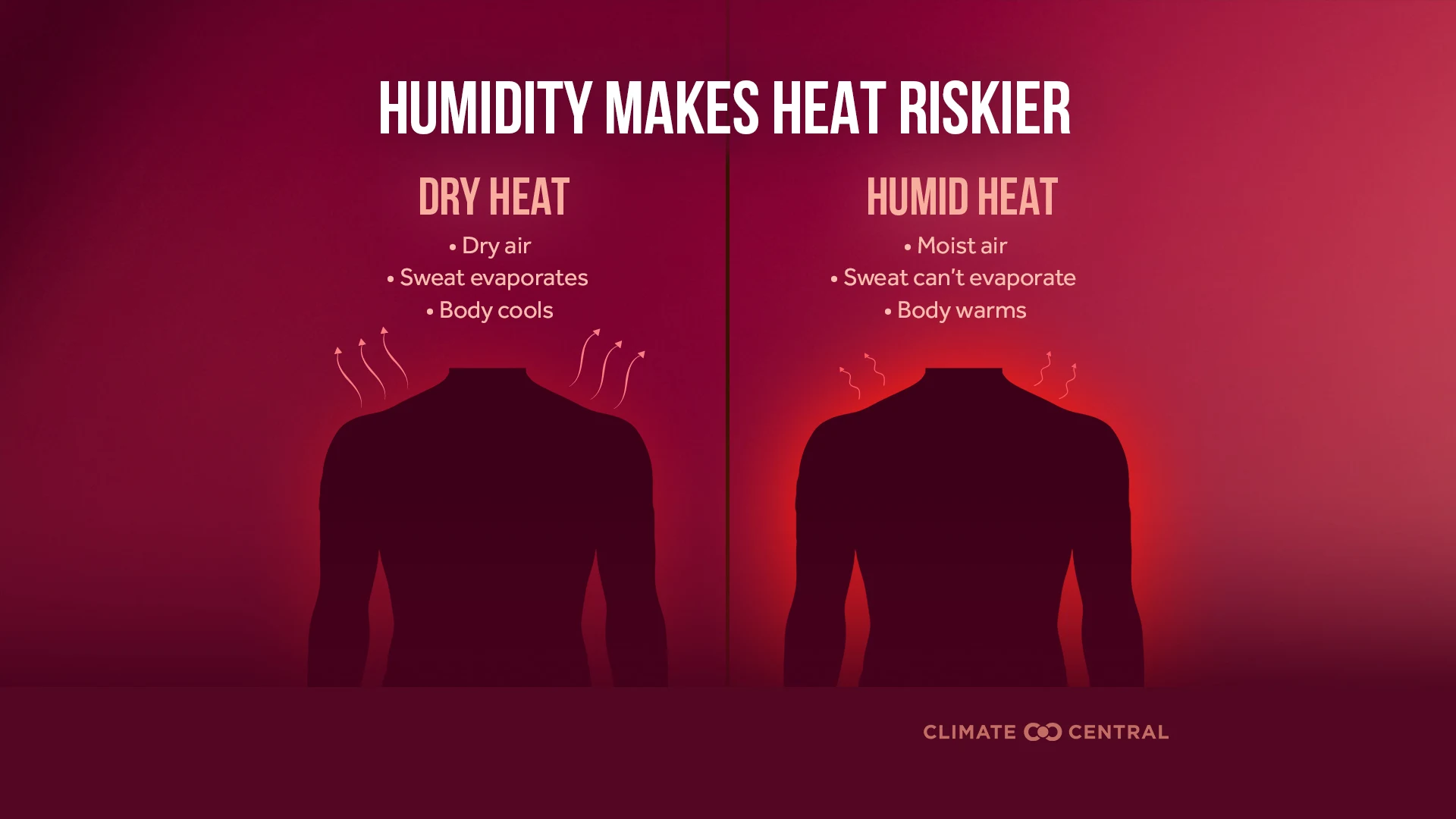
Humidity makes extreme heat more dangerous
The combination of high temperatures and humidity can compromise the body’s main cooling mechanism: sweating. The evaporation of sweat from skin cools our bodies. But in humid heat, this process breaks down.
Sweat can’t evaporate as efficiently in high humidity, making it harder to shed heat and cool down. As heat builds up in the body, the heart works harder and the risk of dehydration and heat-related illness (including heat exhaustion and heat stroke) increases. Heat stroke is a medical emergency that can lead to organ damage, or even death, without rapid treatment.
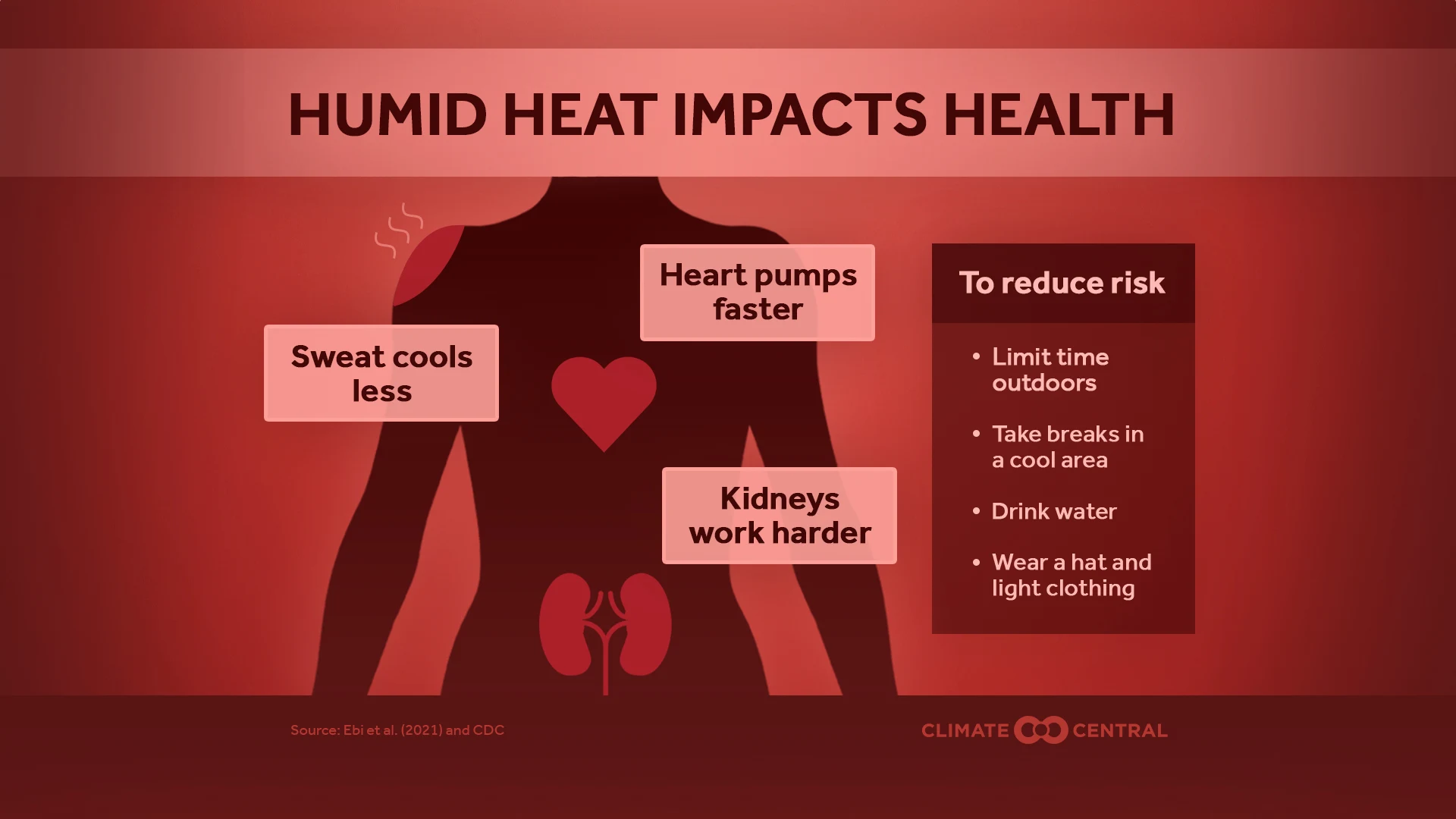
Extreme heat, especially combined with high humidity, is risky for everyone. But some groups face higher risks of heat-related illness. This includes children, older adults, pregnant people, outdoor workers, athletes, and people without access to cooling. Some medications and health conditions can make it even harder to stay safe in excessive heat.
How climate change makes humid heat worse
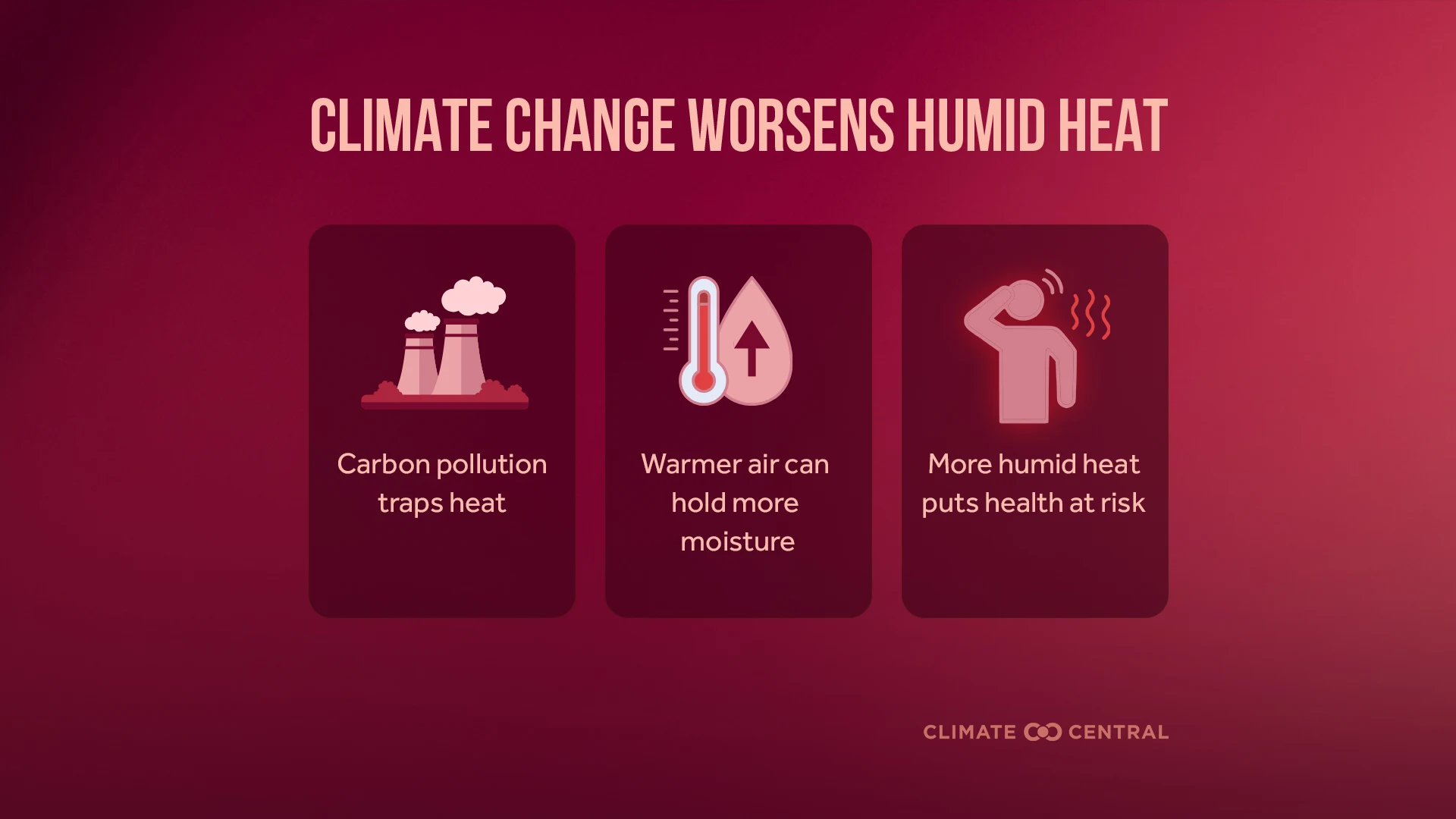
Rising global temperatures and more extreme heat are among the most direct and widely recognized consequences of heat-trapping pollution.
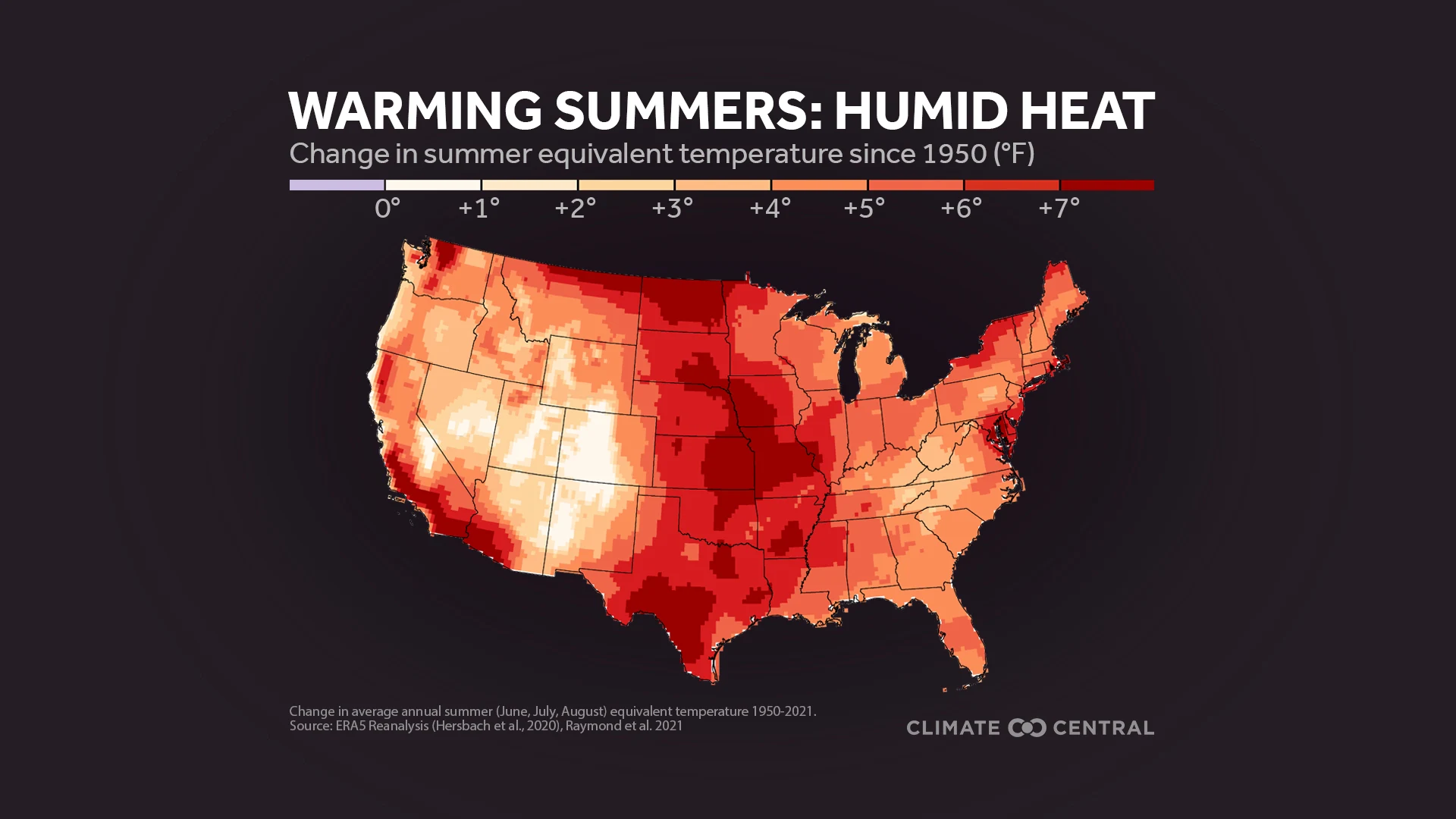
But human-caused climate change is altering more than air temperature alone. It’s also changing humidity and amplifying the health risks of hotter and more frequent extreme heat.
Human-caused warming increases humidity because warmer air can hold more moisture. As the planet warms, more water evaporates from oceans, lakes, and soil. This adds more moisture to the air, raising humidity levels in many regions.
For every 1°F of warming, the air can hold 4% more moisture. The planet has already warmed 2.1°F (1.2°C) above pre-industrial levels and we’re seeing the resulting rise in the frequency and intensity of humid heat.
Globally, the frequency of extreme humid heat has more than doubled from 1979 to 2017.
Humid heat extremes have also more than doubled in most U.S. regions, comparing 2000-2019 to two decades prior.
Although these trends aren’t observed everywhere (for example, some very dry regions, including parts of the U.S. Southwest, are seeing drier heat extremes,) the amount of moisture in the air has increased globally in recent decades, as expected with warming.
As temperatures continue to rise, exposure to extreme humid heat is likely to increase further — especially in the densely populated tropics and mid-latitudes.
Understanding how climate change is influencing dangerous levels of humid heat can help raise public awareness about these growing risks and keep people safe and prepared.
Climate Central’s Climate Shift Index: Humid Heat tool now makes this possible — by calculating the influence of climate change on dangerous humid heat around the globe, every day.
Mapping the influence of climate change on dangerous humid heat — every day
A new peer-reviewed Climate Central study found that climate change added roughly three weeks’ worth of dangerous humid heat days globally in 2024 alone.
The Climate Shift Index: Humid Heat tool can be used to see this type of information on a daily basis. The tool is based on the same peer-reviewed methods as the new study.
The tool focuses on dangerous humid heat, which corresponds to a daily maximum wet-bulb temperature of 25°C (77°F) or higher.
This dangerous humid heat level is informed by prior studies that assessed a range of critical wet-bulb temperatures beyond which core body temperatures is notably affected.
Many people are at risk of experiencing heat-related illness under these conditions, particularly older adults and those without access to cooling.
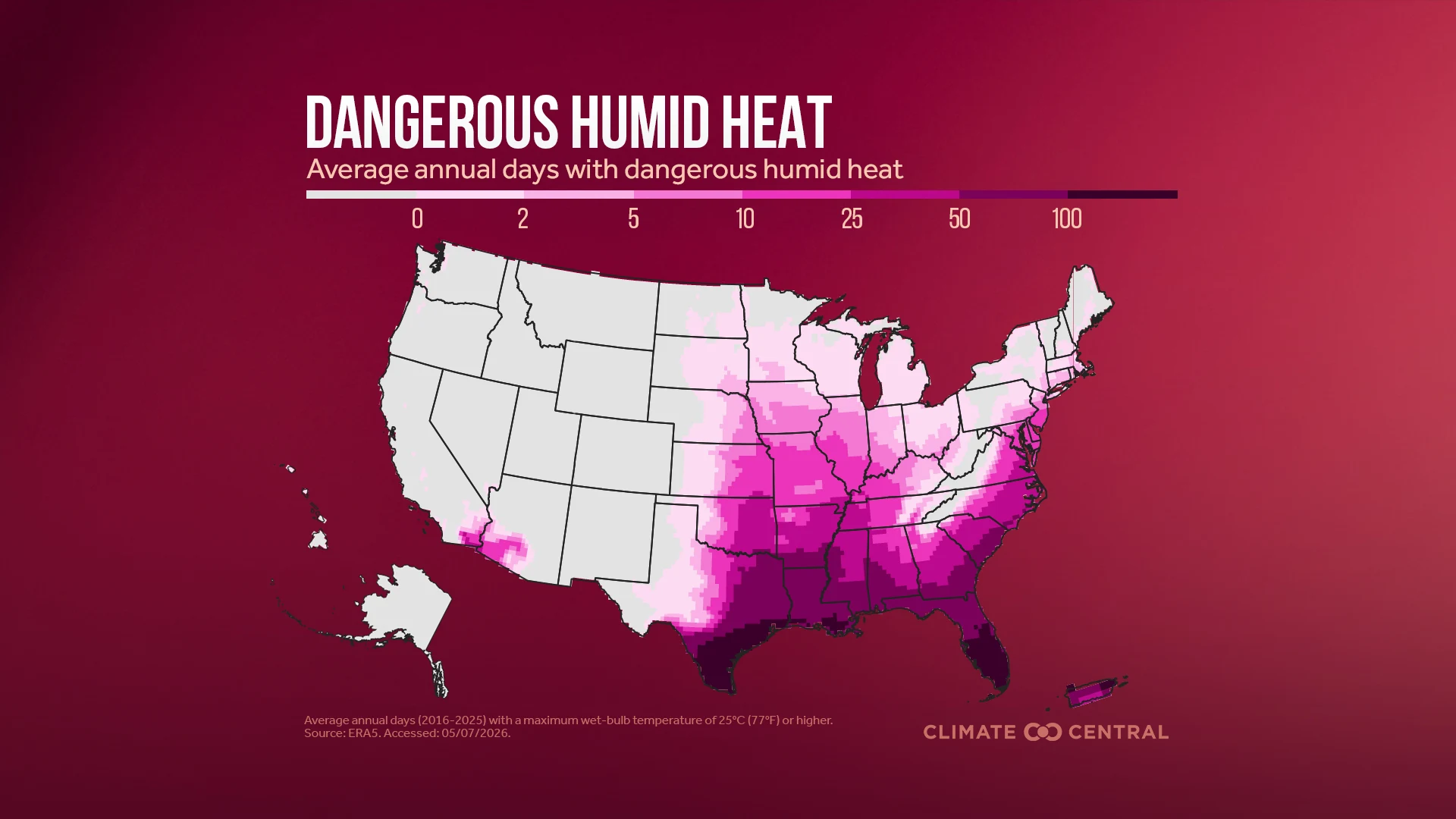
In the U.S, the South and Southeast face the highest burden of dangerous humid heat. Some areas of the Gulf Coast experience more than 100 dangerous humid heat days annually, on average, during 2016-2025.
There are many different humid heat metrics, but wet-bulb temperatures are especially relevant for health. Read the FAQs to learn more.
The wet-bulb temperature represents the lowest temperature a surface — like our skin — can reach through evaporative cooling. It tells us how effectively our bodies can cool themselves through sweating.
The cooling process works only as long as the surrounding air can absorb more moisture. When the air is fully saturated it cannot absorb more moisture. Under these conditions, evaporation of sweat stops entirely, meaning no further cooling can occur, leaving dangerous levels of heat trapped inside the body.
Under normal conditions, wet-bulb temperature is always lower than the air temperature.

CONTACT EXPERTS
To request an interview with a Climate Central expert about this analysis, please contact Abbie Veitch, aveitch@climatecentral.org.
Climate Matters © 2026 by Climate Central is licensed under CC BY 4.0
This license grants permission to use, distribute, and reproduce all text, graphics, and multimedia content published on this page in any medium, provided that Climate Central is credited per the CC BY 4.0 license.
Permission to use data and other materials published on this page is granted for non-commercial uses, commercial news purposes, and educational purposes as governed by Climate Central's Terms of Use.