
Climate Shift Index Alert•June 30, 2026
Climate change fuels extreme Fourth of July weekend heat wave across the U.S.
A dangerous heat wave will bring prolonged high temperatures, humidity, and warm overnight conditions to much of the eastern United States through the Fourth of July holiday (June 29–July 5). Human-caused climate change has significantly increased the likelihood and the intensity of this event, with the highest Climate Shift Index levels — CSI 5 — forecast across large parts of the country.
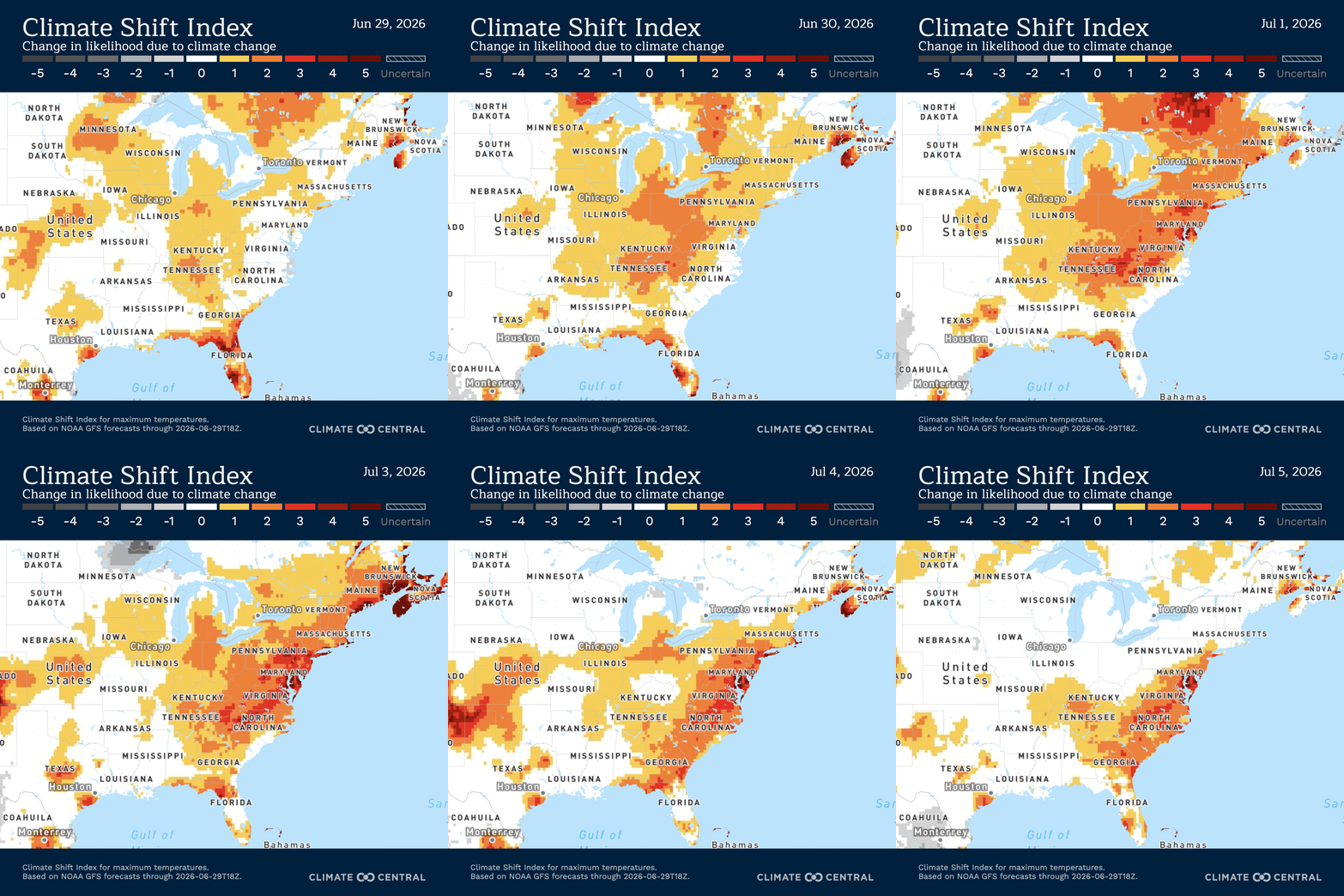
Note: This event may continue beyond July 6, 2026. Use the Global Climate Shift Index map to stay updated on heat in your region.
How unusual is the forecasted heat?
Extreme Heat:
A significant heat wave, primarily impacting the eastern half of the United States, is the result of a strong, slow-moving high-pressure system, commonly known as a “heat dome,” that traps hot and dry air.
The National Weather Service forecasts multiple days of major to extreme heat risk for cities including Chicago, St. Louis, Nashville, Detroit, Pittsburgh, Cincinnati, Charlotte, Washington, D.C., Harrisburg, and New York City.
Temperatures are forecast to exceed 90°F to 100°F (35°C to 40°C) across parts of the eastern United States from June 29 through July 5, with some locations exceeding 100°F (37.8°C) — up to 20°F (11°C) above normal for late June/early July.
All-time high temperature records may be challenged in several cities, including Philadelphia and Washington, D.C.
The heat peaks on July 2, when 70% of the contiguous United States — about 239 million people — is forecast to have daytime highs above 90°F (32°C).
About 37 million people could see daytime highs above 100°F on July 3.
Overnight Heat:
260 million people are forecast to have overnight low temperatures that won’t drop below 70°F (21°C).
In some cities across Maryland, Delaware, New Jersey, and New York, overnight lows are forecast to remain above 80°F (26.7°C).
Hot summer nights limit people’s ability to cool off and recover from hot summer days. This can lead to greater heat stress and related health risks.
Humid Heat:
Humidity is helping to drive the persistent heat. Dangerous humid heat due to climate change will impact every state across the Eastern Seaboard from June 29 through July 5.
High wet-bulb temperatures are up to 100 times more likely due to climate change.
How has climate change influenced this heat?
Climate Shift Index (CSI) levels of 5 — the highest possible — are forecast across the eastern United States from June 29 through July 5, meaning human-caused climate change made this extreme heat at least five times more likely. This signals an exceptional climate-influenced event.
From June 29 through July 5, more than 201 million people across the eastern United States will experience at least one day with maximum temperatures reaching a CSI 3 or higher, indicating a very strong influence from climate change.
Temperatures made at least three times more likely by human-caused climate change are projected to affect approximately 1,000,000 square miles (2.6 million square kilometers) — about 56% of the central and eastern U.S.
What do experts say?
Dr. Zachary Labe, climate scientist at Climate Central, said:
“Science shows that while summer heat is nothing new, climate change is pushing it beyond what we’ve experienced in the past. That includes hotter and more humid nights like those this week, which raise health risks because the body has less time to cool down and recover.”
To request an interview with a Climate Central scientist, please contact Abbie Veitch at aveitch@climatecentral.org.
How do we know climate change is influencing this heat?
The Climate Shift Index uses peer-reviewed methodology and real-time data to estimate how climate change has increased the likelihood of a particular daily temperature.