Climate Shift Index Alert•September 8, 2026
Hurricane Lowell’s torrential Hawaii rainfall linked to climate change boosted Pacific warmth
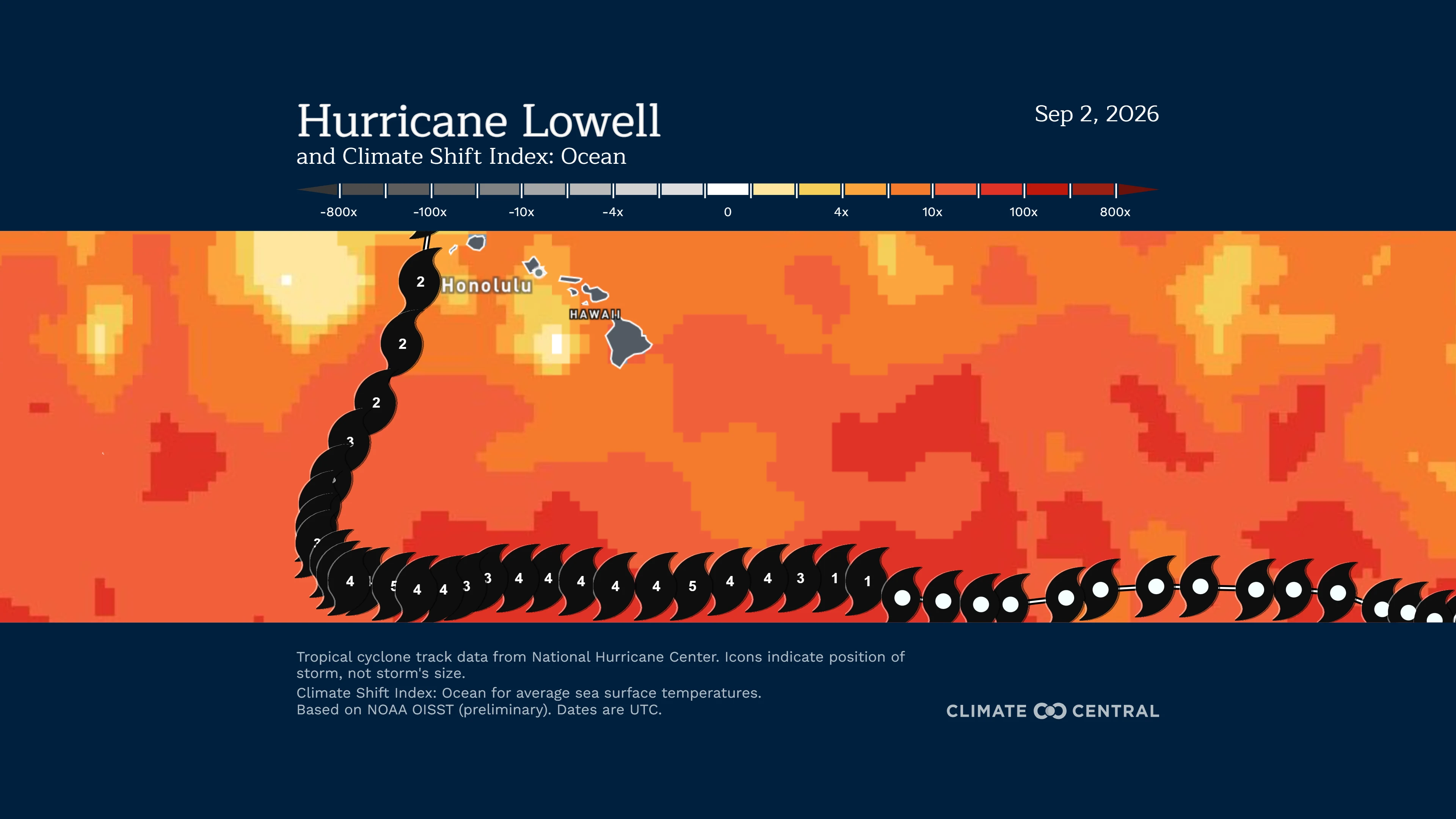
Human-caused climate change boosted the Pacific waters that Hurricane Lowell tracked over for several days, making the unusually warm sea surface temperatures along its path up to 60 times more likely. That added warmth helped to create the torrential rainfall that impacted Hawaii as Lowell approached and then made its closest approach to the islands Labor Day Monday, with totals exceeding 16 to 19 inches over Kauai. The storm washed out roads while prompting flash flood warnings the first-ever tornado watch issued for Hawaii.
Note: This is NOT a storm forecast. Visit the National Hurricane Center for the latest updates and information on how the storm is evolving.
How is climate change influencing Lowell’s rainfall?
Hurricane Lowell tracked over unusually warm Pacific waters throughout its tropical storm and hurricane lifetime. From August 27 through September 1, sea surface temperatures along its path were made up to 60 times more likely because of human-caused climate change.
Lowell became a hurricane on September 1 and briefly reached Category 5 intensity on September 2. During this period, it moved over waters about 0.7°C to 1.1°C (1°F to 2°F) warmer than normal, where sea surface temperatures this warm were generally 10 to 20 times more likely because of climate change.
After turning northward between September 5 and 6, Lowell continued north, passing just west of Kauai. As it approached and moved west of Hawaii between September 7 and 8, it crossed waters where sea surface temperatures were about 3 to 8 times more likely because of climate change.
Warmer oceans fuel more evaporation, allowing for additional moisture in the atmosphere. In a warmer world due to climate change, storms like Lowell can produce more rain, falling at faster rates.
How do we know climate change is influencing this storm?
The Climate Shift Index: Ocean is grounded in peer-reviewed methodology and high-quality data. It quantifies the influence of climate change on sea surface temperatures.
The Ocean CSI indicates how human-caused climate change has influenced the likelihood of daily sea surface temperatures occurring at nearly any location around the world’s oceans.
To request an interview with a Climate Central scientist, please contact Tom Di Liberto at tdiliberto@climatecentral.com.