Climate Shift Index Alert•July 24, 2026
Climate change is intensifying an extreme and widespread U.S. heat wave
July 24, 2026
Human-caused climate change is fueling dangerous heat across much of the United States as a prolonged heat wave spreads from the western U.S. eastward to the Midwest and South.
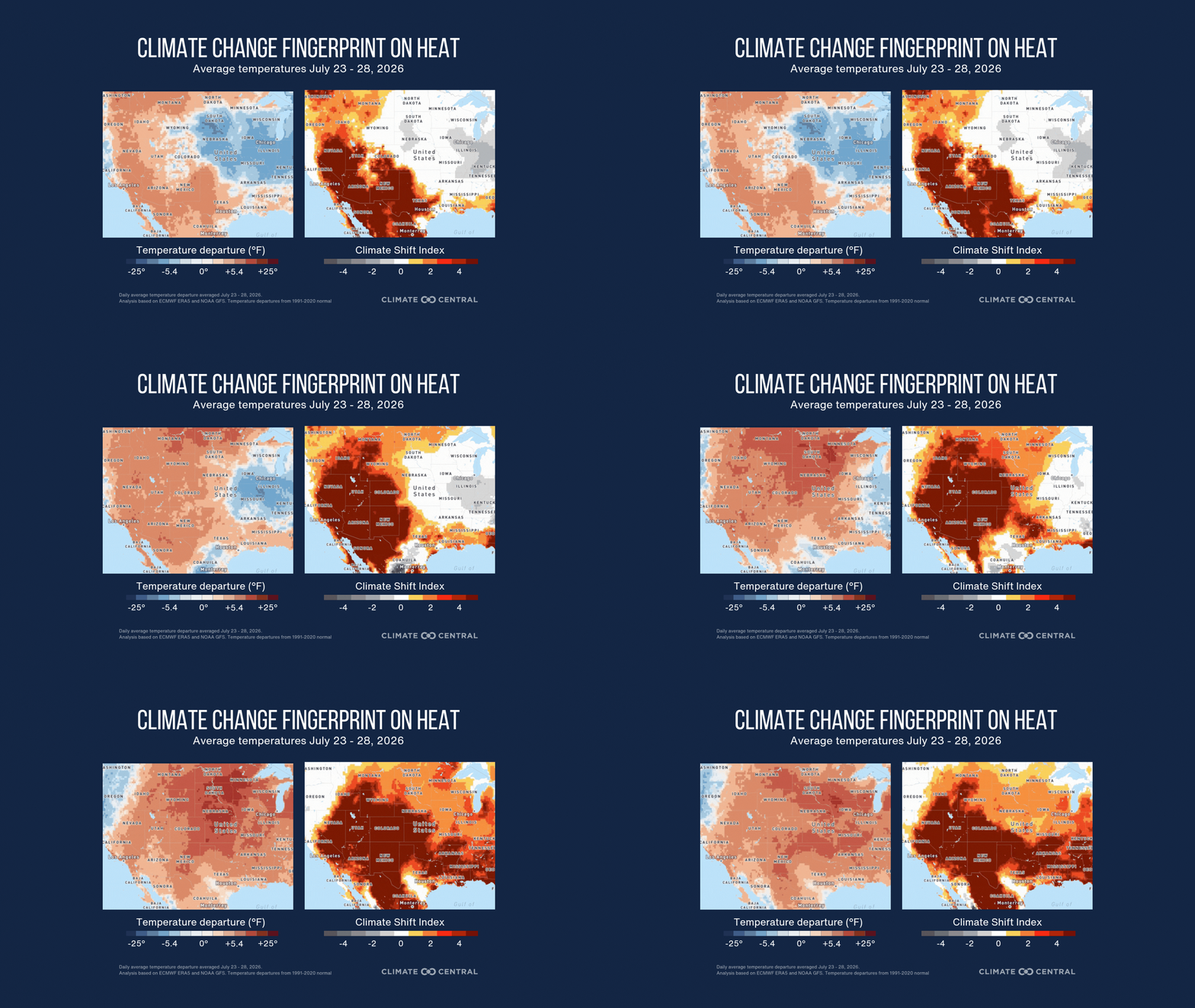
Climate Shift Index levels of 5 — the highest possible — are forecast across large areas of the country through July 28, indicating that climate change made the extreme heat at least five times more likely. Over two dozen states are forecast to experience temperatures above 100°F (38°C).
Note: This event may continue beyond July 28, 2026. Use the Global Climate Shift Index map to stay updated on heat in your region.
How has climate change influenced this heat?
Climate Shift Index (CSI) levels of 5 — the highest possible — are forecast across much of the CONUS, with the highest concentrations in the Southwest, southern Plains, and parts of the central U.S. from July 23 through July 28, meaning human-caused climate change made this extreme heat at least five times more likely. This signals an exceptional climate-influenced event.
From July 23 through July 28, more than 101 million people across the western and southern United States will experience at least one day with average temperatures reaching a CSI 5 or higher, indicating an exceptional influence from climate change.
Temperatures made at least five times more likely by human-caused climate change are projected to affect approximately 1.5 million square miles (3.9 million square kilometers) — about 50% of the CONUS — an area larger than India.
How unusual is the forecasted heat?
Heat dome brings dangerous heat
From July 23 through July 28, a heat dome building across the United States will drive widespread hot and humid conditions. According to NWS, Moderate to Major HeatRisk is already present across parts of the southern half of the country and forecast to expand over much of the country, with areas of Extreme HeatRisk forecast to develop over the weekend and persist into next week.
Currently, 60.2 million people are under heat alerts — this number is expected to grow over the weekend and into next week.
Daytime temperatures
Widespread daytime heat is forecast across much of the contiguous U.S., with the hottest conditions focused across the Southwest, southern Plains, and parts of the central U.S. High temperatures above 90°F (32°C) are expected across a broad swath of the West, Plains, Midwest, and South, while many areas in the hottest portion of the event are forecast to reach or exceed 100°F (38°C).
Across much of the western U.S., daytime highs are forecast to be about 4°F to 11°F (2 to 6°C) above normal, while parts of the northern and north-central U.S. are expected to reach about 10°F to 20°F (6°C to 11°C) above normal.
Over the weekend, Southern California and western Arizona are forecast to reach up to 117°F (47°C). Similar extreme heat, with highs between 109°F and 116°F (43°C and 46°C), is expected to affect parts of Nebraska, South Dakota, Minnesota, Iowa, and Oklahoma from the weekend into next week.
In those areas, daytime temperatures are forecast to reach roughly 20°F to 30°F (11°C to 17°C) above normal for this time of year.
Overnight Lows
Overnight lows of 77°F to 84°F (25°C to 29°C) will extend from the South into the central Plains and Midwest, reaching 87°F (31°C) in Oklahoma and 89°F to 94°F (32°C to 34°C) in Southern California and western Arizona.
Temperatures will be 3-11°F (2-6°C) above normal across much of the West and South, and up to 20°F (11°C) above normal in Nebraska, southern South Dakota, and northern Kansas.
Humid Heat
Dangerous humid heat — wet-bulb temperatures above 77°F (25°C) — is forecast across parts of the southern United States during this time. The affected area initially stretches from Texas and the lower Mississippi Valley across the Gulf Coast and Southeast, including Florida, before expanding northward through the central Plains and Midwest over the weekend and early next week.
From July 25 through 28, dangerous humid heat extends from Texas and Louisiana north into parts of the Dakotas, Minnesota, and Wisconsin, and east through the Mississippi Valley, Ohio Valley, and Southeast.
How do we know climate change is influencing this heat?
The Climate Shift Index uses peer-reviewed methodology and real-time data to estimate how climate change has increased the likelihood of a particular daily temperature.
To request an interview with a Climate Central scientist, please contact Abbie Veitch at aveitch@climatecentral.org.