KEY FACTS
New Climate Central analysis shows that human-caused climate change is the leading driver of spring warming trends in 98% of 241 major U.S. cities analyzed from 1970-2025.
Unusually warm spring days now happen more often in nearly every city analyzed. Some 84% of cities now experience at least one more week’s worth of warmer-than-normal spring days than in the 1970s.
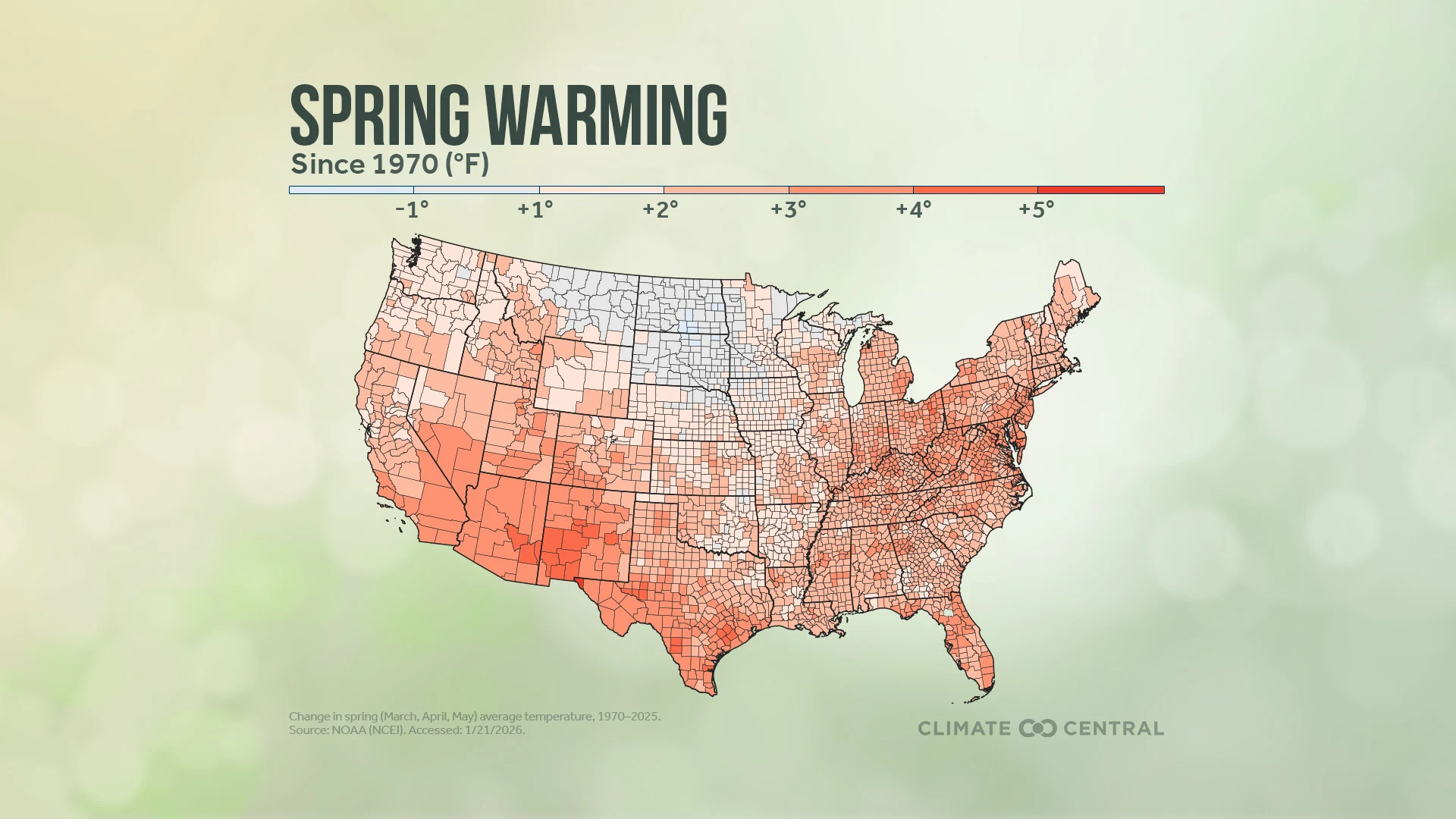
Spring has warmed the most across the southern tier of the country, particularly in the Southwest.
Spring warming can prolong seasonal allergies, worsen wildfire risk, and limit snow-fed water supplies.
This Climate Matters analysis is based on open-access data from the National Oceanic and Atmospheric Administration (NOAA). See Methodology for details.
Warming springs affect allergies, wildfire risk, and water supplies
Like all other seasons, spring is getting warmer across the U.S. Spring warming can prolong seasonal allergies, worsen wildfire risk, and limit snow-fed water supplies.
Explore spring reporting resources covering these and other effects of spring warming.
Climate Central analyzed average spring (March, April, May) temperature data from 241 major U.S. cities and quantified the influence of human-caused climate change on each city’s warming trend from 1970 to 2025. See Methodology for details.
Climate change is driving spring warming in 98% of U.S. cities analyzed
Spring warming has been widespread. Spring temperatures warmed in 98% (236) of the 241 U.S. cities analyzed.
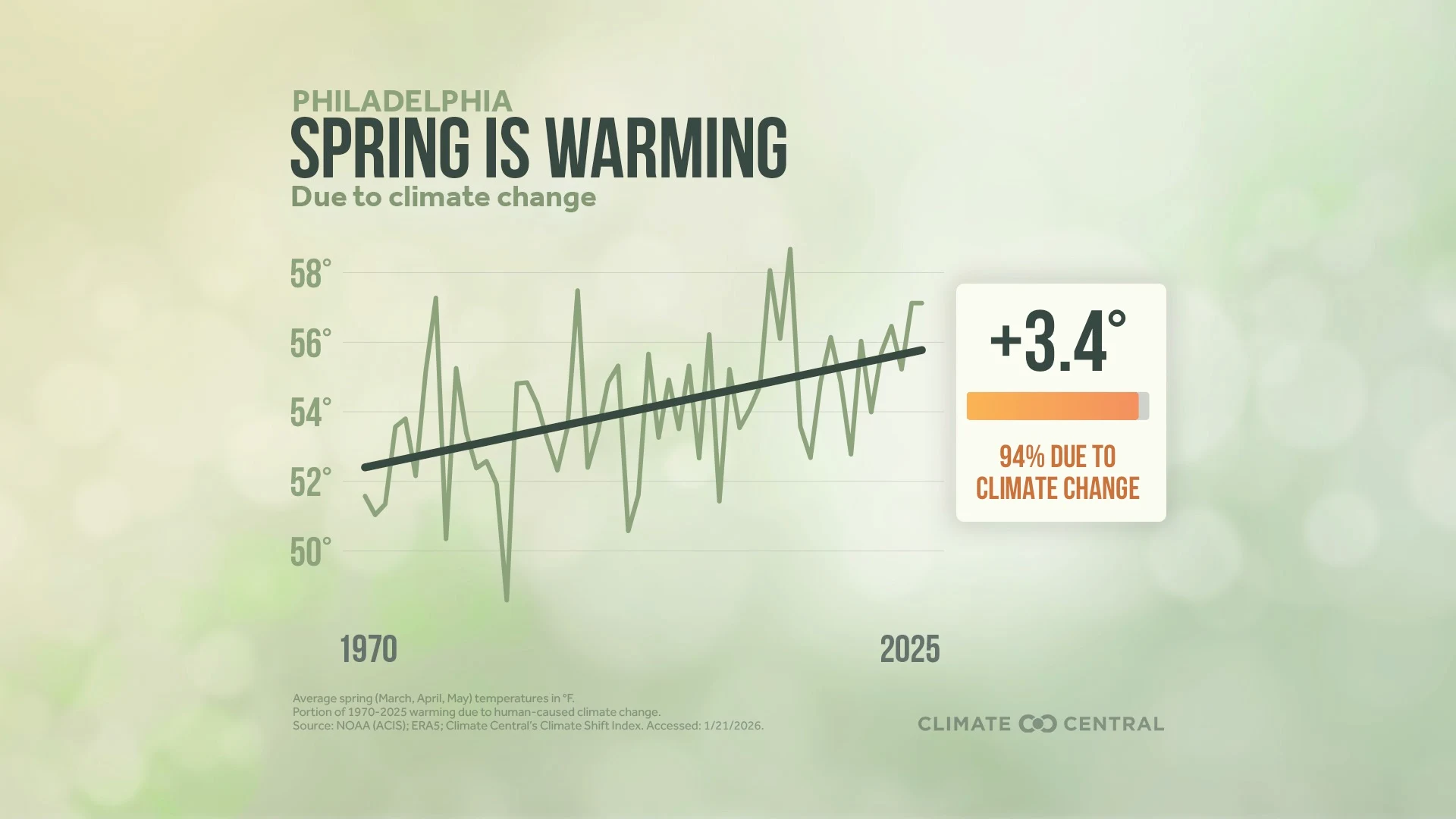
From 1970-2025, spring warmed by 2.6°F on average across these 236 cities.
On average, spring has warmed the most in cities across the southern tier of the country, led by the Southwest (3.4°F), South (2.9°F), and Southeast (2.8°F).
The top five spring warming locations were: Reno, NV (6.9°F); El Paso, TX (6.4°F); Las Vegas, NV (6.2°F); Tucson, AZ (5.8°F); and Albany, GA (5.5°F).
Spring warming is mostly human-caused. New attribution science analysis used Climate Central’s Climate Shift Index to directly assess the influence of human-caused climate change on spring warming trends in the same 241 U.S. cities since 1970.
In nearly every city analyzed (98%, or 235 cities), human-caused climate change was the leading cause of spring warming — accounting for at least 50% of observed warming since 1970. Secondary drivers of spring warming include natural climate variability (for example, the El Niño-Southern Oscillation) and other unresolved processes (for example, weather station relocations since 1970).
In the majority of cities analyzed (69%, or 167 cities) all of the spring warming since 1970 can be explained by human-caused climate change.
In only five cities (2% analyzed), spring temperatures have cooled since 1970. In these locations, natural climate variability is the leading cause of observed spring temperature trends.
Human-caused climate change is mainly due to the heat-trapping carbon pollution that results from burning fossil fuels for transportation, electricity, heating and cooling, and more.
Download data for all 241 cities to see the influence of climate change on spring warming near you.
More unusually warm spring days
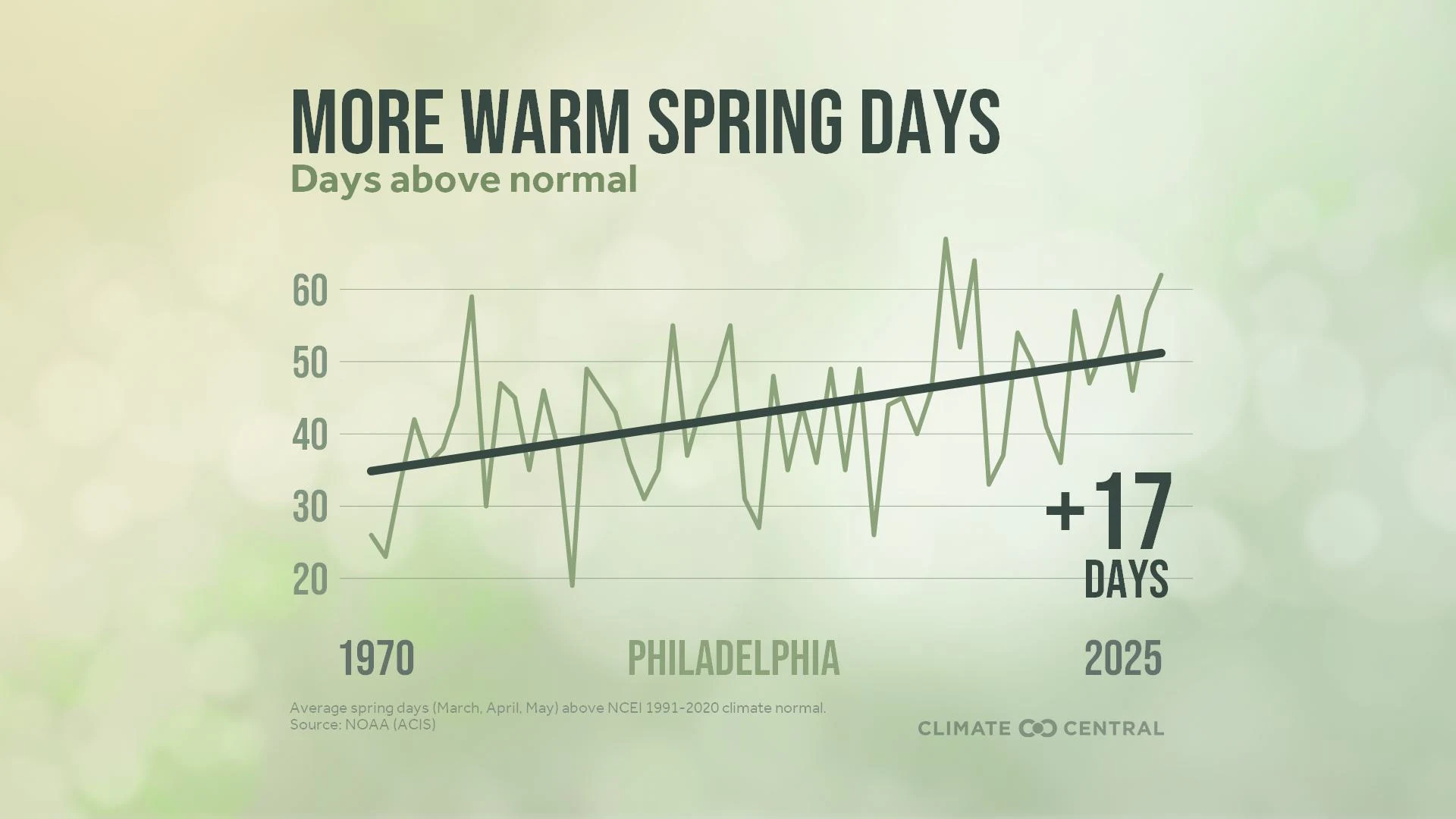
The warming season is also reflected in the growing number of spring days that are warmer than normal based on local temperatures during 1991-2020.
Since 1970, the average number of warmer-than-normal spring days has increased in 238 (99%) of the 241 locations analyzed.
The majority of locations (84%, or 203) now experience at least seven additional warmer-than-normal spring days than they did in the early 1970s.
The rise in warmer-than-normal spring days was largest among cities in the Southwest (19 more days on average), Southeast (16 more days on average), and South (15 more days on average).
The cities with the largest increase in warmer-than-normal spring days since 1970 were: El Paso, TX (39 more days); Tampa, FL (38 more days); Reno, NV (37 more days); Tucson, AZ (34 more days); and Albany, GA (34 more days).
Spring Reporting Resources #
Spring warming can…
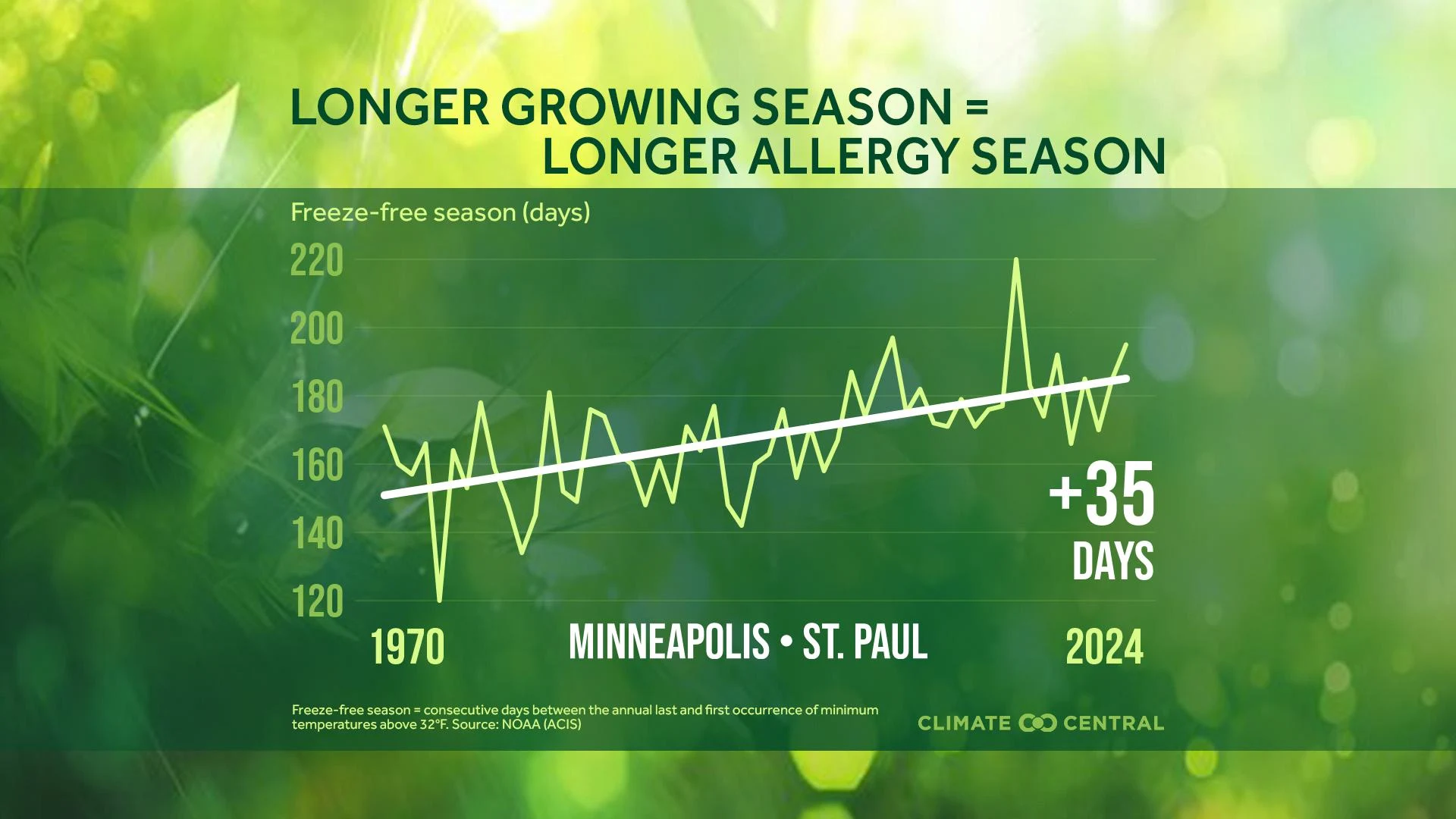
Prolong seasonal allergies. Warmer, shorter winters mean an earlier spring thaw and later fall freeze. This warming trend gives plants more time to grow and release allergy-inducing pollen earlier in spring and later into fall. That’s bad news for people with seasonal allergies — about one-quarter of adults and one-in-five children in the U.S.
Worsen wildfire risk. Fire weather — a combination of high heat, low humidity, and strong winds — helps wildfires start and spread, increasing the health risks for those exposed to wildfire smoke. Climate Central analysis indicates that spring is the fastest-growing fire weather season (1973-2024) in nearly every major U.S. region, particularly in the Southwest and West.
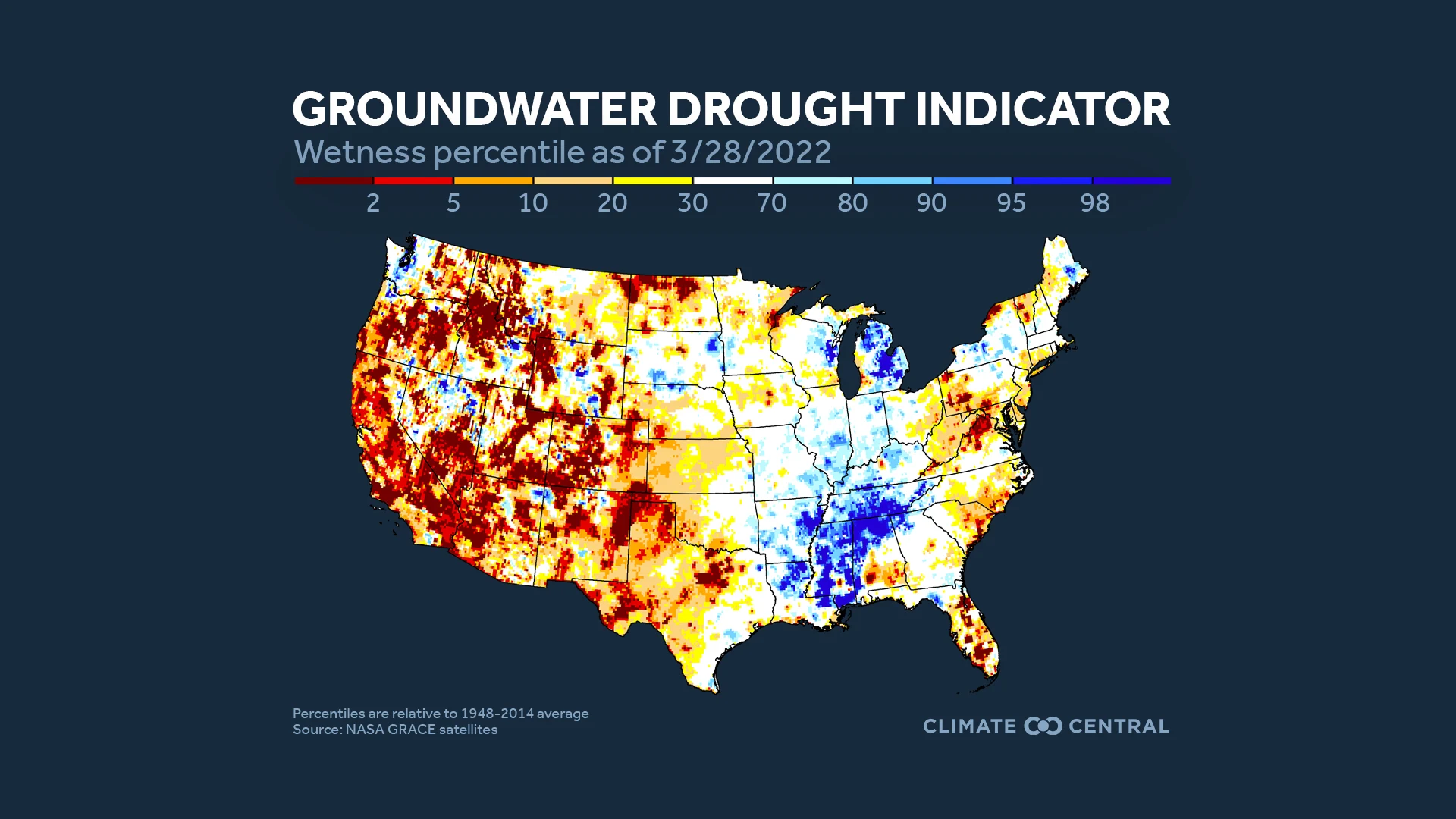
Stress western water supplies. Spring meltwater and runoff is a critical source of water that refills reservoirs, irrigates crops, and helps meet peak water demand across the western U.S. Warming winters can reduce snowfall and mountain snowpack, while warming springs can contribute to earlier snowmelt. The water deficit brought by earlier spring snowmelt has critical consequences for drinking water supplies and farm irrigation.
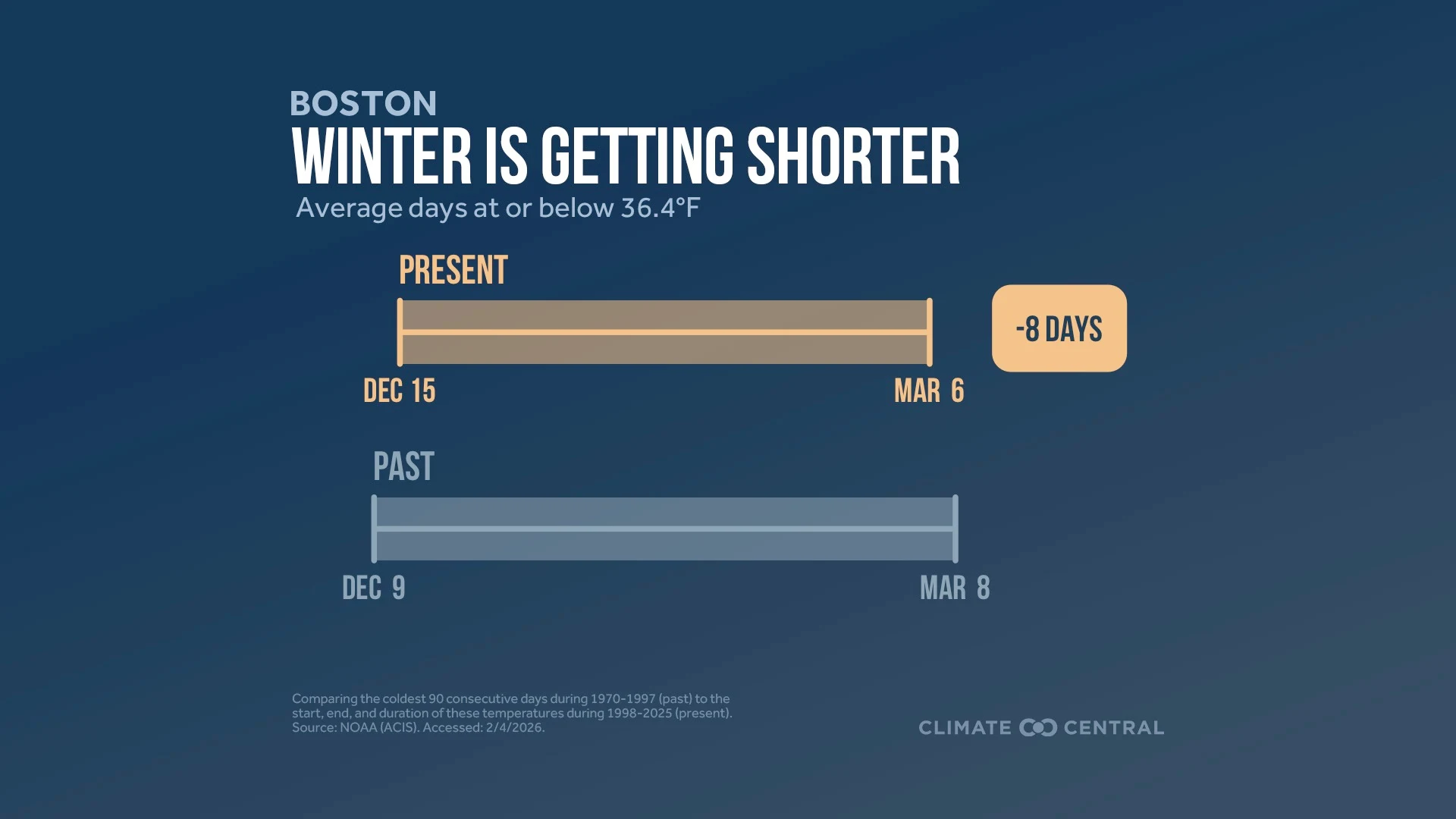
Shorten the winter season. As spring temperatures rise, warm days also arrive sooner – eroding the number of winter days and shrinking the coldest time of year.
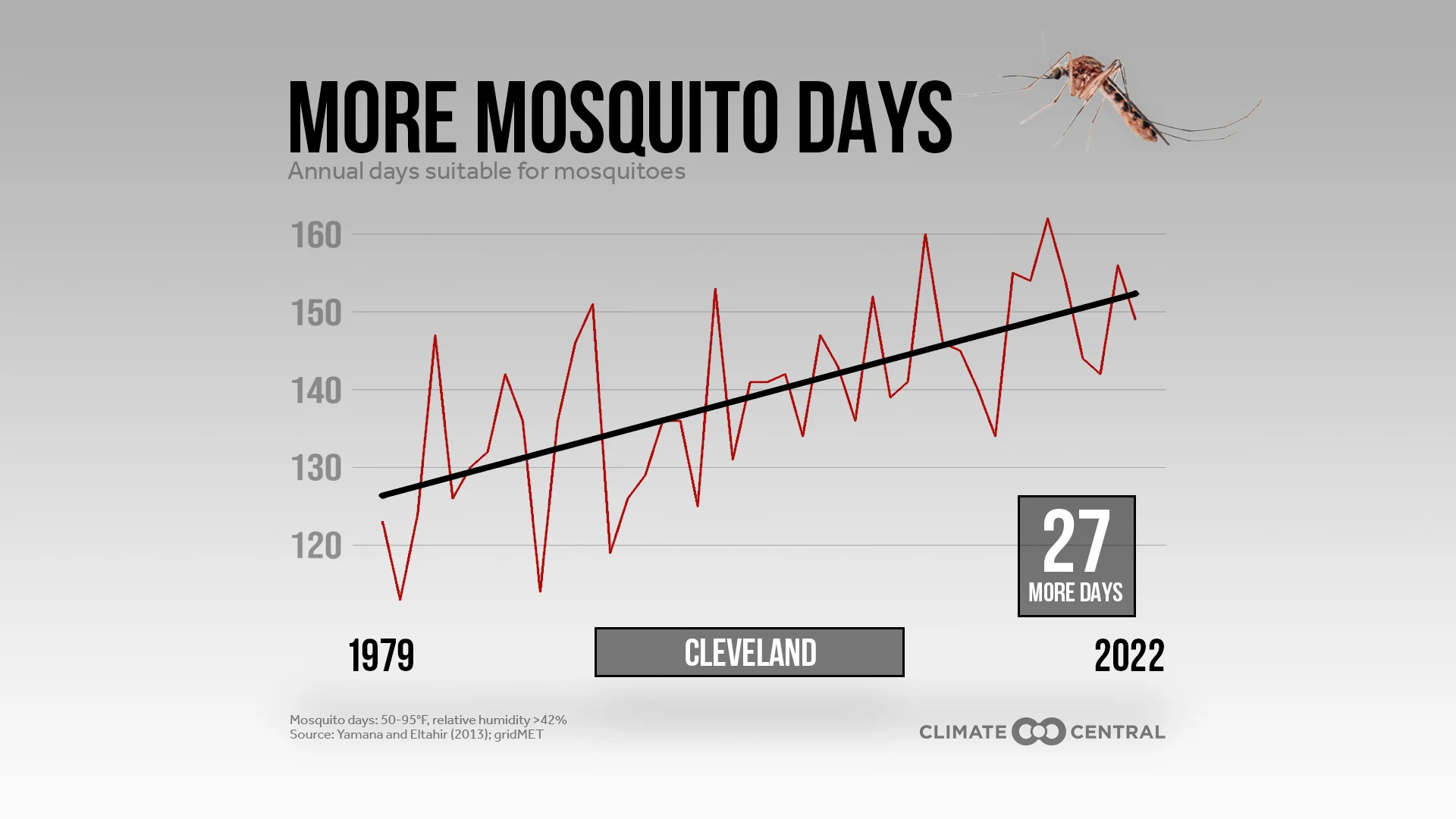
Boost disease-carrying pests. Cold winters and springs can keep the populations of disease-carrying pests like mosquitoes in check. But warmer winters and shoulder seasons can extend mosquito seasons and worsen pest-related health risks.
Lengthen growing seasons. Spring is not only warming but also shifting. As warm weather cuts into colder months, growing seasons last longer. A longer growing season can bring opportunities and challenges for agriculture, depending on the location, ecosystem, and other factors such as water supply.
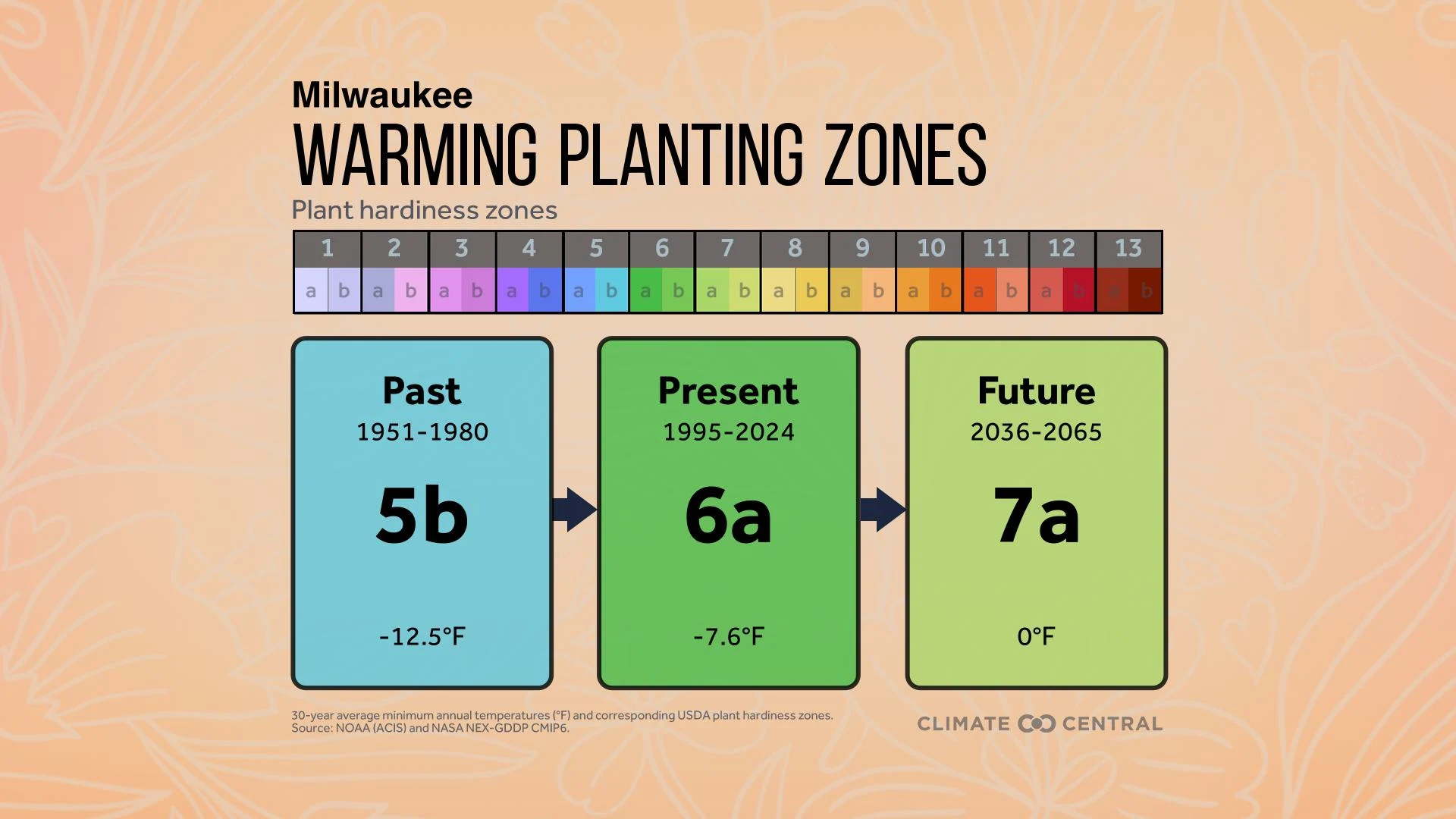
Shift planting zones that guide farmers and gardeners. As the U.S. warms, plant hardiness zones are shifting north, changing which plants can grow and thrive in different parts of the country. These trends are projected to continue throughout this century with continued high levels of heat-trapping pollution.
LOCAL STORY ANGLES
What’s the status of spring near you?
The USA National Phenology Network provides a suite of tools to track the status of spring across the country including historical, real-time, and forecasted phenology maps. These tools can be used to forecast invasive species and pests, anticipate allergy outbreaks, and inform agricultural calendars.
How is allergy season in your area affected by warmer springs?
Explore Climate Central’s analysis of long-term changes in the freeze-free growing season in 203 U.S. cities. Find out how your city ranked in the Asthma and Allergy Foundation of America’s annual report on the top 100 U.S. Allergy Capitals. Search for a local allergen report or sign up for pollen level alerts through the National Allergy Bureau.
See the influence of climate change on warm spring days near you.
Climate Central’s Climate Shift Index map tool quantifies the influence of climate change on daily temperatures across the U.S. and around the globe in real time.
CONTACT EXPERTS
To request an interview with a Climate Central expert about this analysis, please contact Abbie Veitch, aveitch@climatecentral.org.
FIND EXPERTS
Submit a request to SciLine from the American Association for the Advancement of Science or to the Climate Data Concierge from Columbia University. These free services rapidly connect journalists to relevant scientific experts.
Browse maps of climate experts and services at regional NOAA, USDA, and Department of the Interior offices.
Explore databases such as 500 Women Scientists, BIPOC Climate and Energy Justice PhDs, and Diverse Sources to find and amplify diverse expert voices.
Reach out to your State Climate Office or the nearest Land-Grant University to connect with scientists, educators, and extension staff in your local area.
METHODOLOGY
Average temperatures and days above normal were calculated for each meteorological spring (March, April, May) from 1970 to 2025 using data obtained from the Applied Climate Information System (ACIS), which is developed, maintained, and operated by NOAA’s Regional Climate Centers. Spring days above normal are defined as the number of days with average temperatures above the 1991-2020 NOAA/NCEI climate normals.
The map of the contiguous U.S. shows the change in average spring temperatures by county since 1970 with data from NOAA/NCEI’s Climate at a Glance. Note that data for Connecticut is displayed by county because NCEI data are not yet available for Connecticut’s planning regions.
Climate Central's local analyses typically include data for 247 U.S. weather stations. For reported data summaries based on linear regression, however, only 241 stations are included in this brief due to data completeness measures that were not met by six stations: Bend, OR; Hazard, KY; Jefferson City, MO; Jonesboro, AR; Twin Falls, ID; and Wheeling, WV. Graphics for 26 locations with spring warming trends greater than -1.0°F and less than 1.0°F don’t include a callout value representing the total change over 1970-2025; data for these locations is available in the full data file.
To estimate the spring warming (1970-2025) attributable to human-caused climate change in each city, we used Climate Central's Climate Shift Index system to compare two statistical models of spring temperature distributions (fit to ERA5 data): one calibrated to today's climate (with ~1.3°C of global warming above pre-industrial levels) and one representing a world without human-caused warming (0°C above pre-industrial levels). The difference between these two modeled temperature distributions is the expected spring warming attributable to human-caused climate change.
We then compare the expected spring warming due to human-caused climate change to the observed spring warming since 1970 from weather station data (ACIS) to calculate the percent of observed warming that is due to human-caused climate change.
Based on these data, the 241 cities analyzed fell into one of four categories based on whether and how natural climate variability and other unresolved processes (for example, weather station relocations since 1970) affected the observed spring warming in each city. Natural climate variability reflects variations in climate driven by processes other than human influence.
Across these four categories, the amount of warming due to human-caused climate change was:
Less than the observed warming (69 cities). In these locations, natural climate variability amplified the warming attributable to human-caused climate change.
Greater than the observed warming (163 cities). In these locations, at least 100%all of the observed spring warming since 1970 can be explained by human-caused climate change; however, natural variability dampened the expectedtotal warming due to human-causedwe'd expect from climate change. For simplicity, graphics for these 163 locations report that 100% of spring warming is due to human-caused climate change. For exact estimates, please download the full data file.
Equal to the observed warming (4 cities). In these locations, the magnitude of observed spring warming is equal to what we’d expect based on human-caused climate change.
Opposite in sign to observed warming (5 cities). All of the cities in this category have experienced spring cooling since 1970. In these locations, natural variability has outpaced any warming that may have occurred due to human-caused climate change.