Climate Shift Index
Revealing the influence of climate change on local weather around the globe, every day.

Climate Matters•December 3, 2025•Reuse this content
It’s possible to make explicit connections between climate change and some types of weather events we experience, thanks to decades of scientific advancements.
Event attribution science helps us measure how much more likely, frequent, or intense specific weather events are because of human-caused climate change.
Some extreme weather events, like heat waves, clearly and consistently show climate change’s fingerprint. For other types of extreme weather, making the connection is more complex, but not impossible.
Climate Central’s Climate Shift Index uses attribution science to quantify the influence of climate change on daily temperatures, daily sea surface temperatures, and hurricane wind speeds.
Use these materials — including a new table of ready-to-use messages about multiple types of extreme weather — to learn about attribution science and the kinds of statements we can confidently make about the role climate change plays in shaping our weather.
Humans have increased Earth’s temperature, mainly by burning fossil fuels like coal, oil, and methane gas. The resulting heat-trapping pollution has caused global average temperatures to rise about 1.3°C (2.2°F) above pre-industrial (1850-1900) levels.
Human-caused climate change leaves a “fingerprint” on weather that scientists can distinguish from the signals of natural climate variability. This fingerprint of human-caused climate change can be identified and measured in daily weather and extreme events around the world.
Event attribution science is the branch of climate science that studies how much human-caused climate change is shaping our weather.
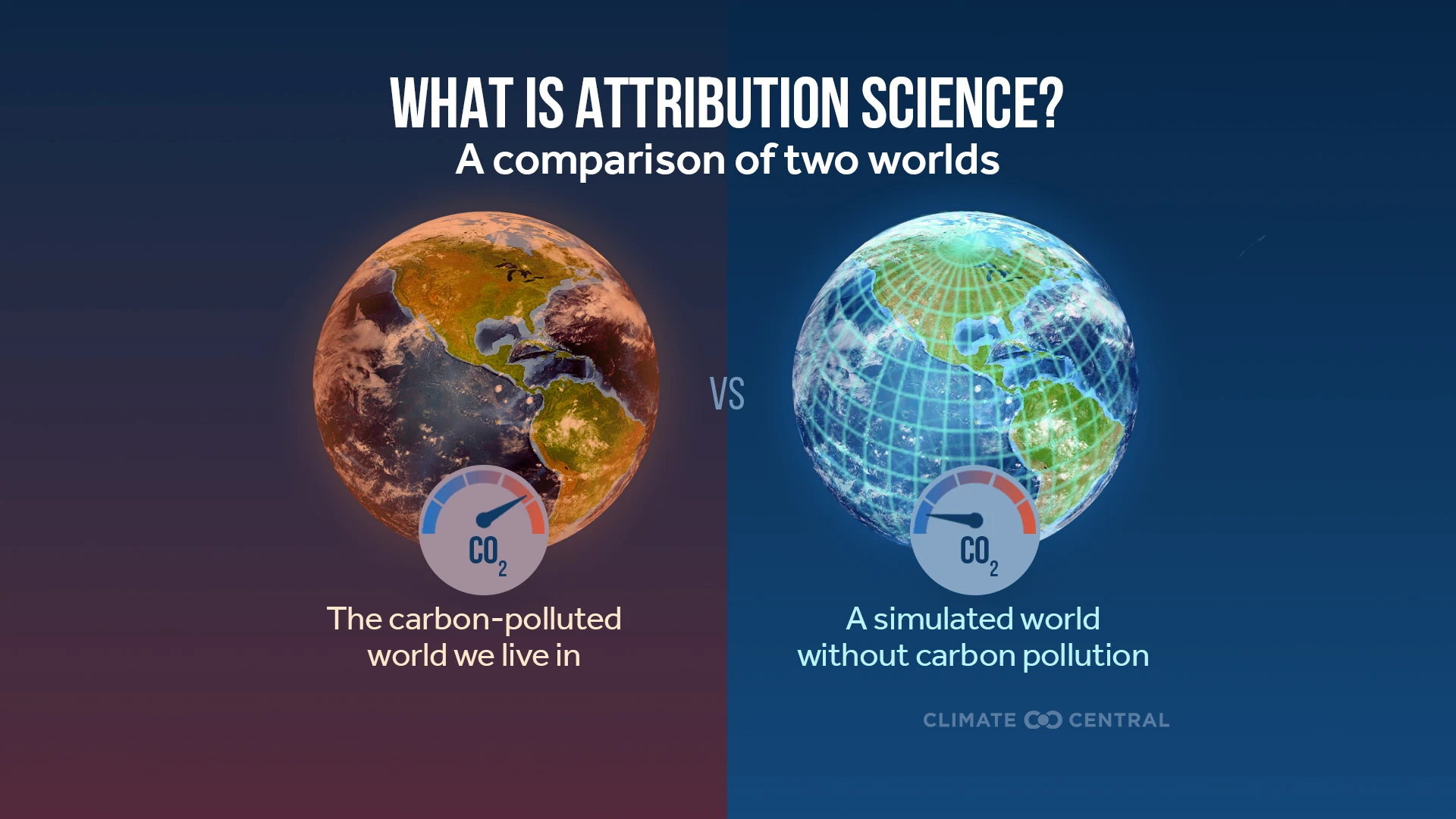
Using advanced computer models along with directly observed and measured weather data, scientists can compare the carbon-polluted world we live in today to a simulated cooler world without that heat-trapping pollution.
By comparing these two simulated worlds, scientists can measure how much more likely, frequent, or intense certain weather events have become due to human-caused climate change.
We know how much heat-trapping pollution is in the atmosphere from humans burning fossil fuels. Therefore, scientists can use computer models that include physics and chemistry to simulate our world with or without that pollution. Simulations without human-caused carbon pollution are called counterfactual scenarios.
Scientists can then determine the likelihood of a certain weather event in both our current carbon-polluted climate and the unpolluted simulated climate. Comparing the results tells us how much more (or in some cases, less) likely or intense an event is due to climate change. This is known as event attribution or extreme event attribution.
Event attribution can be used to calculate the influence of climate change on daily temperatures as well as its contribution to extreme events like hurricanes or heat waves.

Some types of extreme weather clearly show climate change’s fingerprint. For others, there may be a known connection between a type of extreme weather and climate change, but scientists haven’t yet been able to measure how much climate change contributes to specific events.
For temperature-related events, like dangerous heat waves, scientists can almost always measure the influence of climate change, and with high confidence. However, for severe weather like thunderstorms or tornadoes, scientists can’t yet confidently quantify the climate change fingerprint for specific storms (though it’s an active area of research).
With complex weather events (like hurricanes) or events that involve a combination of weather and other factors (like wildfires), making the connection is more difficult, but not impossible.

There’s increasingly robust evidence that helps scientists detect the climate change fingerprint in extreme weather events. The historical climate and weather datasets that attribution scientists rely on grow longer each year. As this science advances, as climate models improve, and as climate change has a stronger influence on weather, the effects are easier to isolate and measure. Over time, we will be able to make the connection with more types of weather, more easily and with greater confidence.
We can confidently make broad statements about the influence of carbon pollution on certain hazards that comprise extreme weather events like heat, heavy rainfall, or fire weather.
Global warming brings higher average temperatures, and more frequent and intense heat waves. On the flip side, it means less frequent or extreme cold. A warmer atmosphere can hold more moisture, which leads to more frequent extreme rainfall on average. This thirstier atmosphere pulls more water from streams, soils, and plants — causing or worsening drought and fueling wildfire risk.
When an attribution study has been done for an event, we can make more specific and quantified statements, such as:
“The heat wave that hit the western U.S. in June 2025 was made two to five times more likely due to human-caused climate change.”
“Climate change strengthened Hurricane Melissa’s top wind speed by about 10 mph, and increased its potential damages by up to 50%.”
Climate Central’s factsheet, Statements You Can Make About Climate Change and Extreme Weather, serves as a quick reference for key messages about different types of extreme weather events and attribution to climate change.
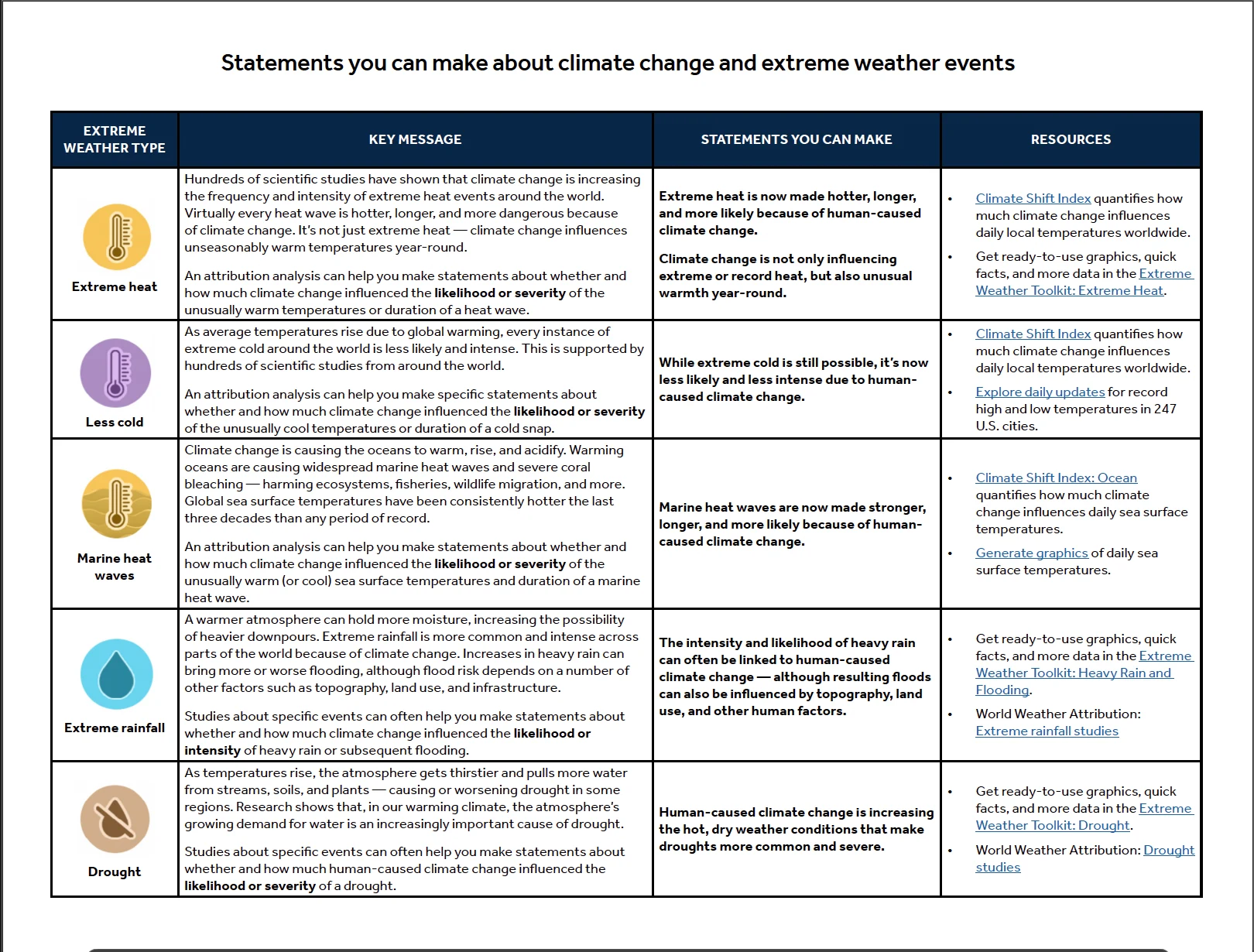
Attribution science doesn’t tell us if climate change caused an extreme weather event. Rather, it helps answer questions about whether and how much human-caused climate change affected the event’s intensity or likelihood.
Heat waves, hurricanes, wildfires, and other disasters would happen even in a world without climate change. Many factors, including natural variability, affect the frequency and severity of extreme weather. Human-caused climate change is just one factor — albeit an important one — that influences these events.
With some extreme weather events, such as the extraordinary June 2021 heat wave in western North America, attribution science is able to tell us that the influence of climate change was so strong that the event would have been virtually impossible in a world without climate change.
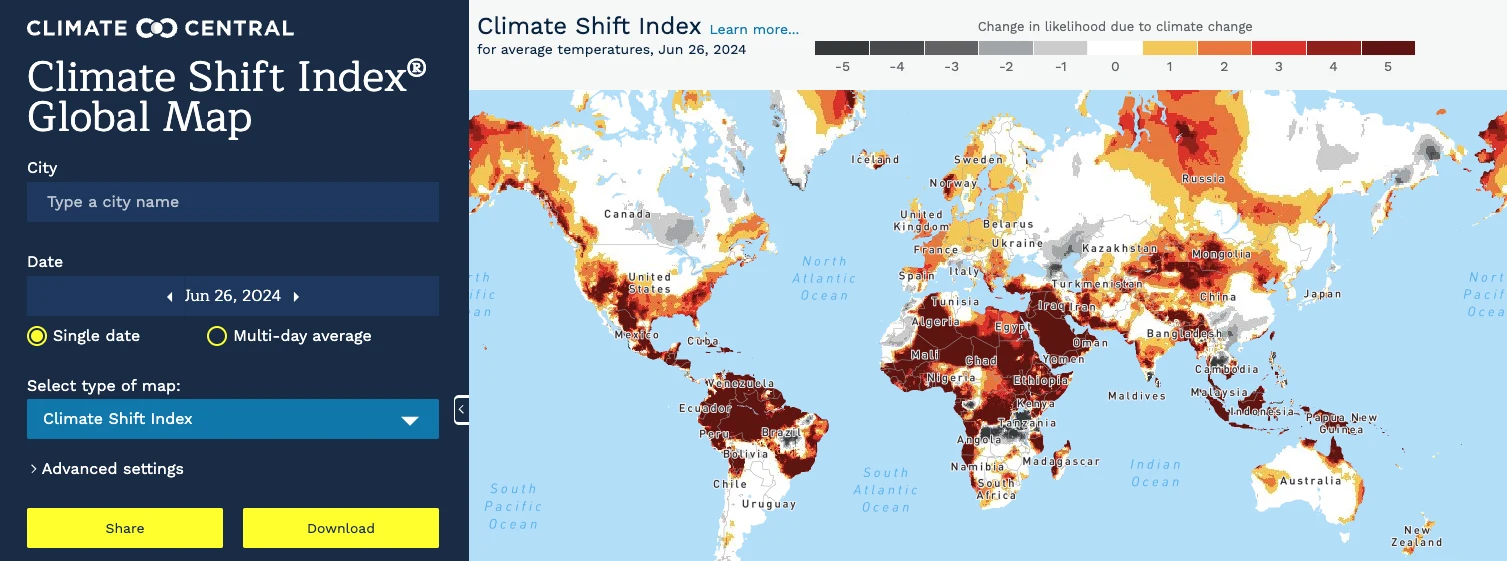
Climate Central has been working in attribution science for more than a decade. In 2022, we launched Climate Shift Index (CSI) to quantify the influence of climate change on local daily temperatures around the world. The index ranges from -5 to +5 with positive levels indicating temperatures that are becoming more likely due to climate change (negative scores indicate conditions that are becoming less likely).
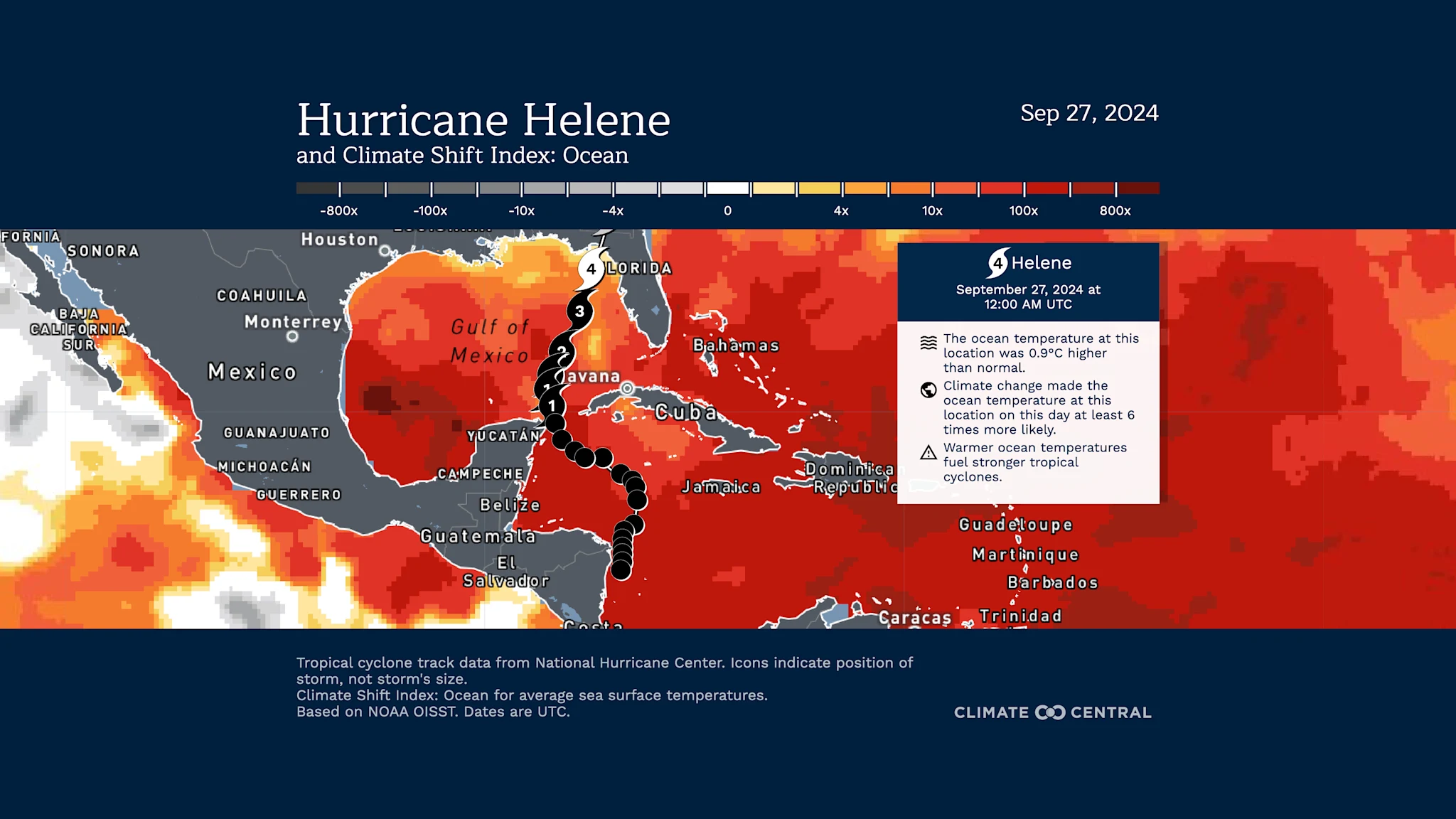
Ocean CSI (launched in 2024) is based on the same scientific framework as the CSI, but it’s applied to sea surface temperatures rather than air temperatures. Oceans store at least 90% of the extra heat trapped on the planet from burning fossil fuels. This steady heating, combined with the fact that sea surface temperatures have lower day-to-day variability compared to air temperatures, makes the climate change fingerprint on ocean temperatures even easier to isolate. As a result, the range for the Ocean CSI index extends from -1000 to +1000.
Both use categorical scales, defined by the ratio of how likely a temperature is in today’s carbon-polluted climate compared to how likely that temperature would be in a climate without that pollution.
Climate Central’s Tropical Cyclone CSI (launched in 2025) is a hurricane attribution resource that calculates the increase (or decrease) in a hurricane’s wind speeds because of ocean waters warmed by climate change (using the Ocean CSI) and tropical climate warming in the atmosphere.
Climate Central also works closely with World Weather Attribution (WWA) — a collective of scientists that conducts rapid event attribution analyses on extreme weather events around the world.
Attribution science is an established discipline, grounded in decades of rigorous, peer-reviewed research. The earliest attribution research was published in the 1990s, and the first event attribution study was published in 2004. Each decade has brought major scientific advancements to the field.
The United Nations Intergovernmental Panel on Climate Change (IPCC) recognizes attribution science as a crucial tool for understanding and assessing climate change impacts.
In this growing field, there are variations in methods and definitions — which is expected as science advances. This means different studies may yield different results about the role of climate change in an event. Multiple studies reaching similar conclusions means that we can have a high degree of confidence that climate change influenced the event.
In addition to event attribution, three other subfields contribute to our understanding of how human-caused climate change influences our world. These are:
Trend attribution, the earliest form of attribution science, provides insight into how much climate change influences long-term global trends in temperature changes, precipitation shifts, and sea level rise.
Source attribution allows scientists to trace carbon pollution to its source and quantify how much specific industries or entities contribute to climate change, extreme events, and related impacts. These studies provide critical scientific foundations for climate litigation and accountability.
Impact attribution helps quantify the direct socio-economic and health-related consequences of climate change. This could mean, for example, measuring how much more land burned in a wildfire because of climate change, or how much climate change increased damages from a hurricane.
Attribution science not only reveals current impacts of climate change on extreme weather — it also helps scientists predict future changes and consequences of carbon pollution.
Attribution science helps make the connection between climate change and the consequences we experience. It has implications for public understanding of climate change, future research, city planning, legal and financial accountability, and environmental policy.
If we know when and how much climate change affects extreme weather, we can better understand the costs of continued carbon pollution and make informed decisions now to create a safer, more resilient world for our kids, ourselves, and the planet we call home.
Find more guidance on reporting about climate change and extreme weather. Review WWA’s extreme weather reporting guide for journalists.
See attribution science in reporting. View examples of how journalists and meteorologists have incorporated the Climate Shift Index into their reporting.
Learn more about attribution science. Read about the history and evolution of attribution science at Climate Central, or more broadly from the Union of Concerned Scientists.
Review attribution studies from around the world through WWA and Carbon Brief.
The CSI system provides tools, data, custom maps, and local alerts to answer this question in real time. Here are three ways to use the CSI:
Use the tools and download free graphics. Climate Central’s Climate Shift Index map shows which parts of the world are experiencing climate change-driven temperatures, every day. Explore the global CSI map for today, tomorrow, and any day in the recent past.
Access KML files to create custom CSI maps. Get access using the panel links in the map tool and review the KML reference guide.
Sign up for alerts. Sign up here to receive custom email alerts when significant CSI levels are detected in your local area.
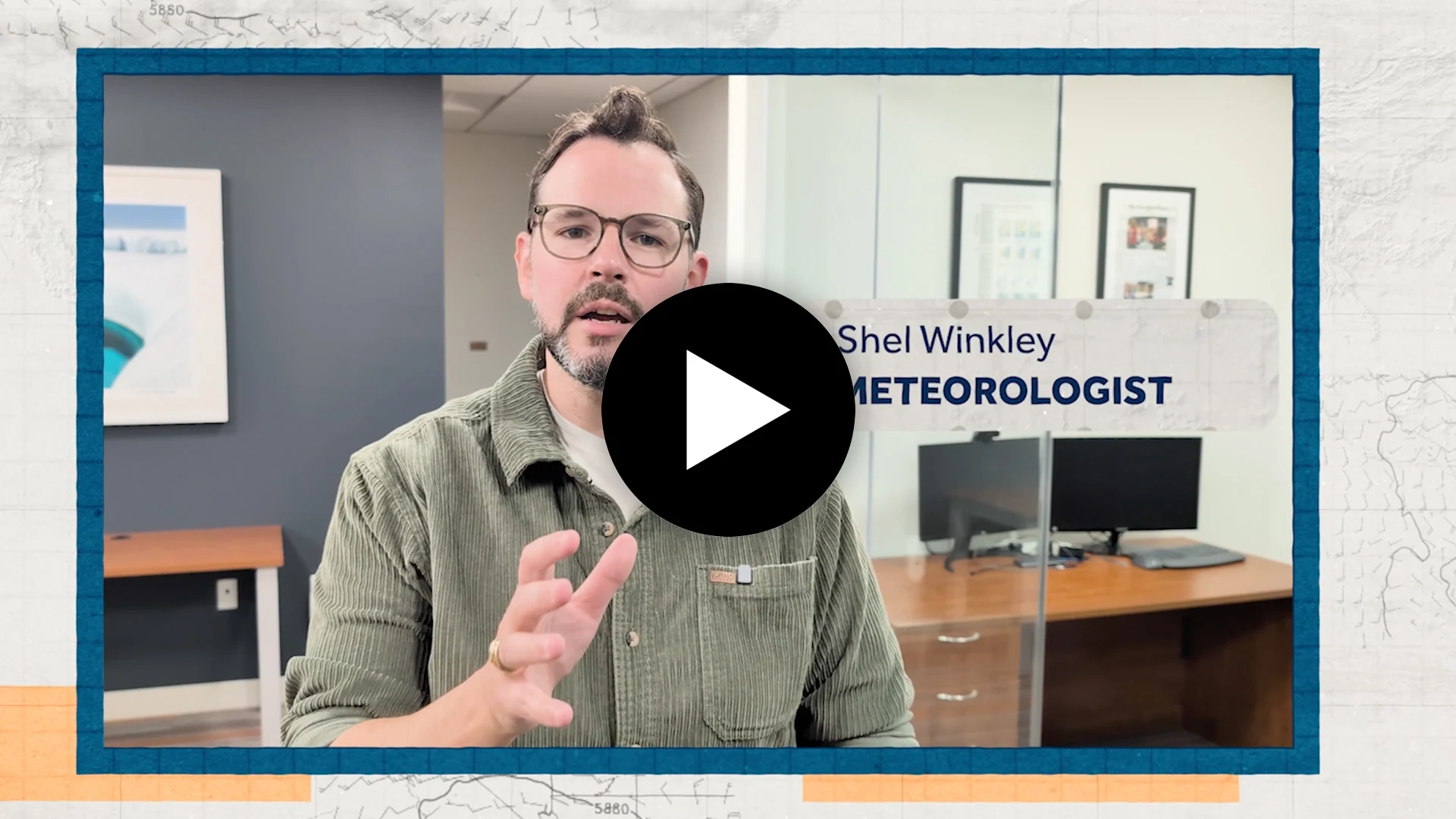
To learn more about attribution science, or if you have questions about how to use these resources in your reporting, please contact Shel Winkley, swinkley@climatecentral.org
To request an interview with a Climate Central scientist about attribution science, please contact Abbie Veitch, aveitch@climatecentral.org.
Climate Matters © 2025 by Climate Central is licensed under CC BY 4.0
This license grants permission to use, distribute, and reproduce all text, graphics, and multimedia content published on this page in any medium, provided that Climate Central is credited per the CC BY 4.0 license.
Permission to use data and other materials published on this page is granted for non-commercial uses, commercial news purposes, and educational purposes as governed by Climate Central's Terms of Use.