Climate Shift Index: Tropical Cyclones
Climate change is warming oceans worldwide, and that added heat is fueling stronger hurricanes. This system quantifies how climate change affects tropical cyclone strength.
Climate Matters•June 10, 2026•Reuse this content
Oceans made warmer by climate change are fueling more intense Atlantic hurricanes that bring heavier rainfall and higher storm surge when they make landfall.
Throughout the 2026 Atlantic hurricane season, Climate Central’s Climate Shift Index: Tropical Cyclones system will calculate how much stronger each named storm became due to ocean temperatures made warmer by climate change.
Research suggests that warmer oceans may contribute to an increased fraction of tropical cyclones that strengthen quickly, a process known as rapid intensification.
From 1980 to 2025, 190 Atlantic tropical cyclones rapidly intensified, and nearly one-quarter of these storms rapidly intensified at extreme rates.
Climate Central’s RiskViewer site provides a set of photorealistic storm surge visualizations in coastal locations across 20 Atlantic and Gulf Coast states.
This Climate Matters analysis is based on open-access data from the National Oceanic and Atmospheric Administration (NOAA). See Methodology for details.
Loading visual assets...
Oceans made warmer by human-caused climate change are fueling more intense hurricanes in the Atlantic. In our warming climate, these storms also bring heavier rainfall and higher storm surge when they make landfall.
What does this mean for the 2026 Atlantic hurricane season (June 1 to November 30)?
Here are Climate Central’s latest resources that explain the science and bring real-time analysis to the season ahead.
In addition, Climate Central’s June 16 Monthly Climate Briefing will cover the 2026 hurricane season outlook. The briefing will also feature a live demo of Climate Central’s tools that can be used to track the connections between climate change, hurricanes, and real-time risk throughout hurricane season.
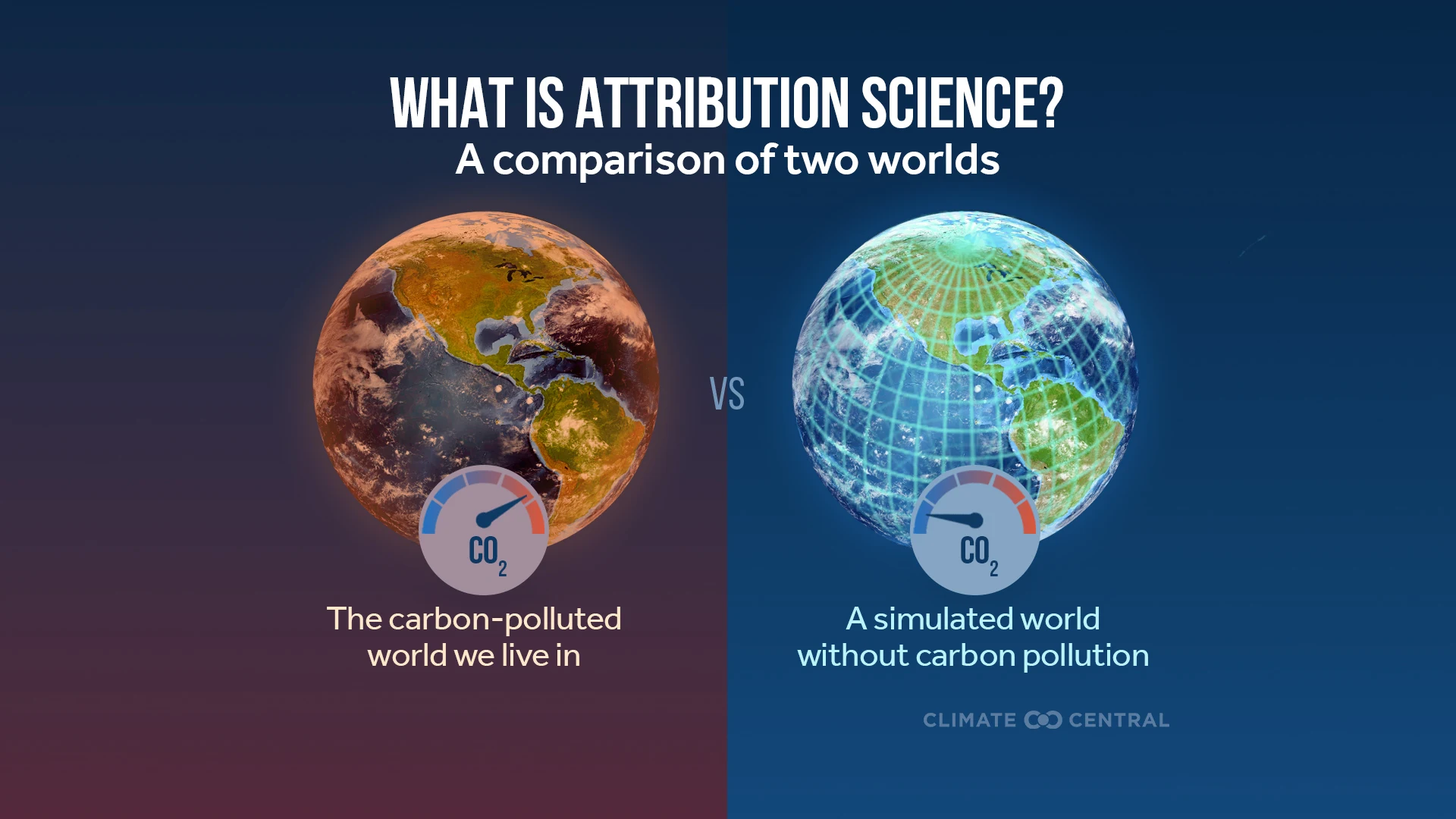
Climate change is warming oceans worldwide. Those warm waters can fuel stronger hurricane winds and more powerful hurricanes.
But how is climate change affecting individual hurricanes? A powerful pair of attribution tools from Climate Central can answer this question in real-time as storm systems develop:
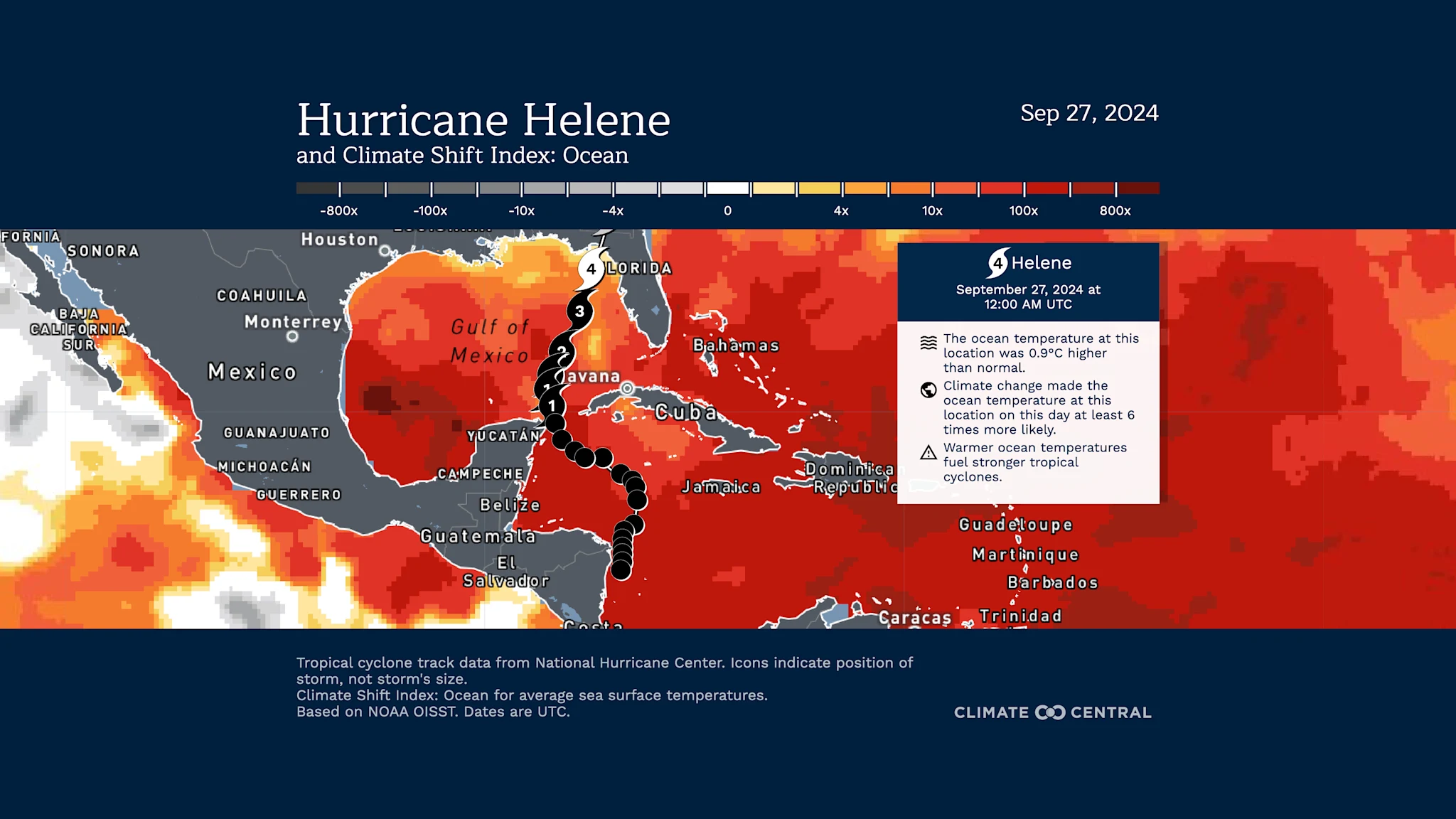
Climate Shift Index: Ocean calculates the influence of climate change on sea surface temperatures around the globe, every day.
Climate Shift Index: Tropical Cyclones calculates how much more intense a storm’s winds became because of climate change-fueled warmer waters.
Learn more about how the science works and how these tools can help tell the climate change story of each named storm of the 2026 Atlantic hurricane season, in real-time.
Loading visual assets...
Warmer oceans may contribute to an increased fraction of tropical cyclones that strengthen quickly, a process known as rapid intensification.
Updated graphics show that, from 1980 to 2025, 190 Atlantic tropical cyclones experienced rapid intensification — defined as an increase in the maximum sustained winds of a tropical cyclone of at least 30 kt (about 35 mph) in a 24-hour period.
Nearly one-quarter of these storms (46 or 24%) experienced extreme rapid intensification: an increase in maximum sustained winds of at least 50 kt (about 58 mph) in a 24-hour period.
Loading visual assets...
In 2025, four Atlantic hurricanes (Erin, Gabrielle, Humberto and Melissa) rapidly intensified. All four of these reached the extreme rapid intensification threshold.
Forecasting rapid intensification can be challenging, which contributes to the high human and economic toll of such storms.
Tropical cyclones, which include hurricanes and tropical storms, are the most costly U.S. weather and climate disasters by far.
Most (72%, or 48) of the 67 total billion-dollar tropical cyclones impacting the U.S. since 1980 rapidly intensified.
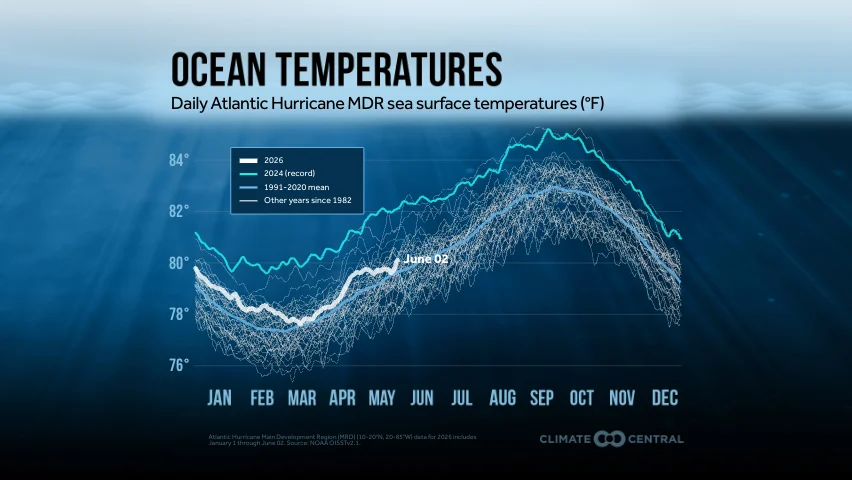
One of the key ways that climate change affects hurricanes is through warmer ocean temperatures.
Many tropical cyclones form within the Atlantic hurricane main development region — a swath of the tropical Atlantic Ocean extending from western Africa to the U.S. Gulf Coast.
Sea surface temperatures in this area tend to rise throughout the Atlantic hurricane season, and typically peak in October.
Click to view and download the latest data and graphics showing daily sea surface temperatures for the globe and selected ocean regions. These graphics update daily around 6 a.m. ET, with the latest data from NOAA’s OISST dataset.
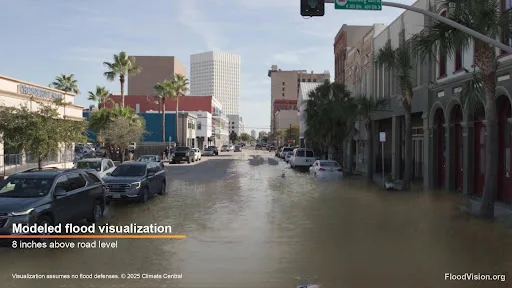
Sea level rise can amplify storm surge during hurricanes, putting coastal residents at heightened risk.
Climate Central’s RiskViewer site provides a set of photorealistic visualizations of storm surge in coastal locations across 20 states along the Atlantic and Gulf Coasts.
RiskViewer is powered by Climate Central’s FloodVisionⓇ technology, which generates science-based visualizations of local flood risk from storm surge and sea level rise.
Contact the FloodVision team to request additional visualizations of locations at risk near you.

Climate Central’s Extreme Weather Toolkit: Tropical Cyclones provides quick facts in English and Spanish on hurricanes and climate change — along with a collection of our latest reporting resources.
The toolkit reviews the connections among ocean warming, sea level rise, and heavier rainfall in our warming climate and observed trends in tropical cyclone intensity and impacts.
Warmer air can hold more moisture, increasing the chances of heavier downpours that contribute to flooding.
Tropical cyclone rainfall rates have increased globally and in the Atlantic, with further increases expected as warming continues.
This higher rainfall intensity, combined with the fact that climate change is enabling tropical cyclones to maintain more of their strength after making landfall, increases the risk of dangerous inland flooding.
Rainfall flooding accounted for 57% of all U.S. deaths from tropical cyclones during 2013–2022, according to a 2023 report from the National Hurricane Center.
Official outlook: NOAA’s 2026 Atlantic hurricane season outlook predicts below-normal activity due to several factors including a strong El Niño event. Learn more about how El Nino affects the Atlantic hurricane season.
Real-time updates: NOAA’s National Hurricane Center monitors current conditions and provides 2-day and 7-day tropical weather outlooks for the Atlantic, Eastern Pacific, and Central Pacific.
Hurricane safety: NOAA’s Hurricane Preparedness hub provides safety information and resources to help communities stay safe before, during, and after hurricanes. The Ready.gov hurricanes site provides guidance in 13 languages.
New products and services: For 2026, the National Hurricane Center’s forecast cone graphic will also depict inland tropical storm and hurricane watches and warnings in effect. Learn more about product improvements for the 2026 hurricane season.
Risk screening: NOAA’s National Storm Surge Risk Maps can be used to assess risk in hurricane-prone coastal areas. FEMA’s Resilience Analysis and Planning Tool maps hurricane risk levels for counties and census tracts in the contiguous U.S.
Media resources: NOAA regularly updates a comprehensive summary of the science on Global Warming and Hurricanes, and offers a hurricane season Media Resource Guide.
Use the tool. The online map tool allows you to explore data showing which parts of the world are experiencing high Ocean CSI levels — every day.
See the climate story for individual hurricanes. Use the “Show tropical cyclones” toggle to display the influence of climate change on each Atlantic tropical cyclone since 2024.
Share custom maps. Use yellow buttons in the tool’s left panel to share a direct link to a custom map or download the current map view as a PNG file.
Download maps in KML format. The tool’s left panel also includes a link to download daily Ocean CSI maps in KML format for use in TV broadcasts.
Read the FAQs. Review common questions and answers on the science behind the Ocean CSI and expert guidance and caveats on using the tool in climate reporting.
To request an interview with a Climate Central expert about these resources, please contact Abbie Veitch, aveitch@climatecentral.org.
Submit a request to SciLine from the American Association for the Advancement of Science or to the Climate Data Concierge from Columbia University. These free services rapidly connect journalists to relevant scientific experts.
Browse maps of climate experts and services at regional NOAA, USDA, and Department of the Interior offices.
Explore databases such as 500 Women Scientists, BIPOC Climate and Energy Justice PhDs, and Diverse Sources to find and amplify diverse expert voices.
Reach out to your State Climate Office or the nearest Land-Grant University to connect with scientists, educators, and extension staff in your local area.
An earlier version of this article incorrectly stated: "From 1980 to 2025, 190 landfalling Atlantic tropical cyclones rapidly intensified, and nearly one-quarter of these storms rapidly intensified at extreme rates." The statement has been corrected to clarify that these 190 storms were not all landfalling.
Special thanks to Dr. Phil Klotzbach of the Colorado State Tropical Meteorological Project for assistance. A rapid intensification period (RI) is defined by the National Hurricane Center as an increase in the maximum sustained wind speed of at least 30 knots (approx 35 mph) in 24 hours. Hurricane data were collected from the HURDAT2 dataset and intensity of storms was analyzed at synoptic times (00, 06, 12, 18 GMT). Only storms that had reached tropical storm status were considered for the rapid intensification analysis and subtropical systems were excluded. Because of limitations in detection (before satellite and aircraft reconnaissance), HURDAT2 data before 1980 were excluded in this analysis.
As of June, 2026, there have been 67 total tropical cyclones that have caused at least $1 billion in damage in the U.S. since 1980. All billion-dollar tropical cyclone cost estimates are CPI-adjusted (Climate Central data accessed June 4, 2026).
Climate Matters © 2026 by Climate Central is licensed under CC BY 4.0
This license grants permission to use, distribute, and reproduce all text, graphics, and multimedia content published on this page in any medium, provided that Climate Central is credited per the CC BY 4.0 license.
Permission to use data and other materials published on this page is granted for non-commercial uses, commercial news purposes, and educational purposes as governed by Climate Central's Terms of Use.