
Climate Matters
Earlier Spring
The first leaves of spring now emerge earlier across the U.S. compared to the early 1980s — affecting allergies, ecosystems, and crops.
Climate Matters•April 8, 2026•Reuse this content
Shorter winters and warmer springs can disrupt the environmental cues that birds rely on to begin their spring migrations and affect the distances they travel to find suitable breeding grounds.
Nearly two-thirds of North American bird species are vulnerable to significant range loss if the planet warms 3°C (5.4°F) above pre-industrial temperatures.
At this level of warming, common backyard birds like the American Robin and Red-headed Woodpecker may no longer occupy much of their current U.S. range.
As spring progresses, billions of birds are set to take flight on migratory journeys in search of their summer breeding grounds.
Of the more than 650 species of North American breeding birds, more than half migrate each year. The vast majority take flight at night, and some fly hundreds or even thousands of miles nonstop.
Bird migration typically peaks between mid-April and mid-May across the U.S. as hundreds of different species head north.
Migratory birds are highly attuned to the environmental cues (such as temperature, rainfall, day length, and plant growth) that they use to align their spring arrival with blooming plants, abundant food, and ideal temperatures in their breeding grounds.
But this environmental sensitivity also makes birds vulnerable to rapid climate change. Shorter winters, spring warming, and earlier first spring leaves can disrupt the annual cues that birds rely on to begin their migrations.
These disruptions may impact the long-term survival of bird populations — making the future uncertain for hundreds of species across North America.
Indeed, the total North American bird population has lost a staggering 2.9 billion birds since 1970 — a 29% decline. The vast majority of individuals lost were birds that migrate. And common backyard birds like sparrows, warblers, blackbirds, and finches saw the most severe decline.
Birds disperse seeds, pollinate plants, and eat insects. Threats to their survival impact these important functions and the people, ecosystems, and economies that depend on them.
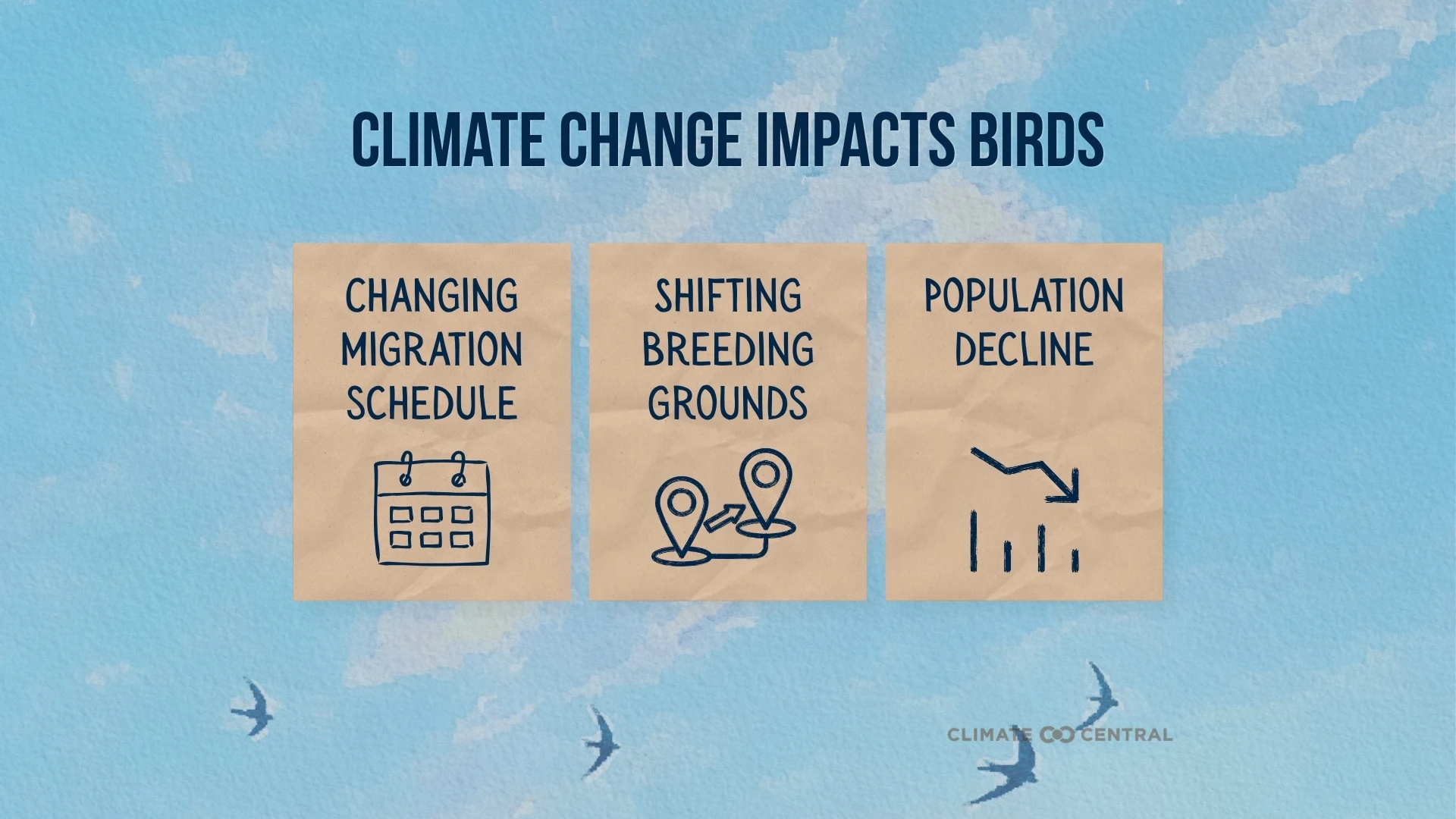
There are three main ways that climate change affects migratory birds:
1. The timing of bird migration is shifting in response to climate change.
The peak night migration timing among North American birds shifted several days earlier, on average over two decades (1996-2016) in the northern latitudes of the U.S. Earlier springs and warmer temperatures due to climate change can result in insects emerging earlier than they used to. If birds can’t keep pace with these changes, they may risk arriving exhausted from their migration journey after the peak abundance of insects has already ended.
2. Bird habitats are shifting in response to climate change.
Warming may push the bounds of bird ranges farther north into higher latitudes and cooler climates. Indeed, a 2024 study found that the most densely populated parts of birds’ ranges have already shifted an average of 51 miles north since 1966, across 209 North American species. The most rapid shifts have occurred among species in the western U.S. As their historical breeding grounds rapidly warm, birds are making these changes to find temperatures suitable for their prey and their habitat.
3. Birds that don’t adjust their migration timing or breeding grounds may face population decline.
When birds receive mixed environmental cues or they don’t migrate earlier to stay in sync with earlier spring plants and insects, they may not overlap with the abundant food they need to raise their young. A 2024 study found that, out of 150 birds that breed in North America, most still time their migration to align with past conditions rather than the current climate with warmer, earlier springs. Migrating birds that arrive too late may miss peak food availability needed for a successful breeding season, which can ultimately lead to population decline.
In addition to these core effects of long-term warming leading to mismatched timing among species, climate change also affects birds through more frequent and intense extremes such as dangerous heat, wildfire, drought, and sea level rise.
The relationship between climate change and birds is complex and many other human activities also threaten birds, including collisions with buildings, the introduction of invasive species, the use of pesticides, and plastic pollution.
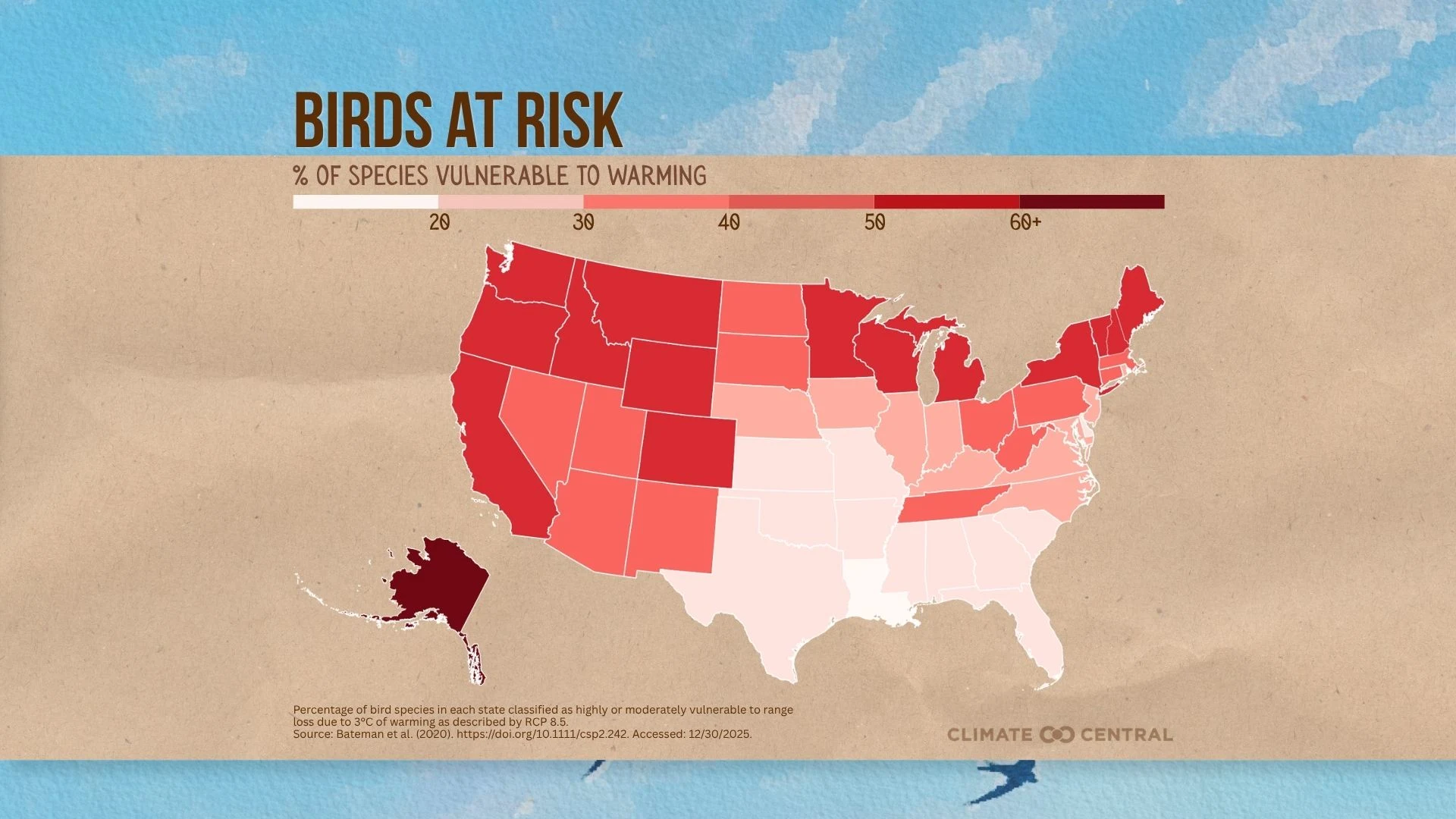
According to a 2019 report from the National Audubon Society, nearly two-thirds (64%) of North American bird species are vulnerable to moderate or high levels of range loss if the planet warms 3°C (5.4°F) above pre-industrial temperatures.
That’s not a far-off scenario. Current policies place Earth on track to warm 2.8°C (5.0°F) by the end of the century.
Northern regions generally see a greater proportion of vulnerable birds than southern regions.
The states with the most vulnerable species are: Alaska (78% of species), California (59%), Montana (58%), Washington (57%), Wyoming (57%), and Maine (57%).
These changes impact birds in our backyards and neighborhoods. For example, with 3°C (5.4°F) of global warming, the ranges of the following common species could change considerably:
Red-headed Woodpecker: 94% range loss, mostly in the South, Southeast, and Ohio Valley
Mountain Bluebird: 53% range loss, mostly in the Western U.S.
Tree Swallow: 43% range loss in the Northern Rockies and Plains, Upper Midwest, Ohio Valley, and Northeast
Canada Goose: 25% range loss, across the U.S.
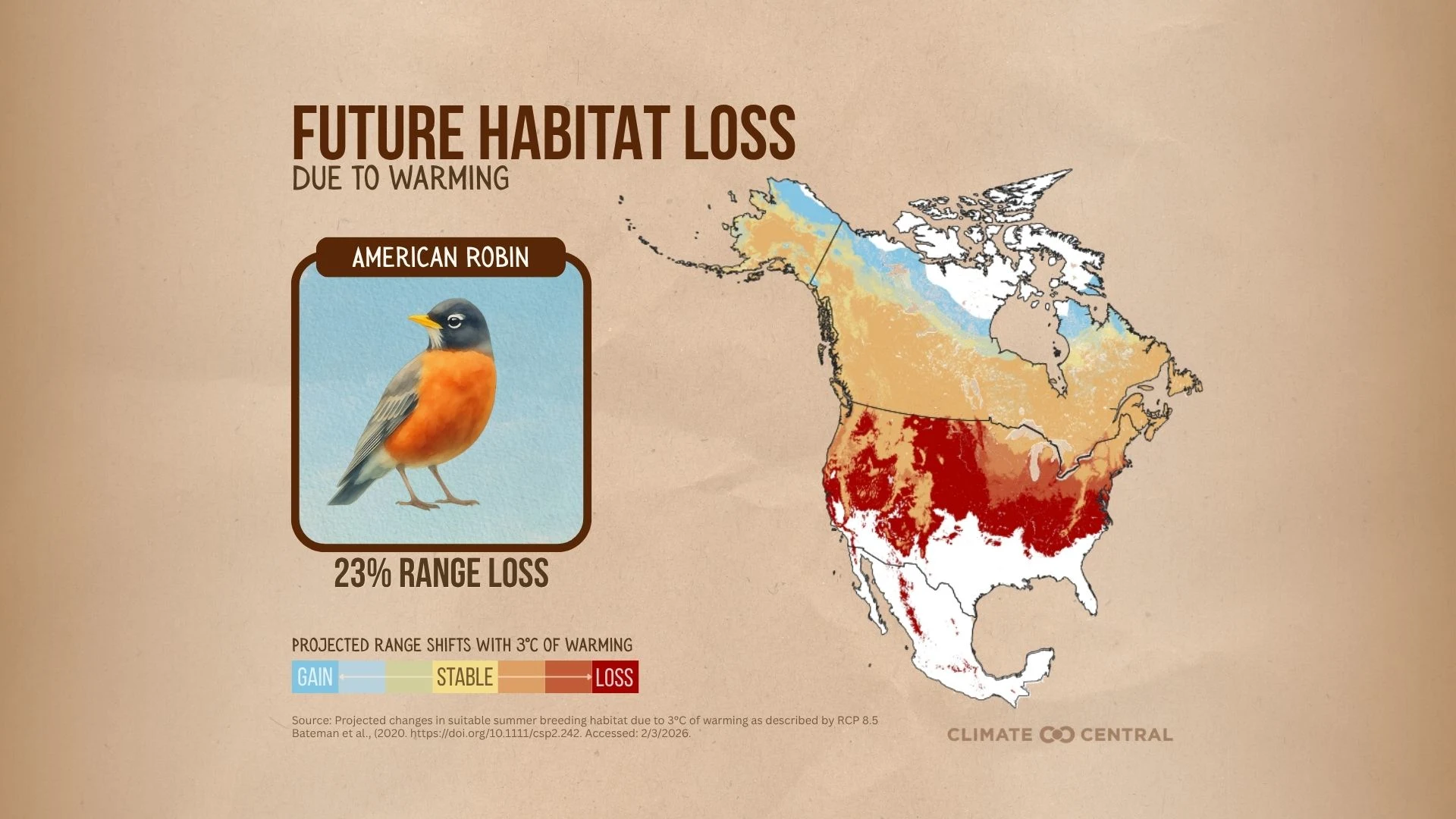
American Robin: 23% range loss, mostly the Northern Rockies and Plains, Southwest, and Ohio Valley
These are birds you might often see looking out your window. But rising temperatures are pushing these birds farther north and out of their historical ranges. And while these shifts may lead to range gains in Canada, the range loss in the U.S. could have profound ecological effects.
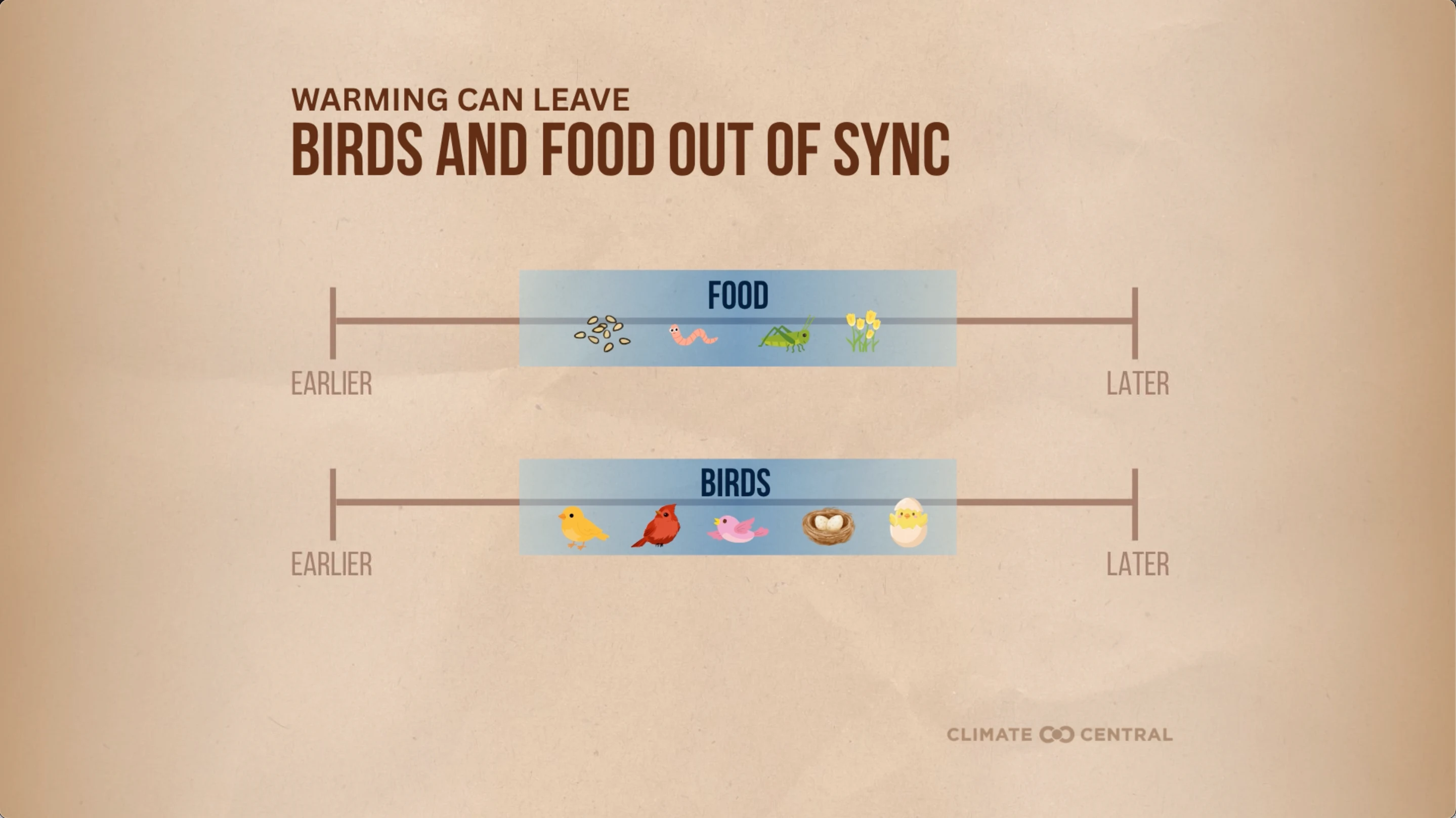
The climate-related impacts on bird migration and survival extend throughout the ecosystems they inhabit. When mismatch timing throws birds out of sync with other species the effects can ripple out across an ecosystem, for example by allowing insect populations to grow unchecked or leaving predators that prey on birds without enough food.
Threats to birds also can also affect recreational activities for humans, like birdwatching and hunting. As birds move north, they may move out of the range hunters typically expect to find them.
According to a 2022 study, up to one-quarter of the bird species that you'd currently expect to see across 525 U.S. national wildlife refuges could be different by 2050 if we allow unchecked heat-trapping pollution (RCP8.5).
In a world where North American birds are already rapidly declining, continued warming could threaten their future survival.
The state of North American birds is just one example of the profound effects of climate change on global ecosystems and biodiversity. According to the Fifth National Climate Assessment, “Climate change is driving transformational changes in many ecosystems, such as reducing biodiversity, shifting the distribution and life cycles of species, and increasing the risk of disease and invasive species.”
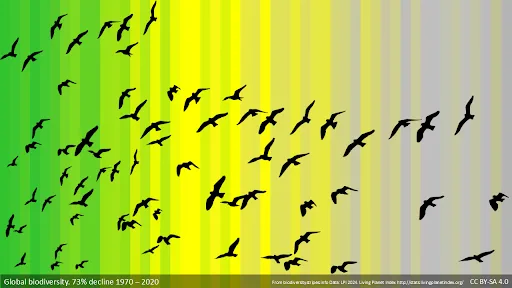
According to biodiversitystripes.info and the Living Planet Index database, global biodiversity has declined 73% from 1970-2020 amid rapid climate change.
Cornell Lab of Ornithology’s BirdCast shows live migrations maps where nocturnal bird migration is occurring in near real-time, as detected by the U.S. weather surveillance radar network between local sunset to sunrise. Explore interactive range maps by species or subspecies on eBird – a CLO platform that compiles data from birders around the world.
Read the National Audubon Society’s full report, “Survival by Degrees: 389 Bird Species on the Brink.” Explore data for more than 800 North American bird species, learn about their lives and habitats, and how climate change is impacting their ability to survive. The Cornell Lab of Ornithology provides a story map showing recent population declines in four of the 495 North American bird species assessed in a 2025 study — as well as a list of seven simple actions anyone can take to help birds.
Andrew Farnsworth, Ph.D.
Visiting Scientist
Cornell Lab of Ornithology
Relevant expertise: Bird Migration, Radar Ornithology, Climate Change
Contact: af27@cornell.edu
Brooke Bateman, Ph.D.
Senior Director of Climate and Community Science
National Audubon Society
Relevant expertise: Climate and the conservation of birds
Contact: brooke.bateman@audubon.org
Media contact: Nicolas.Gonzalez@audubon.org
Submit a request to SciLine from the American Association for the Advancement of Science or to the Climate Data Concierge from Columbia University. These free services rapidly connect journalists to relevant scientific experts.
Browse maps of climate experts and services at regional NOAA, USDA, and Department of the Interior offices.
Explore databases such as 500 Women Scientists, BIPOC Climate and Energy Justice PhDs, and Diverse Sources to find and amplify diverse expert voices.
Reach out to your State Climate Office or the nearest Land-Grant University to connect with scientists, educators, and extension staff in your local area.
All national and state-level data on bird vulnerability and range loss were obtained from the National Audubon Society’s Survival by Degrees report. A bird species is considered vulnerable if it is classified as moderately or highly vulnerable, consistent with findings from the National Audubon Society. Projected range losses are considered under a 3.0°C (5.4°F) warming scenario (relative to pre-industrial levels) as described by RCP 8.5.
Climate Matters © 2026 by Climate Central is licensed under CC BY 4.0
This license grants permission to use, distribute, and reproduce all text, graphics, and multimedia content published on this page in any medium, provided that Climate Central is credited per the CC BY 4.0 license.
Permission to use data and other materials published on this page is granted for non-commercial uses, commercial news purposes, and educational purposes as governed by Climate Central's Terms of Use.