Climate Shift Index Alert•March 24, 2026
Record-breaking March heatwave, intensified by climate change, continues to shatter records across the U.S.
March 24, 2026
Hundreds of high-temperature records across the western half of the United States were broken last week as an early-season heatwave, driven by human-caused climate change, brought July-like heat to millions of people. The impacts are not over — more records are expected to fall this week, March 24-27. Expect to see this early burst of warmth have lasting impacts into the summer months.
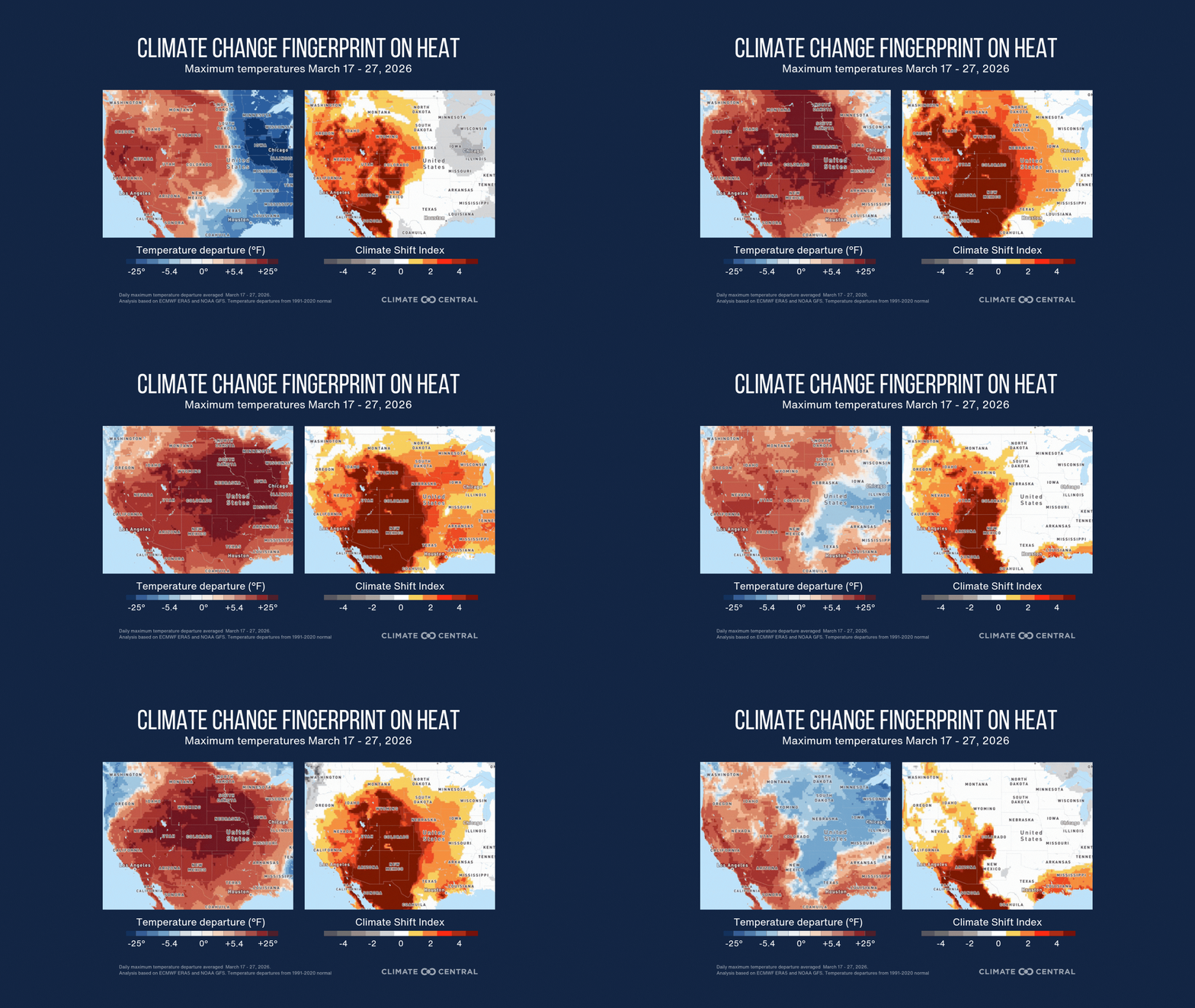
Note: This event may continue beyond March 27. Use the Global Climate Shift Index map to stay updated on heat in your region.
How unusual is the forecasted heat?
The significant and unusually early heatwave, primarily impacting the western U.S., has been driven by a strong, slow-moving high-pressure system, commonly known as a “heat dome,” trapping hot and dry air over the region.
As heat-trapping pollution warms the planet, extreme heat events like this are becoming more frequent and intense. A recent Climate Central analysis shows multi-day heat streaks are becoming more common for many major U.S. cities.
Between March 16 and 23, over 1,500 daily record high temperatures were set across the U.S. Of those, 660 were also all-time March heat records — 209 of which were set Saturday, March 21 alone.
According to NOAA, roughly 190 additional high temperature records are expected between March 24 and 27, with the most excessive heat forecast to run as much as 20°F to 35°F above normal
Exceptional heat and near-record low snowpack are increasing risks heading into summer, including ecosystem stress and early wildfires. These conditions also raise the potential for water shortages and hydropower impacts, especially across the Colorado River Basin. Climate Central will provide more on snowpack totals in Climate Matters on April 1.
How has climate change influenced this heat?
This event is a continuation of last week’s record-breaking heat. On March 20, CSI 3, 4, and 5 all reached their largest U.S. extent on record (since 1970). CSI 5 alone covered approximately 3 million square kilometers, or about 29% of the continental U.S., highlighting the exceptional scale of this event. Check out our analysis of last week's heat, and its connection to climate change.
Climate Shift Index (CSI) levels of 5 — the highest possible — are forecast across the western U.S. from March 24 through 27, meaning human-caused climate change made this extreme heat at least five times more likely. This signals an exceptional climate-influenced event.
From March 24 through 27, more than 42.5 million people across the western U.S. will experience at least one day with maximum temperatures at CSI of 3 or higher, indicating a strong influence from climate change.
To request an interview with a Climate Central scientist, please contact Abbie Veitch at aveitch@climatecentral.org.
How do we know climate change is influencing this heat?
The Climate Shift Index uses peer-reviewed methodology and real-time data to estimate how climate change has increased the likelihood of a particular daily temperature.
Reporting resources
For quick facts about extreme heat in the U.S. → Extreme Heat Toolkit
For more information on this heatwave's connection to climate change → World Weather Attribution’s analysis of the western heatwave
For the latest research-backed messaging to use while reporting on climate change →Potential Energy’s Guide to Reporting on Unnatural Disasters