Climate Briefings
Climate Central’s Monthly Briefing Highlights from February 2026
Climate Central’s Monthly Briefing Highlights from February 2026
Climate Matters•April 15, 2026•Reuse this content
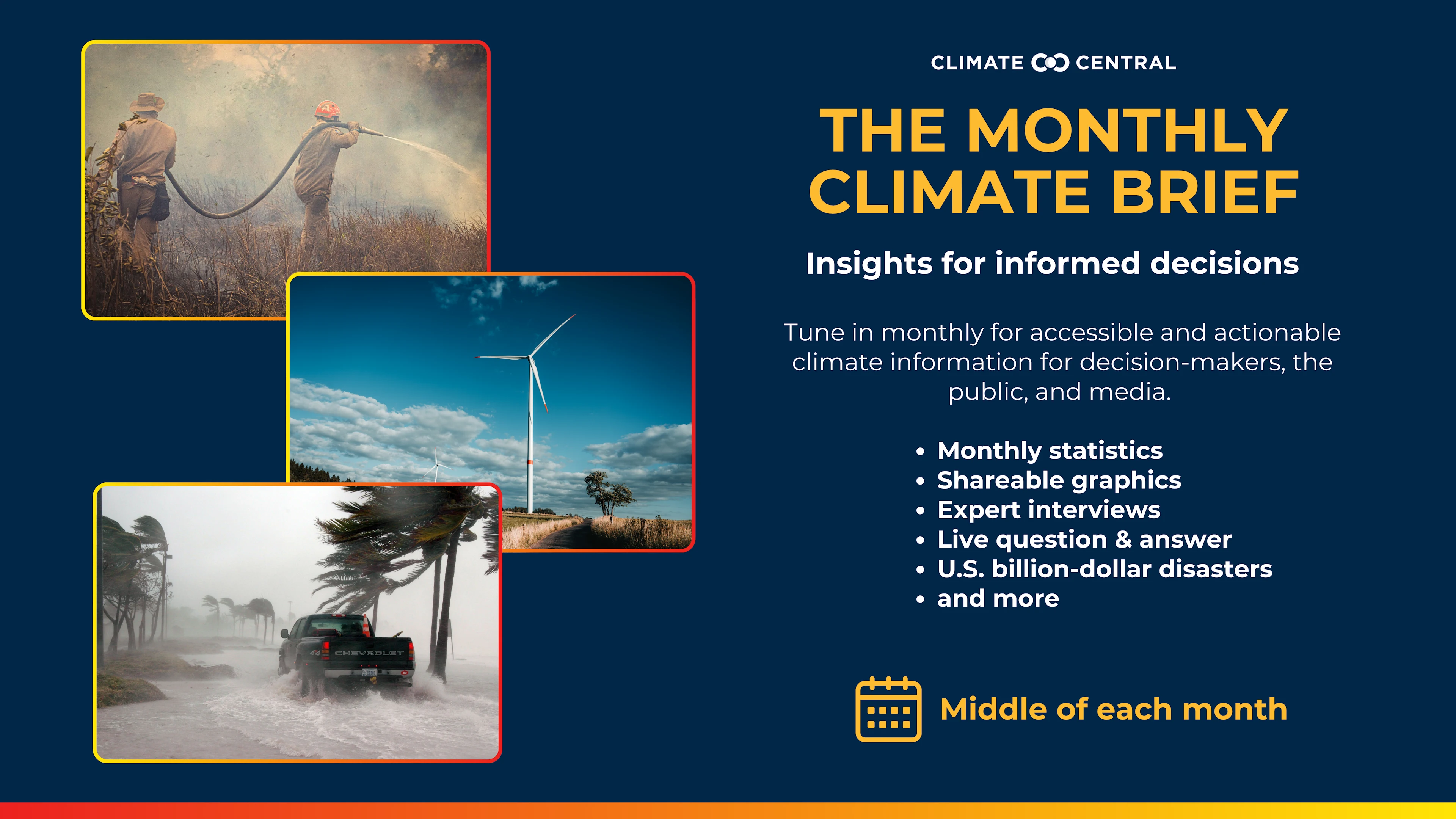
Here are five ways to use Climate Central’s Monthly Climate Brief to cover the climate change stories that matter most each month:
Tune in to a webinar each month for the latest climate data and expert insights.
Download and share graphics including more than 25 new visuals each month covering key climate change indicators.
Ask an expert your climate questions in the live Q&A during each monthly webinar.
Dig into the data on interactive graphics covering temperature and heat-trapping gases.
Explore related reports to learn more about recent climate impacts on energy, transportation, health, and more.
The Monthly Climate Brief is based on open-access data from the National Oceanic and Atmospheric Administration (NOAA).
Here are five ways to use Climate Central’s new Monthly Climate Brief resources to cover the climate change stories that matter most each month.
The 1-hour Monthly Climate Brief webinars, held in the middle of every month, provide insights into recent climate patterns, what’s driving them, and how they affect energy, transportation, health, agriculture, and more.
These monthly briefings share accessible climate information with the media, the public, and decision-makers.
During the first 30 minutes, Dr. Zachary Labe, Climate Scientist at Climate Central:
reviews the latest global and U.S. climate statistics and impacts,
covers the role of climate change in recent extreme weather events, and
shares an outlook for climate conditions in the months ahead.
During the second half, a guest expert joins to discuss timely topics and their climate change connections — from hurricanes and heat waves to shifting seasons.
Register or save the date for an upcoming webinar at 12 p.m. ET:
Tuesday, April 21 | Sign up here
Thursday, May 14
Tuesday, June 16
Wednesday, July 15
Wednesday, August 19
The webinar is open to the public. Can’t make it? Watch the recordings.
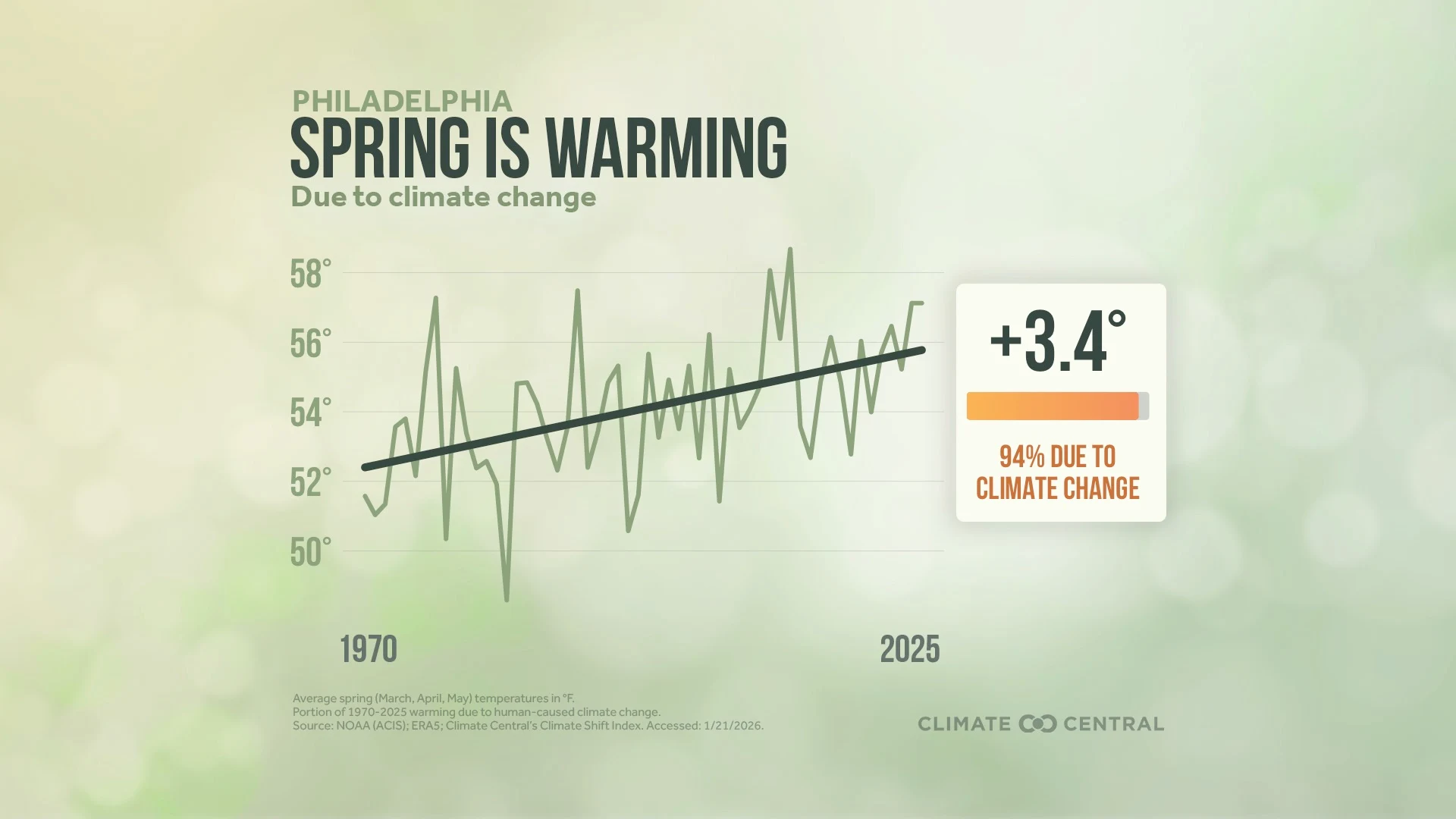
Each monthly webinar features more than 25 new graphics summarizing the latest temperature, precipitation, and greenhouse gas data for the U.S. and the globe.
These clear and timely graphics are freely available to download, in customizable and broadcast-ready versions.
Bookmark the Monthly Climate Brief hub to access the latest graphics each month.
Check out the most recent set of graphics, released in March, covering new highs for global CO2 and record-breaking winter temperatures in western U.S. states.
Got a burning question about climate change? Wondering if a recent weather event was influenced by heat-trapping pollution? Curious to learn how warming affects hurricanes, rainfall, or wildfires?
The Monthly Climate Brief aims to translate climate science for a range of audiences. Each monthly webinar includes a live moderated Q&A session with Dr. Labe and guest experts.
Bring your questions to an upcoming webinar or click the Get in touch button on The Monthly Climate Brief hub for clear answers on complex science.
A new set of interactive graphics let readers explore the latest global and U.S. climate statistics.
Bookmark this page to track key climate change indicators each month — including up-to-date monitoring of global temperatures and concentrations of heat-trapping gases in the atmosphere.
Each webinar is accompanied by a Monthly Climate Highlights article with quick facts covering:
Global and U.S. Climate overviews and statistics
A Climate Moment of the Month with expert perspectives on recent or emerging events
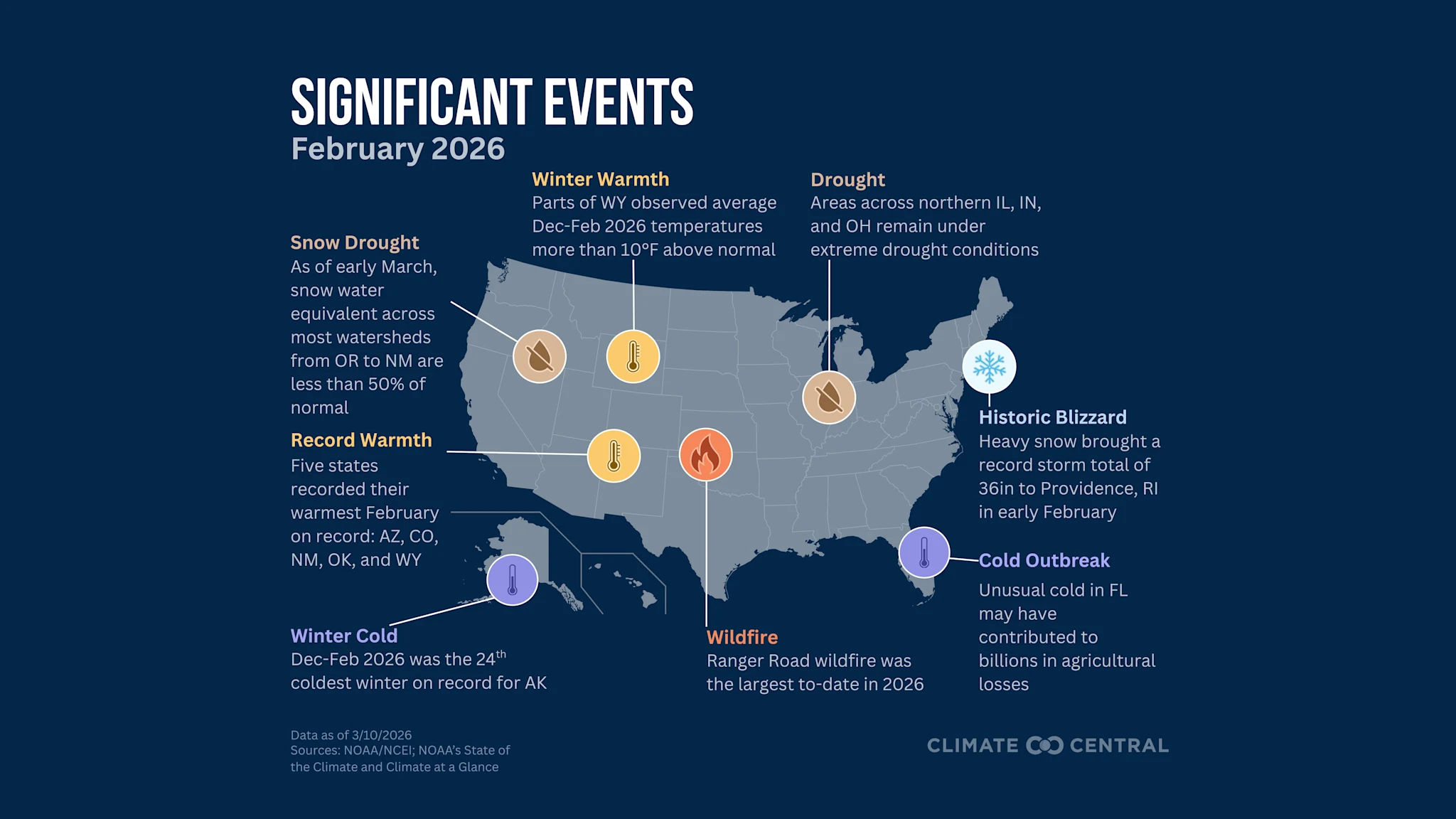
Recent extreme events and their climate change influence
Climate outlooks covering predicted climate conditions in the weeks and months ahead
These articles include links to related Climate Central reporting resources to build out local stories on timely topics each month.
Climate Matters © 2026 by Climate Central is licensed under CC BY 4.0
This license grants permission to use, distribute, and reproduce all text, graphics, and multimedia content published on this page in any medium, provided that Climate Central is credited per the CC BY 4.0 license.
Permission to use data and other materials published on this page is granted for non-commercial uses, commercial news purposes, and educational purposes as governed by Climate Central's Terms of Use.