KEY FACTS
All 50 states and 99% of the 242 major U.S. cities analyzed have warmed since the first Earth Day in 1970.
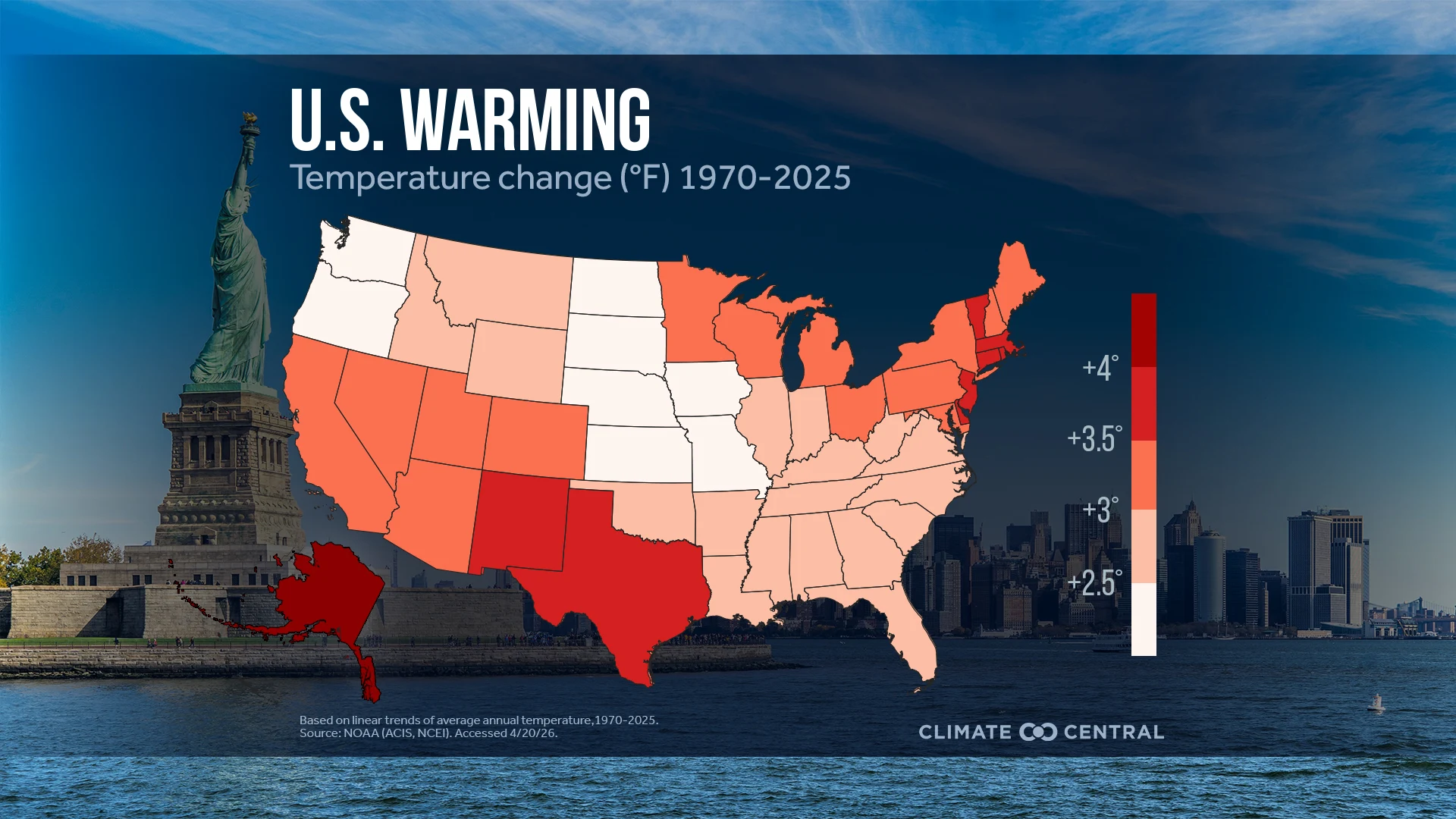
The fastest-warming U.S. states from 1970 to 2025 are: Alaska, New Jersey, New Mexico, Delaware, Massachusetts, and Vermont.
The fastest-warming U.S. cities are: Reno, NV; Las Vegas, NV; El Paso, TX; Burlington, VT; and Tyler, TX.
Continued warming can harm people and ecosystems, but we have many options to accelerate the clean energy transition and cut heat-trapping pollution.
This Climate Matters analysis is based on open-access data from the National Oceanic and Atmospheric Administration (NOAA). See Methodology for details.
Continued heat-trapping pollution
Earth Day, April 22, is an opportunity to raise awareness around planetary-scale challenges — including climate change.
Concentrations of heat-trapping greenhouse gases in the atmosphere are now far higher than at any point during at least the last 800,000 years.
The annual average concentration of CO2, a key greenhouse gas, was 427 ppm in 2025. That’s 31% higher than in 1970, the year of the first Earth Day.
These heat-trapping gases are building up in the atmosphere due to the pollution that results from burning fossil fuels (including coal, oil, and methane gas) for electricity, heating and cooling, transportation, and more.
The excess heat that these gases trap near Earth’s surface has caused global temperatures to rise faster than at any other time in at least the last 2,000 years. This warming puts people and ecosystems at risk from more frequent and intense extreme weather.
Climate Central analyzed average annual temperature trends since 1970 in 49 states and 242 U.S. cities (see Methodology) to understand how temperatures across the country have changed as heat-trapping pollution has continued to climb.
Fastest-warming U.S. states
All 50 states have warmed since 1970, the year of the first Earth Day.
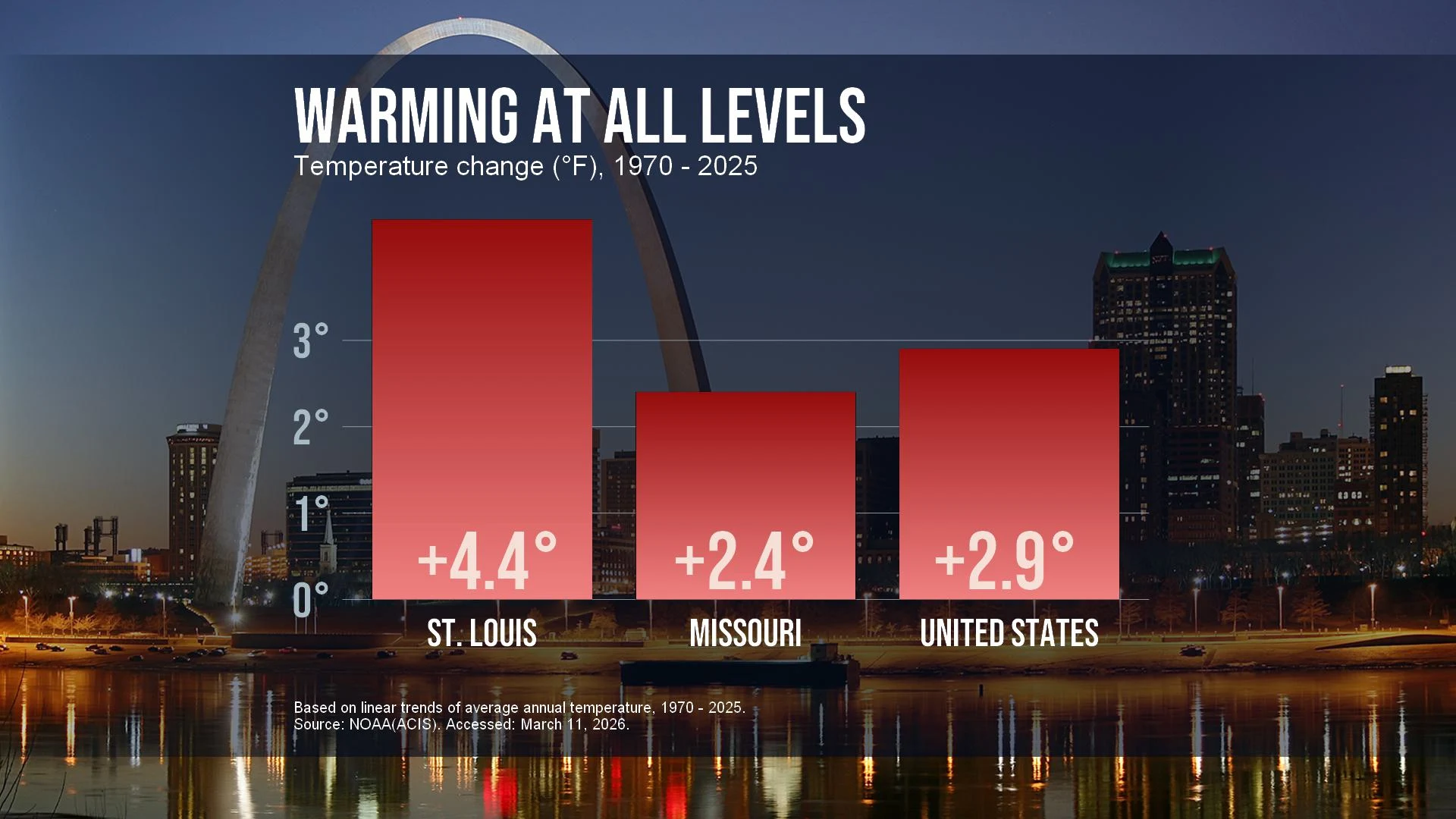
The 49 states analyzed by Climate Central have warmed by 3.0°F on average since 1970.
Alaska was the fastest-warming state by far (warming 4.4°F since 1970), due to its high latitude.
Hawaii is also warming. The latest NOAA State Climate Summaries found warming across the Hawaiian islands since 1950. Honolulu has warmed 2.6°F since 1950; since 1975, the city has consistently been above the 1951-1980 average.
Fastest-warming states | Change in average annual temperature (°F), 1970-2025 |
|---|
Alaska | +4.4° |
New Jersey | +3.7° |
New Mexico | +3.7° |
Delaware | +3.6° |
Massachusetts | +3.6° |
Vermont | +3.6° |
Fastest-warming U.S. cities
Some 240 major U.S. cities (99% of the 242 analyzed) have warmed since 1970.
These 240 cities have warmed by 2.9°F on average since 1970.
Some 206 cities (85% of the 242 analyzed) have experienced at least 2°F of warming.
Grouping cities by climate region, the Southwest (+3.5°F), Upper Midwest (+3.2°F), South (+3.2°F), and Northeast (+3.0°F) have seen the most warming since 1970.
Fastest-warming cities | Change in average annual temperature (°F), 1970-2025 |
|---|
Reno, NV | +7.9° |
Las Vegas, NV | +6.0° |
El Paso, TX | +5.9° |
Burlington, VT | +5.3° |
Tyler, TX | +5.3° |
Climate action counts toward a safer future
If these pollution and warming trends continue, people and ecosystems will face increasing risks. But we have many options to cut heat-trapping pollution from energy, transportation, buildings, agriculture, and more.
Every tenth of a degree of avoided warming counts toward a safer future for younger generations.
The good news is that investment in the U.S. clean energy transition is still progressing, although it faces significant headwinds.
Accelerating recent progress in the manufacture and deployment of the following pollution-reducing technologies can reduce our reliance on planet-warming fossil fuels and ensure a cooler, safer future:
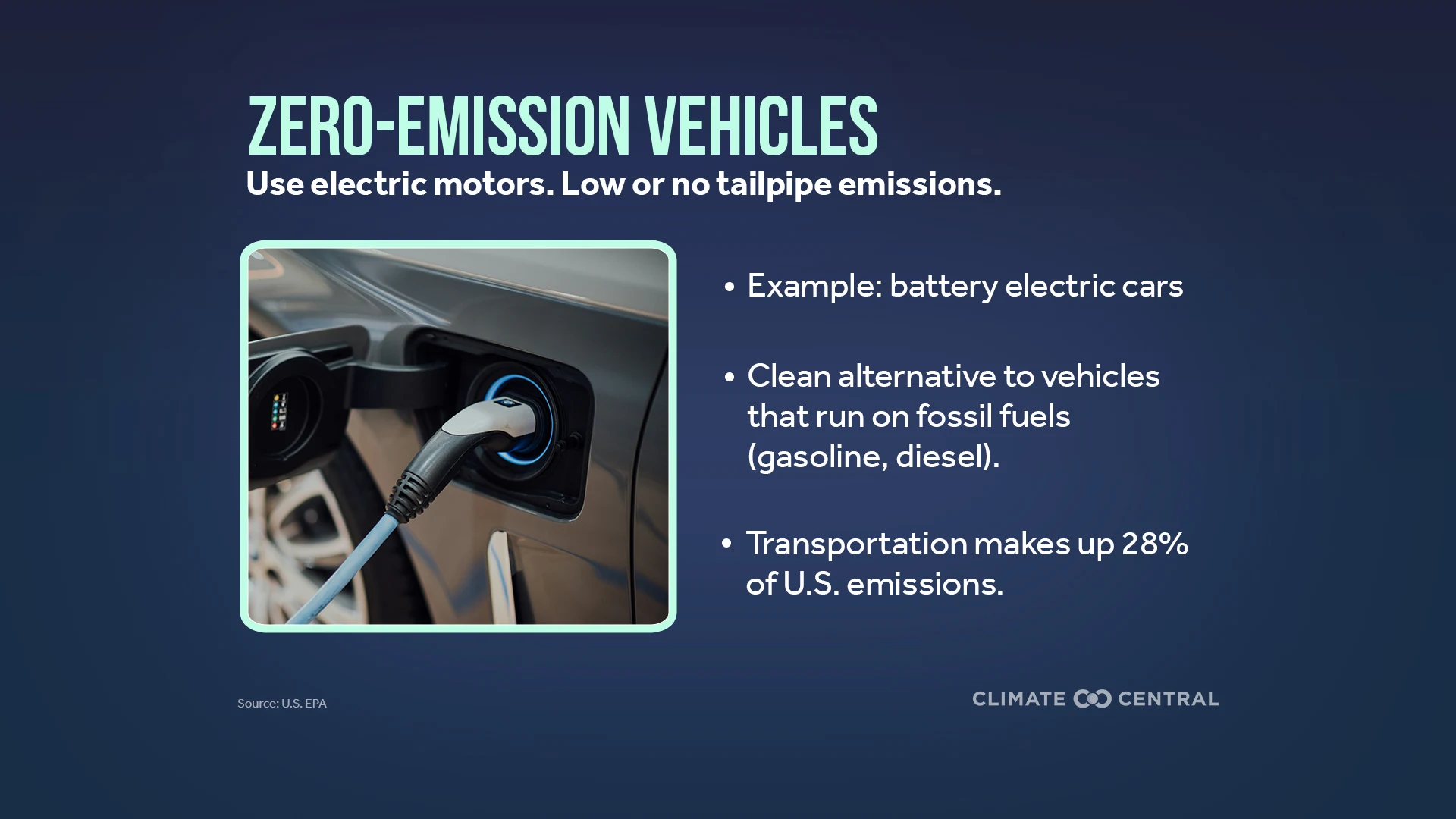
Zero-emission vehicles: These vehicles use electric motors and have low or no tailpipe emissions of heat-trapping gases.
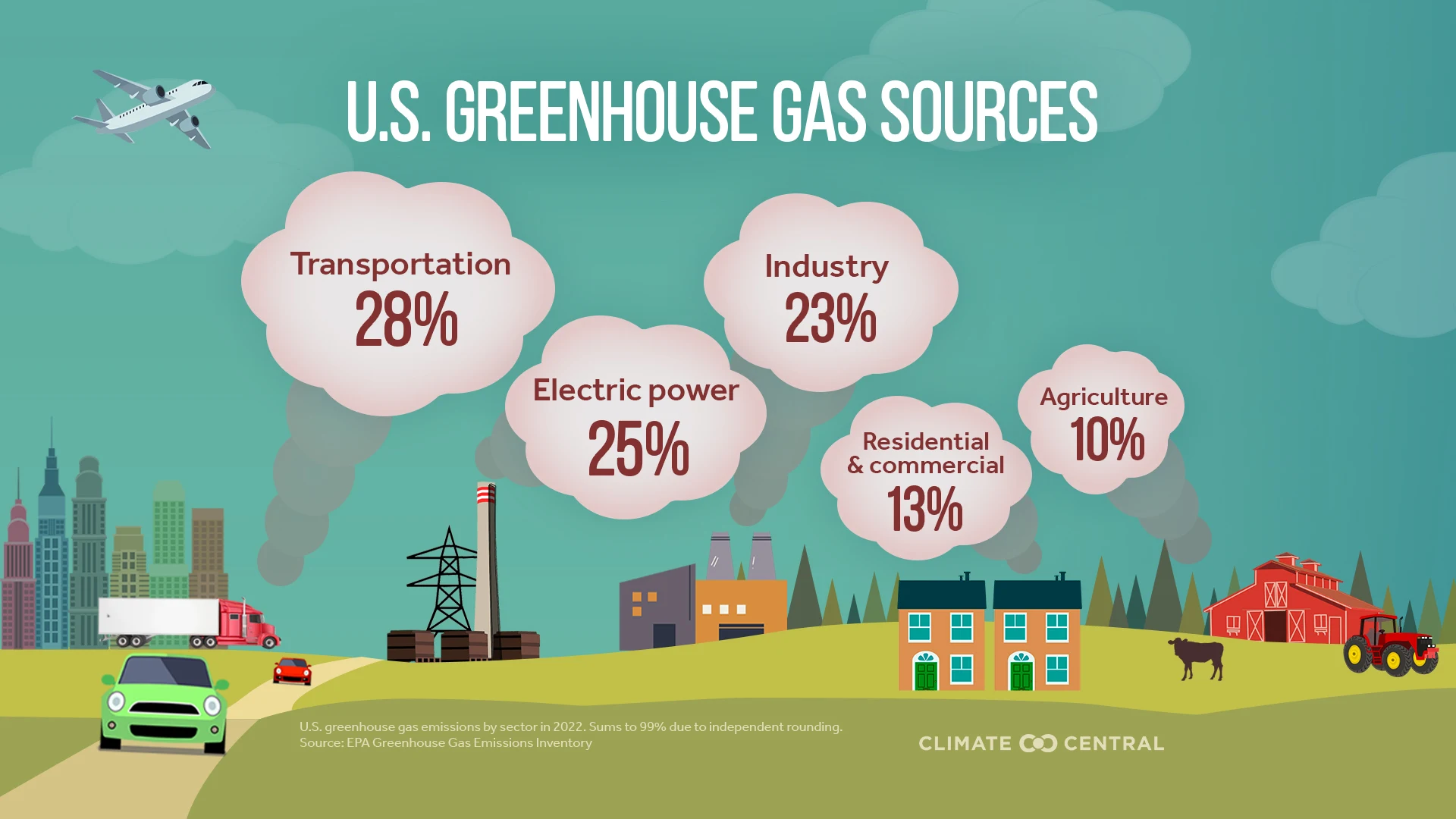
Transportation is the leading source of heat-trapping pollution in 20 states, and accounts for 28% of total U.S. greenhouse gas emissions.
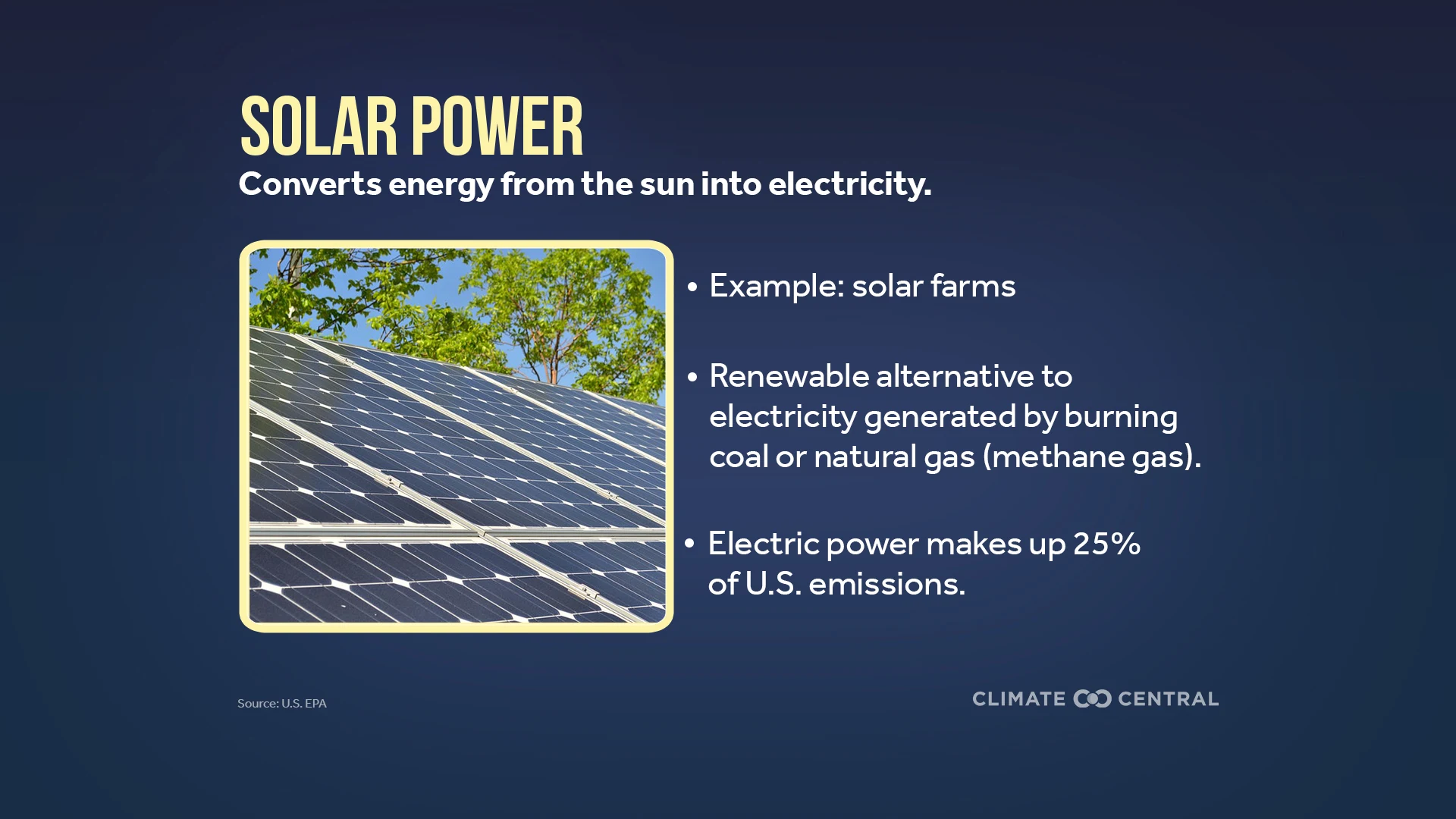
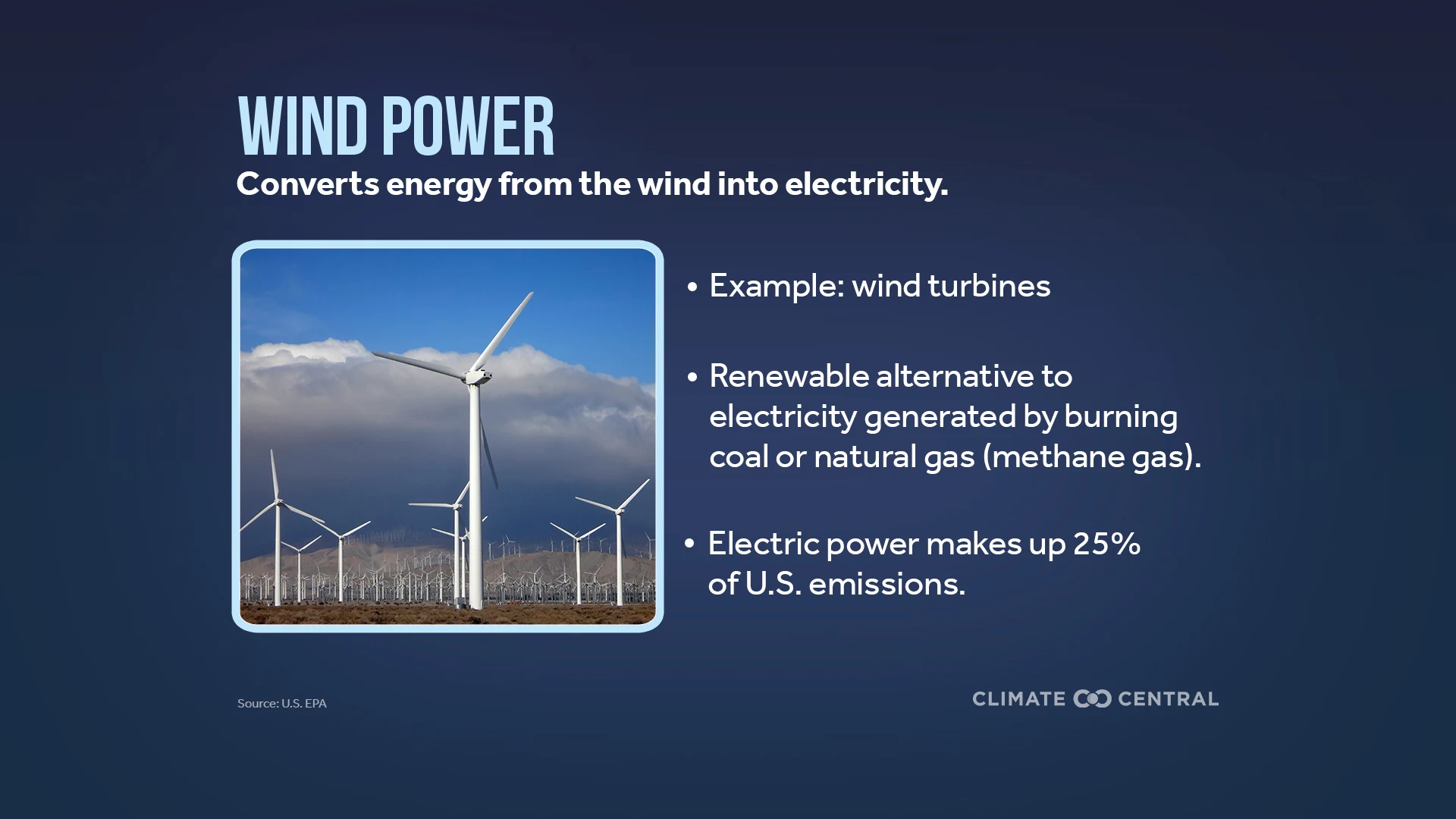
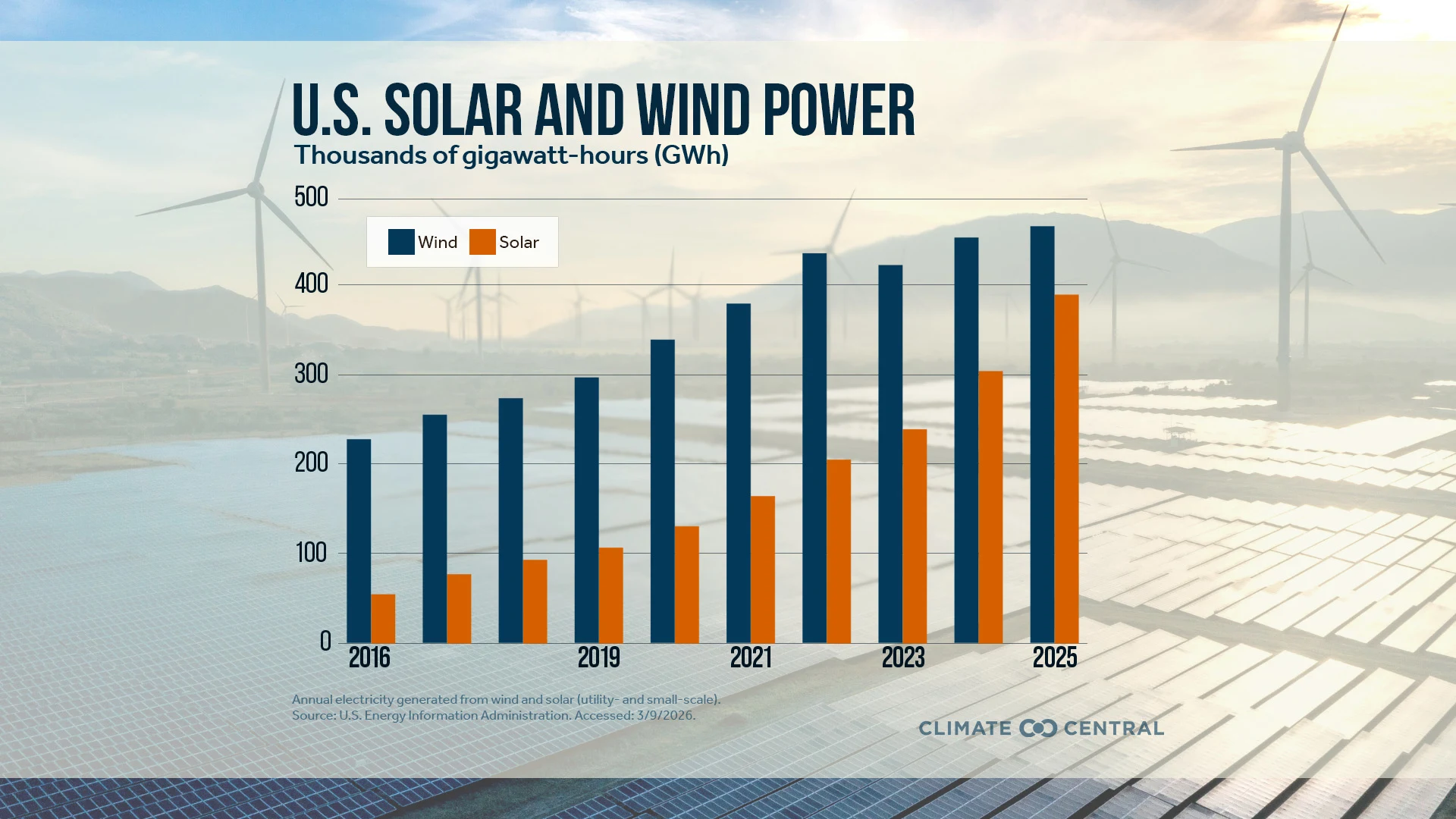
Solar and wind power: Solar panels and wind turbines convert energy from the sun and wind into electricity, providing a clean, renewable alternative to electricity generated by burning fossil fuels such as coal or natural gas (methane gas).
Electric power is the leading source of heat-trapping pollution in 17 states, and accounts for 25% of U.S. greenhouse gas emissions.
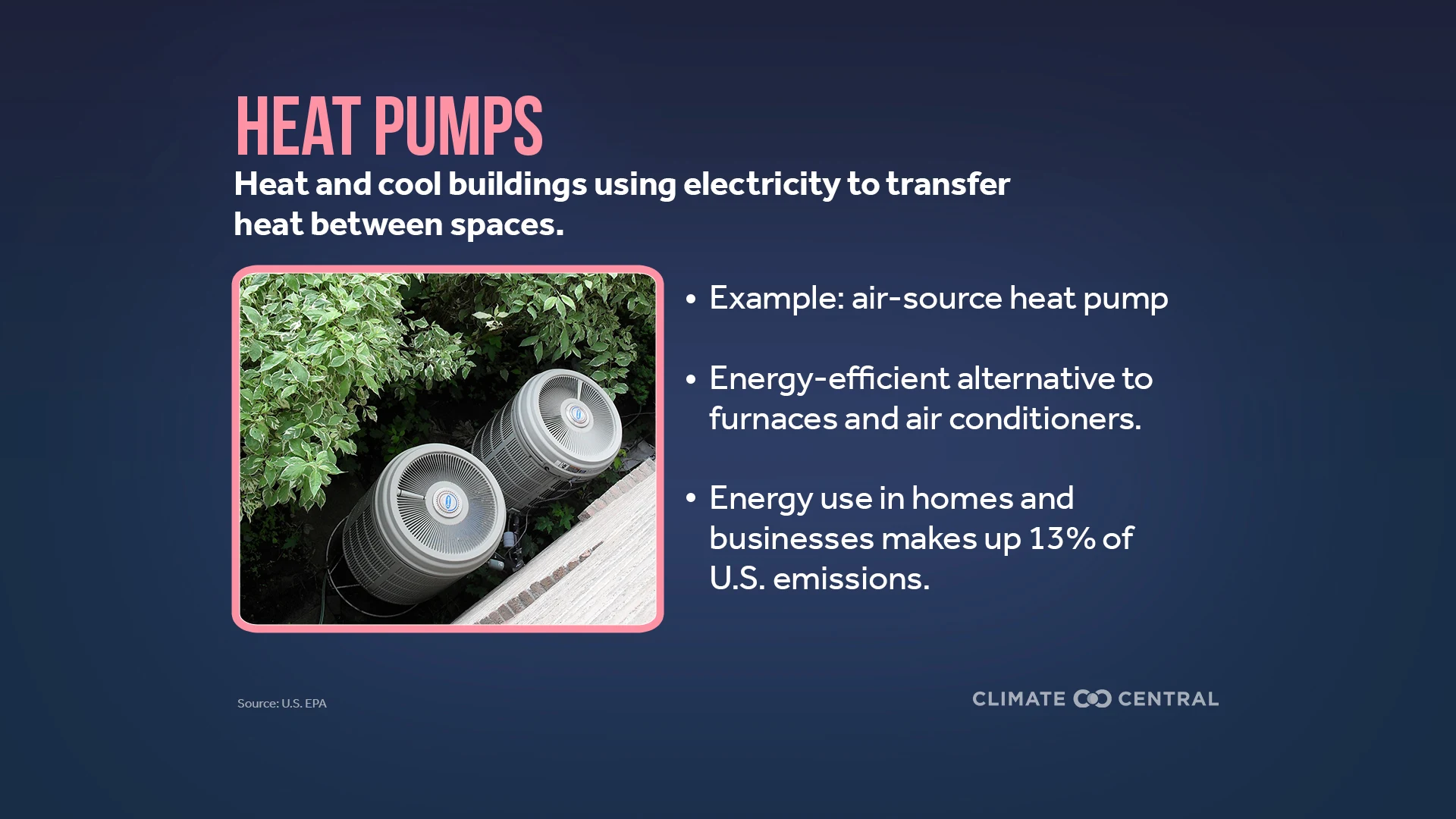
Heat pumps: These devices heat and cool buildings using electricity to transfer heat between indoor and outdoor spaces. Heat pumps are an energy-efficient alternative to furnaces and air conditioners.
Energy use in homes and commercial buildings makes up 13% of U.S. emissions.
LOCAL STORY ANGLES
Three ways to cover climate solutions in your state:
A Decade of Growth for U.S. Solar and Wind shows that the U.S. produced enough solar and wind power in 2024 to power 70 million homes — reflecting a 10-year growth curve in both technologies at the state and national levels.
Clean Energy Investment in Every State shows which states and clean energy technologies have seen the most investment so far.
Climate Solutions in Every State reviews options to quickly reduce emissions in each U.S. state’s top-emitting sector.
Check your state’s official climate goals and progress.
Is yours among the 22 states with official clean energy goals, the 24 states in the U.S. Climate Alliance, or the 33 states with Climate Action Plans? Search State Climate Policy Maps or the Database of State Incentives for Renewables & Efficiency for the status of climate action in all 50 states. State Climate Scorecards track each state’s progress toward official climate goals, broken out by sector.
CONTACT EXPERTS
To request an interview with a Climate Central expert about this analysis, please contact Abbie Veitch, aveitch@climatecentral.org.
FIND EXPERTS
Submit a request to SciLine from the American Association for the Advancement of Science or to the Climate Data Concierge from Columbia University. These free services rapidly connect journalists to relevant scientific experts.
Browse maps of climate experts and services at regional NOAA, USDA, and Department of the Interior offices.
Explore databases such as 500 Women Scientists, BIPOC Climate and Energy Justice PhDs, and Diverse Sources to find and amplify diverse expert voices.
Reach out to your State Climate Office or the nearest Land-Grant University to connect with scientists, educators, and extension staff in your local area.
METHODOLOGY
Annual average temperature data (1970-2025) were obtained for 247 U.S. weather stations from the Applied Climate Information System (ACIS), which is developed, maintained, and operated by NOAA’s Regional Climate Centers. State and contiguous U.S. temperature data were obtained from NOAA’s National Centers for Environmental Information (NCEI) Climate at a Glance. Trends for Hawaii and Puerto Rico were not calculated because they are not included in the NOAA/NCEI dataset with data starting at least in 1970.
Reported long-term trends (1970-2025) in annual average temperature are based on linear regression. Summary statistics were reported for 242 of the 247 stations due to data completeness issues for five stations: Bend, OR; Hazard, KY; Jefferson City, MO; Twin Falls, ID; and Wheeling, WV.