
Climate Matters•February 4, 2015•Reuse this content
Winter Loses Its Cool
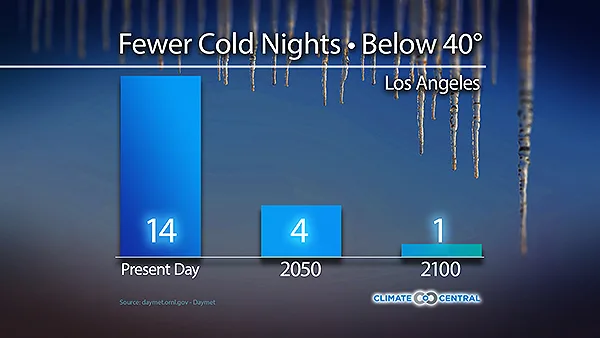
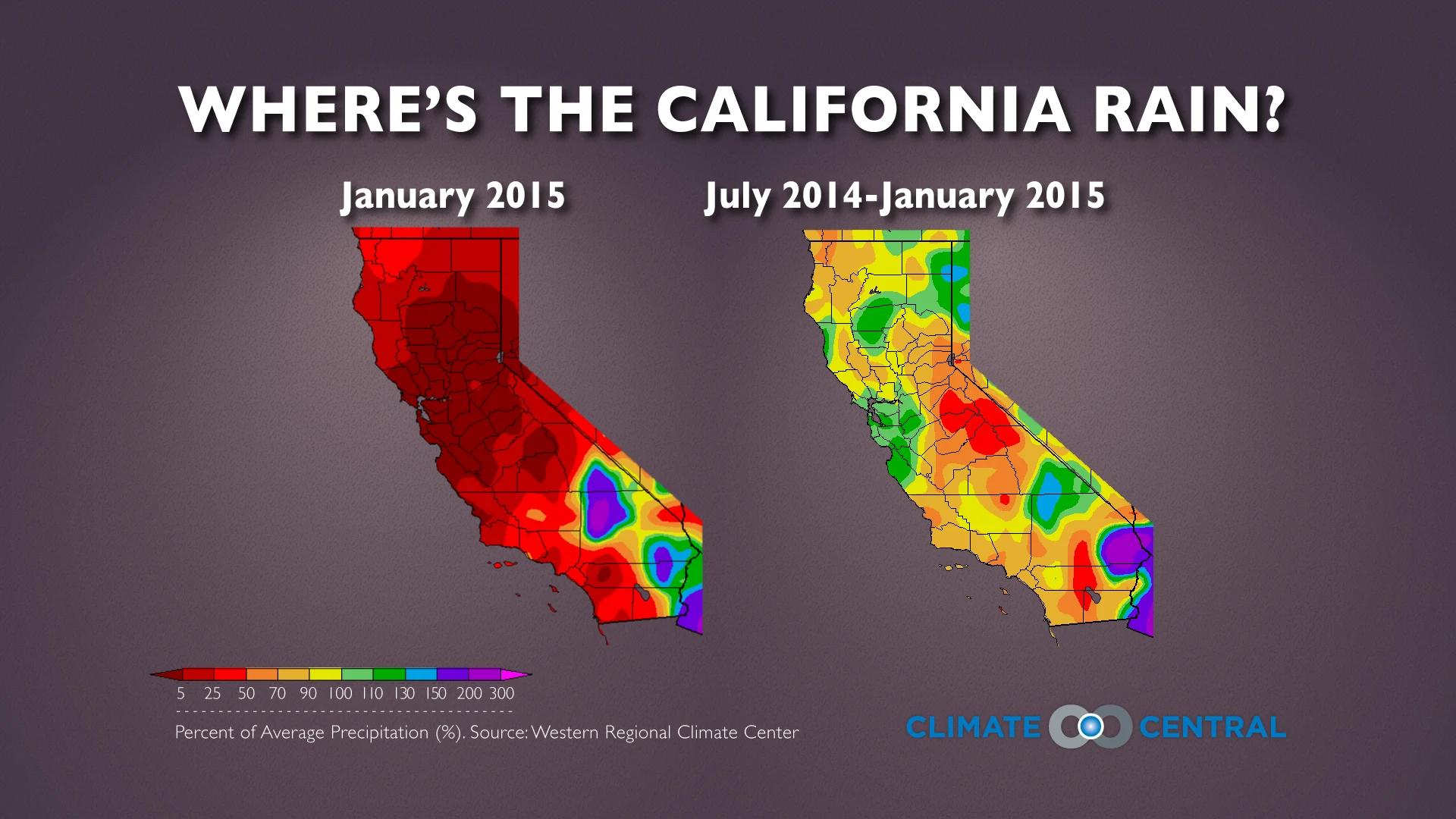
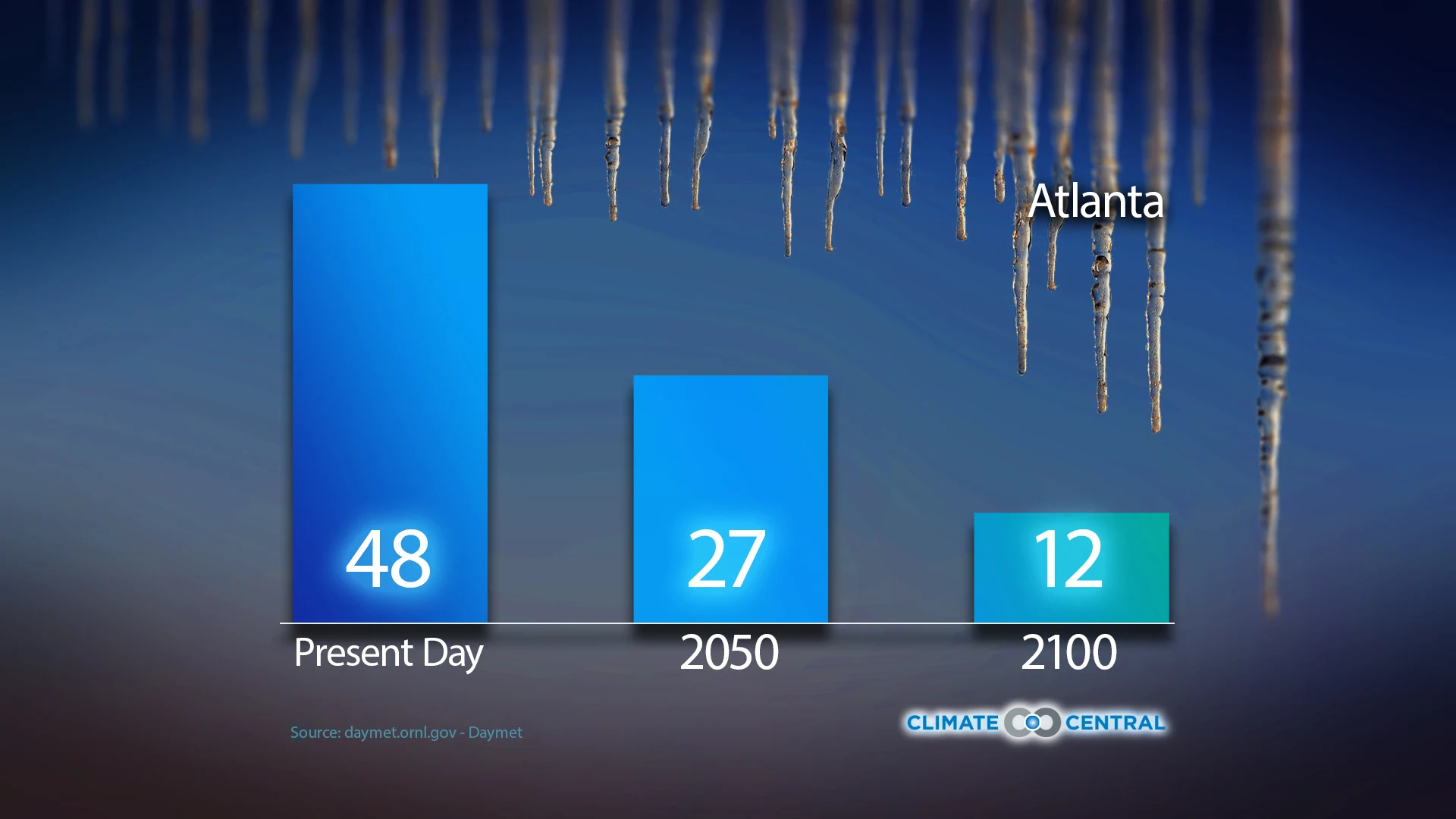
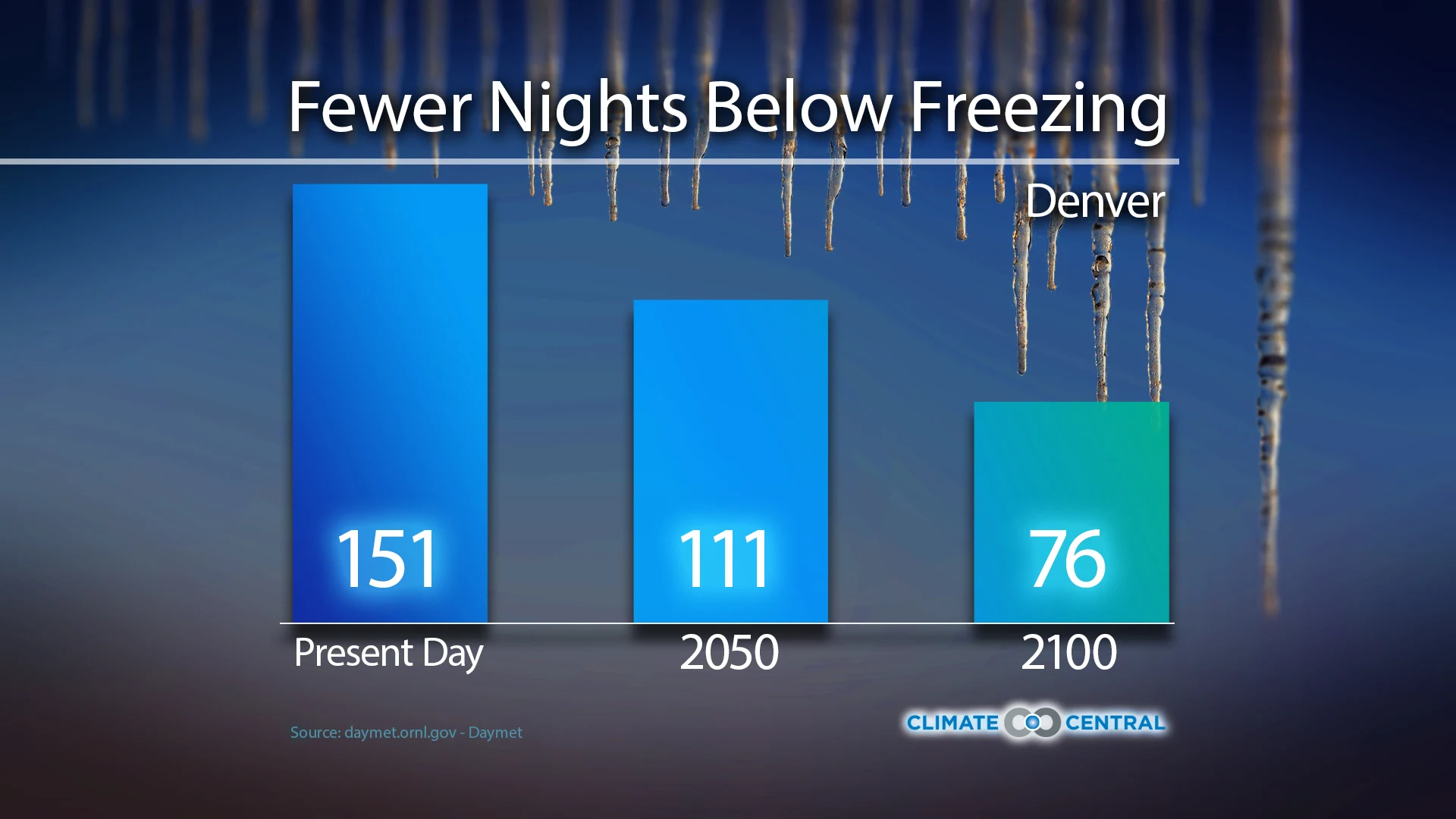
In the middle of winter, Americans in snow-covered parts of the country might be dreaming of milder southern winters. By the end of the century, they might get just that.
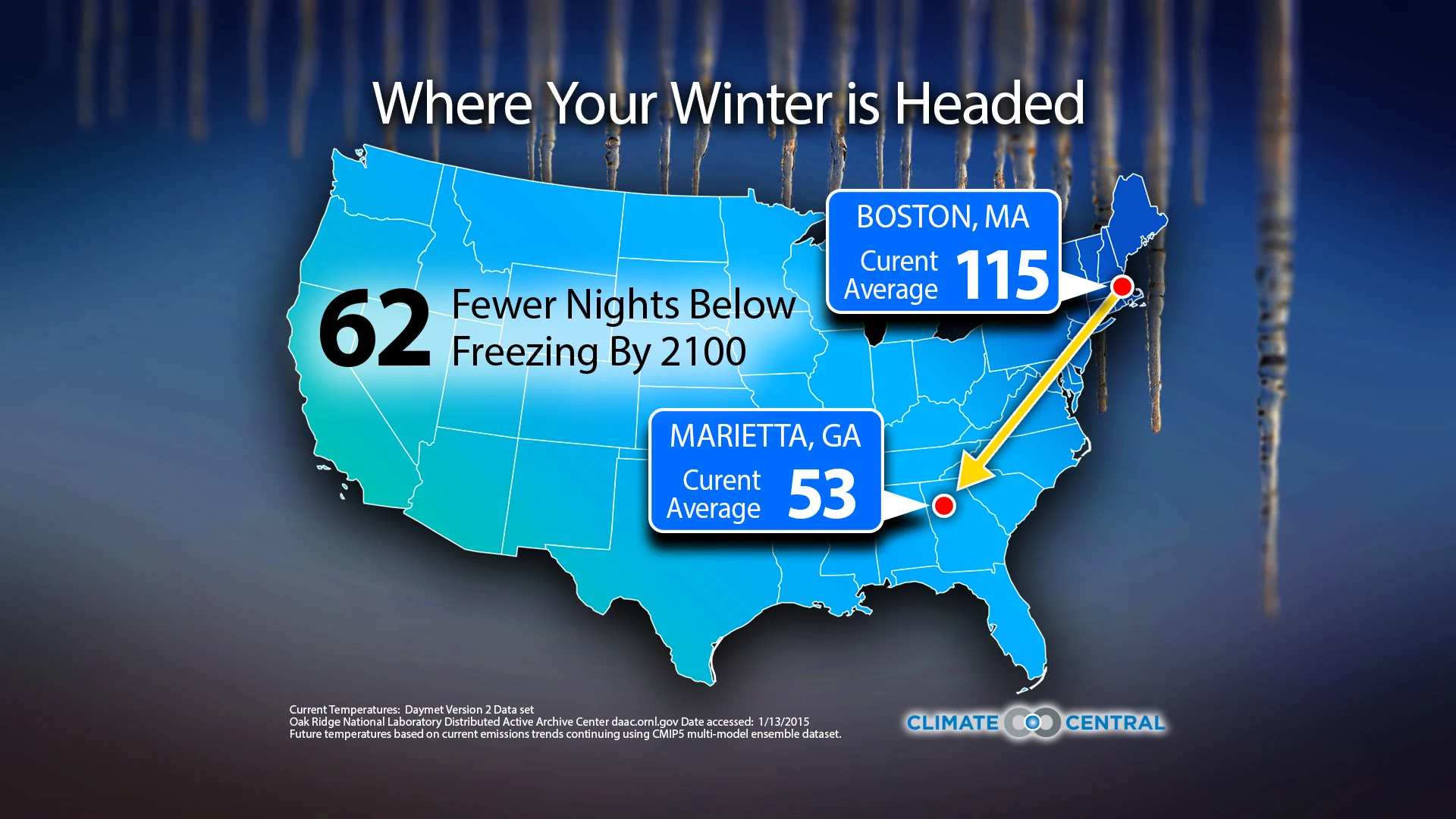
For example, by the end of the century, assuming the current emissions trends, Boston will experience 62 fewer freezing nights. That equates more to the current average climate in Marietta, Ga. Meanwhile, Buffalo currently records about 124 freezing nights each year, but is expected to notch about 57 a year by 2100, making it feel more like Charlotte, N.C.
While many Americans may welcome the prospect of milder winters for their day-to-day activities, there are impacts of warmer winters. Ski resorts require certain minimum temperatures to make and maintain snow, some crops rely on a chill period, and pests can flourish year-round in more regions if winter temperatures aren’t cold enough to kill them.
Climate Matters © 2015 by Climate Central is licensed under CC BY 4.0
This license grants permission to use, distribute, and reproduce all text, graphics, and multimedia content published on this page in any medium, provided that Climate Central is credited per the CC BY 4.0 license.
Permission to use data and other materials published on this page is granted for non-commercial uses, commercial news purposes, and educational purposes as governed by Climate Central's Terms of Use.