
Climate Matters•July 2, 2012•Reuse this content
Solar Potential
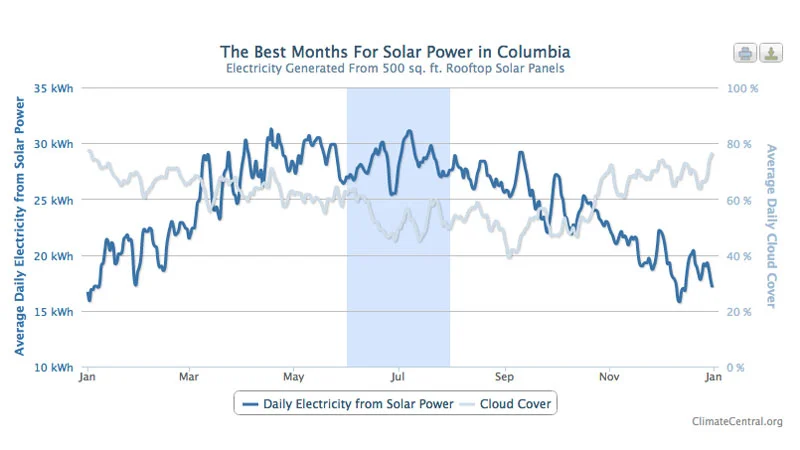
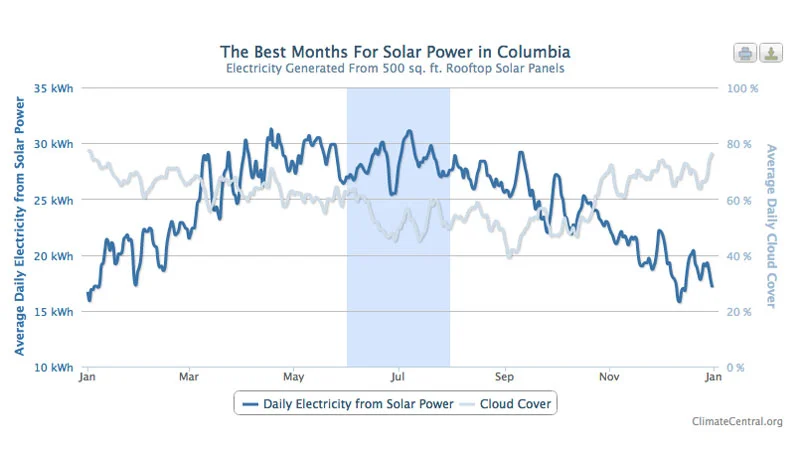
With the longer days of summer, we’re seeing more hours of sunshine everyday and the graphic above shows how these extra daylight hours make this the best time of year for solar power. The dark blue line shows on average how much electricity a typical rooftop solar panel installation (500 ft2) would generate each day of the year. During the summer months, these rooftop solar panels would provide all the electricity a typical U.S. household uses in a day, about 30 kilowatt hours. Each point represents a running five-day average and the data is derived from the National Solar Radiation Database.
Longer days aren’t the only reason that summer is the best season for solar power. Starting in late May and lasting through October, there are far fewer clouds in the skies over Columbia, which means more sunlight hits rooftop solar panels. The gray line in the above graphic shows how much of the sky is covered each day with clouds, as a running seven-day average.See the data for these cities:
Climate Matters © 2012 by Climate Central is licensed under CC BY 4.0
This license grants permission to use, distribute, and reproduce all text, graphics, and multimedia content published on this page in any medium, provided that Climate Central is credited per the CC BY 4.0 license.
Permission to use data and other materials published on this page is granted for non-commercial uses, commercial news purposes, and educational purposes as governed by Climate Central's Terms of Use.