
Climate Matters•January 11, 2018•Reuse this content
Recent Polar Outbreak in the Eastern U.S.
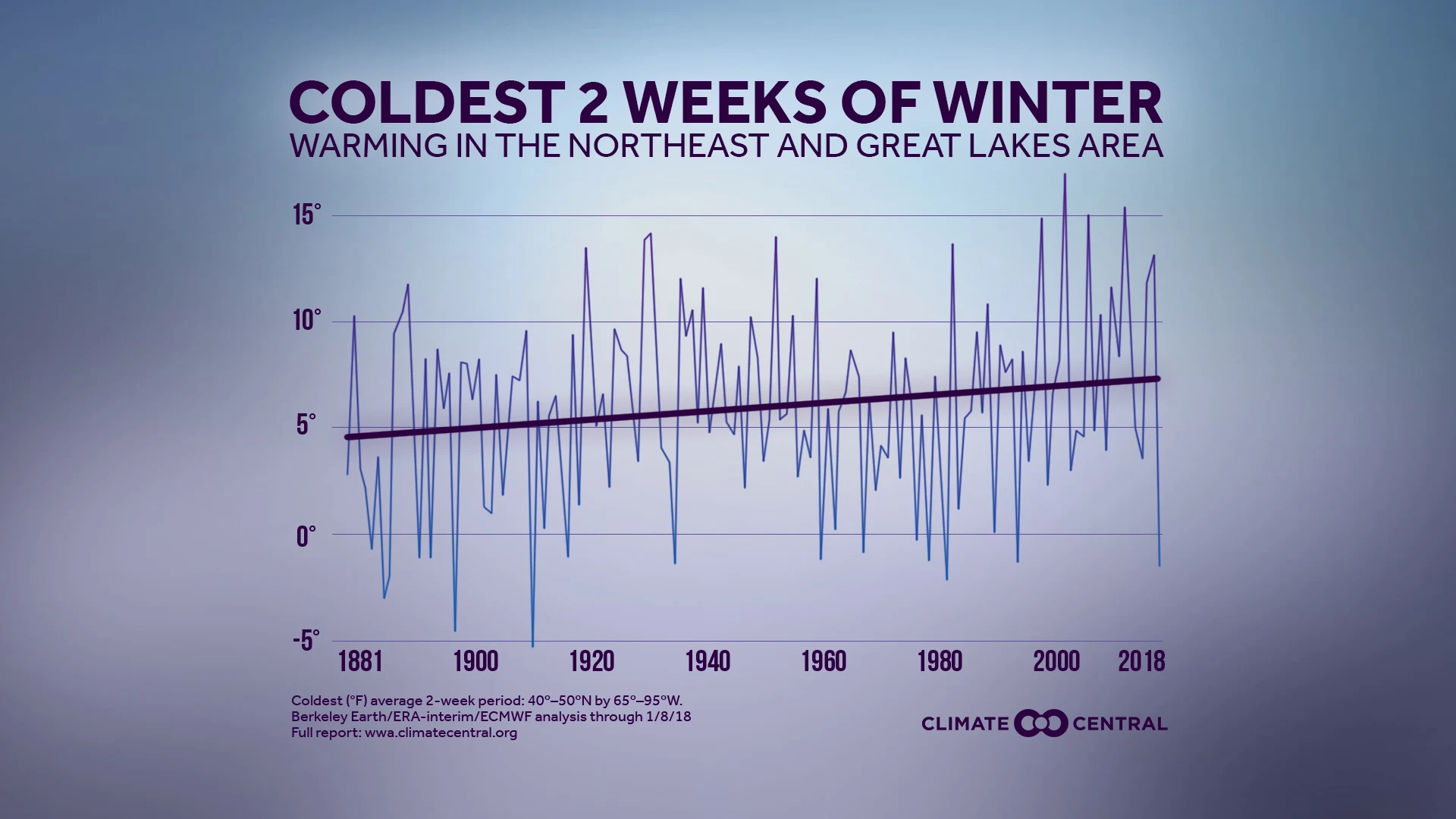
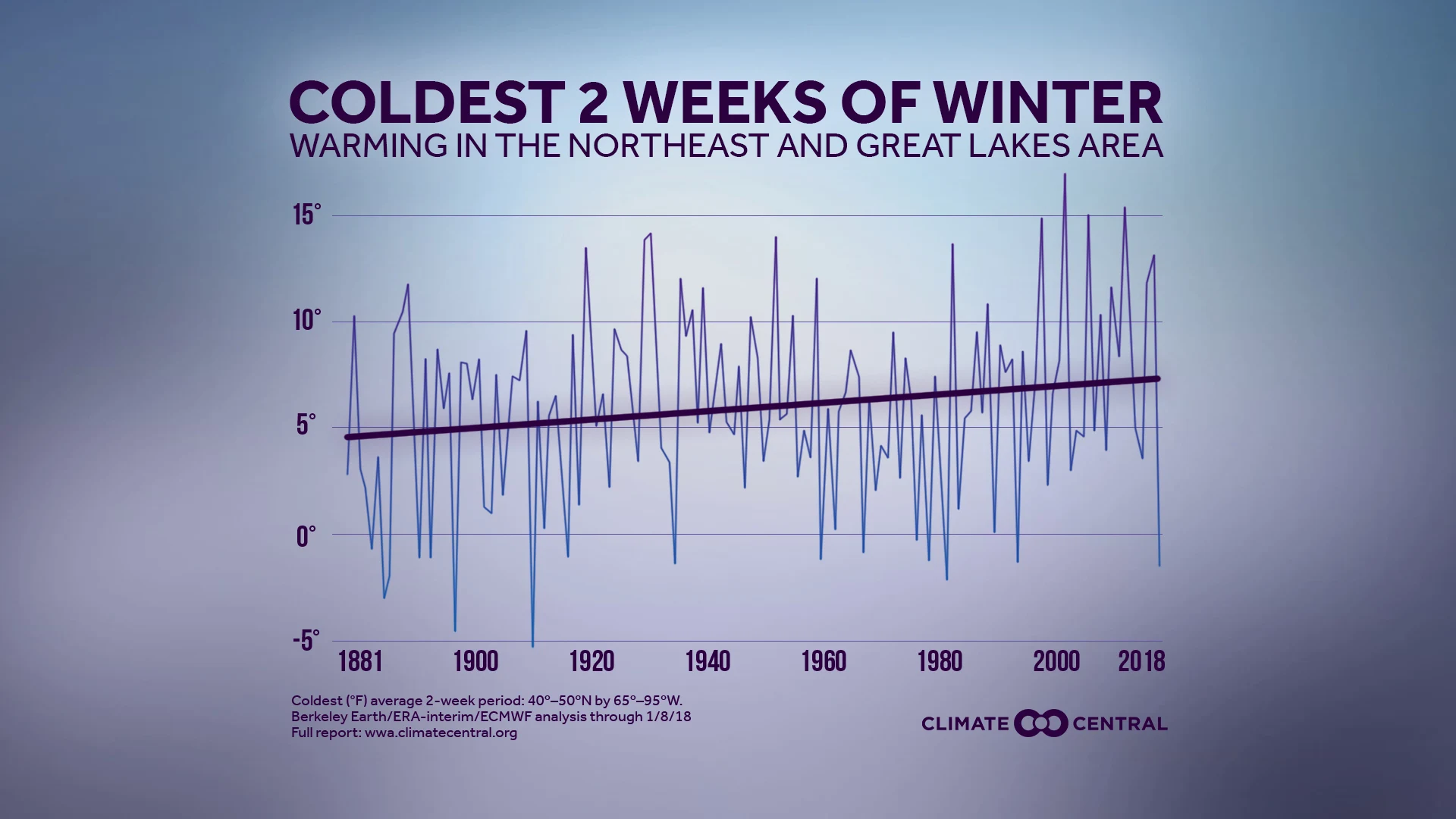
The recent cold spell in the U.S. has retreated for now, and our World Weather Attribution team analyzed its characteristics in the context of our changing climate.
Studying the region affected by the coldest anomalies in the northeastern U.S. and southeastern Canada resulted in the following conclusions:
This type of cold wave is about 15 times more rare, or about 4°F warmer than it was in the climate of a century ago.
This study found no evidence for an increased intensity of these cold waves, nor any evidence of an intensification of these types of cold waves due to rapid Arctic warming.
The analysis also indicated that this winter’s coldest 2-week period (so far) ranked 6th coldest on record. The last winter with a colder 2-week period was 1981-82. The four remaining colder 2-week periods all came before the 1920s.
There are 4 versions (titled, no title, and transparent backgrounds) of an enclosed graphic to illustrate this trend on the air, in print, or on your social media accounts.
For the full analysis, read the paper at the WWA website >>
The research was performed by the World Weather Attribution team, a partnership of Climate Central, the University of Oxford Environmental Change Institute (Oxford ECI), the Royal Netherlands Meteorological Institute (KNMI), the University of Melbourne, and the Red Cross Red Crescent Climate Centre (the Climate Centre). Follow WWA on Twitter: @wxrisk
Climate Matters © 2018 by Climate Central is licensed under CC BY 4.0
This license grants permission to use, distribute, and reproduce all text, graphics, and multimedia content published on this page in any medium, provided that Climate Central is credited per the CC BY 4.0 license.
Permission to use data and other materials published on this page is granted for non-commercial uses, commercial news purposes, and educational purposes as governed by Climate Central's Terms of Use.