Climate change in Albany, Georgia
Climate change is affecting locations like Albany in a variety of ways. In fall, these impacts include increased cooling demand, heavier rainfall, and changes to fall foliage.
Explore these pages to learn how people in Albany are at risk in a warming world.
Since 1970, average annual temperatures in Albany have gotten 5.1°F warmer, reflecting an overall warming trend.
Warming puts people and ecosystems at risk from more frequent and intense extreme weather.
Overall, the contiguous U.S. is about 2.8°F warmer today than in 1970, based on average temperatures.
Data source: NOAA ACIS
Since 1970, Albany's annual precipitation has decreased by 11.6 inches.
Climate change is supercharging the water cycle and bringing heavier precipitation extremes across the U.S.
For every 1°F of warming, the air can hold 4% more moisture, increasing the chances of heavier downpours that contribute to flash flooding hazards.
Data source: NOAA ACIS
As of November 16, 2026, Albany has experienced 62 days this year with temperatures made twice as likely by climate change.
This is according to the Climate Shift Index (CSI), which quantifies the influence of human-caused climate change on daily average temperatures. Temperatures on these days had a CSI level 2 or higher, which indicates local temperatures were at least two times more likely due to climate change.
The CSI ranges from -5 to +5. Positive levels indicate temperatures made more likely due to climate change (while negative scores indicate conditions made less likely).
Data source: Climate Shift Index
Albany's climate threats in include:
Between 1980 and 2025, Georgia experienced 27 billion-dollar hurricanes.
As the planet warms, extreme weather events are becoming more frequent and intense, resulting in devastating losses.
Tropical cyclones (which include hurricanes and tropical storms) are the most costly extreme weather events in the U.S.
This data shows the total number of hurricanes with at least one billion dollars in damages that occurred during 1980-2025.
Data source: U.S. Billion Dollar Weather and Climate Disasters
Since 1970, average fall temperatures in Albany have gotten 4.1°F warmer, reflecting an overall warming trend.
Fall warming means that risky heat, fire weather, and allergies linger later into the year.
Data source: NOAA ACIS
The amount of rainfall during the heaviest rain events each year in the Southeast has increased by 37% since 1958.
Climate change is supercharging the water cycle, bringing heavier precipitation extremes across the U.S.
This chart shows how the amount of rainfall during the top 1% heaviest rain events each year in the Southeast increased between 1958 to 2021.
Data source: Fifth National Climate Assessment
Albany has experienced 18 more extremely hot days (with temperatures at or above 96°F) since 1970.
More frequent and intense extreme heat — the deadliest type of weather in the U.S. — is a direct result of a warming planet.
Extremely hot days are defined as days with maximum temperatures hotter than 95% of local temperatures from 1991-2020.
Data source: NOAA ACIS
Explore some ways climate change is affecting Albany in fall
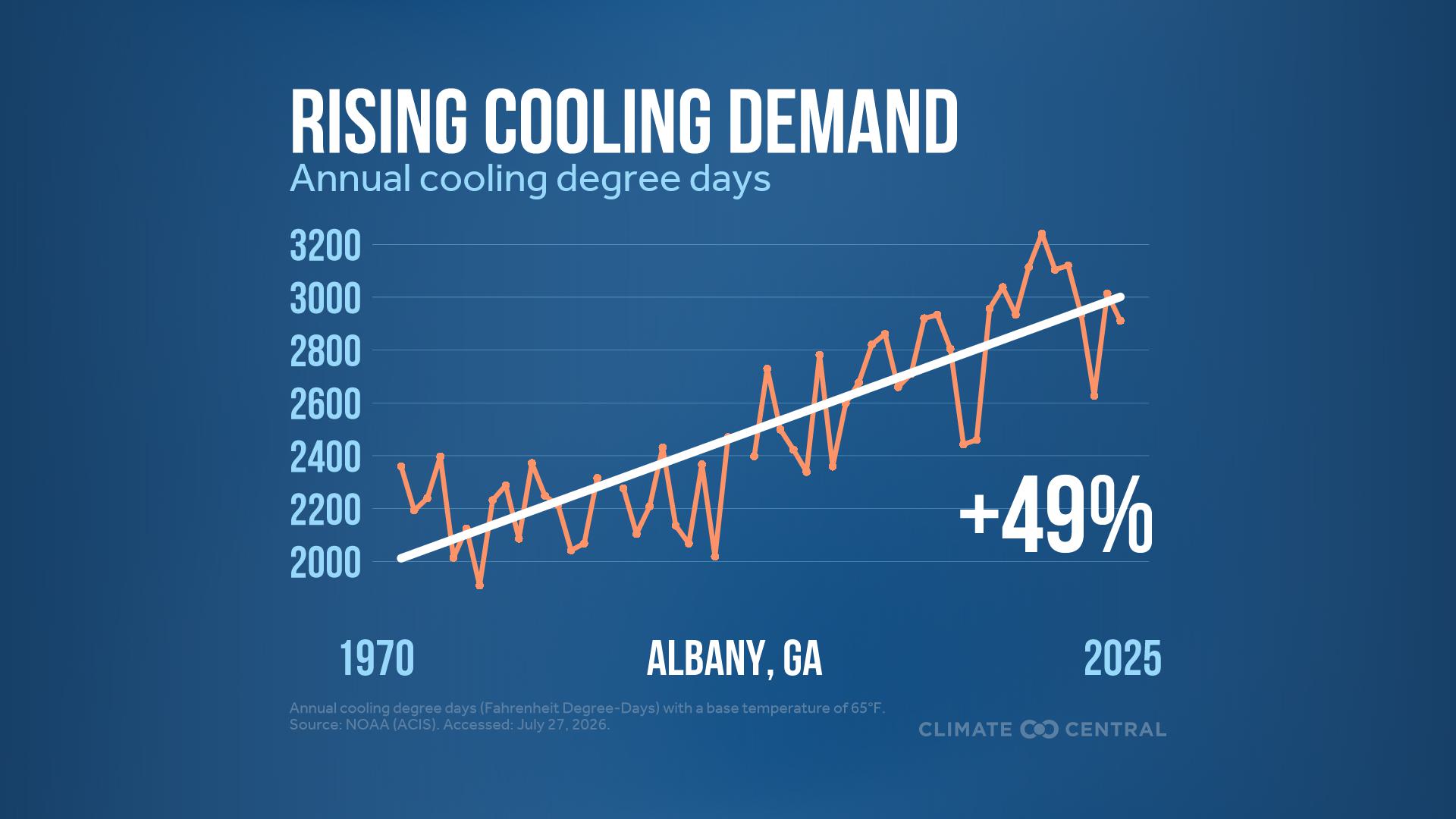
Higher cooling demand
Cooling degree days — an estimate of cooling demand — have increased since 1970 in 97% of major U.S. cities analyzed.
Key concepts:
- Demand for cooling is rising across the U.S., contributing to higher energy bills as households rely more on air conditioning in our warming climate.
- Cooling degree days — a temperature-based metric used to estimate the demand for energy to cool buildings — have increased since 1970 in 97% of the 241 major U.S. cities analyzed by Climate Central.
- As the climate warms, rising cooling demand and electricity costs can make it harder for people who lack or cannot afford air conditioning to stay safe during extreme heat events.
Heavier rainfall
Hourly rainfall intensity — a key factor in flash floods — has increased in 129 cities across the U.S. since 1970.

Key concepts:
- Climate change is supercharging the water cycle, bringing heavier rainfall extremes and related flood risks across the U.S.
- Some 129 U.S. cities (90% of 144 analyzed) have experienced an increase in hourly rainfall intensity since 1970.
- People and ecosystems in both wet and dry locations are facing the risks that come with heavier rainfall in our warming climate.
Impacts to fall color
Conditions that trigger fall color are shifting with climate change.
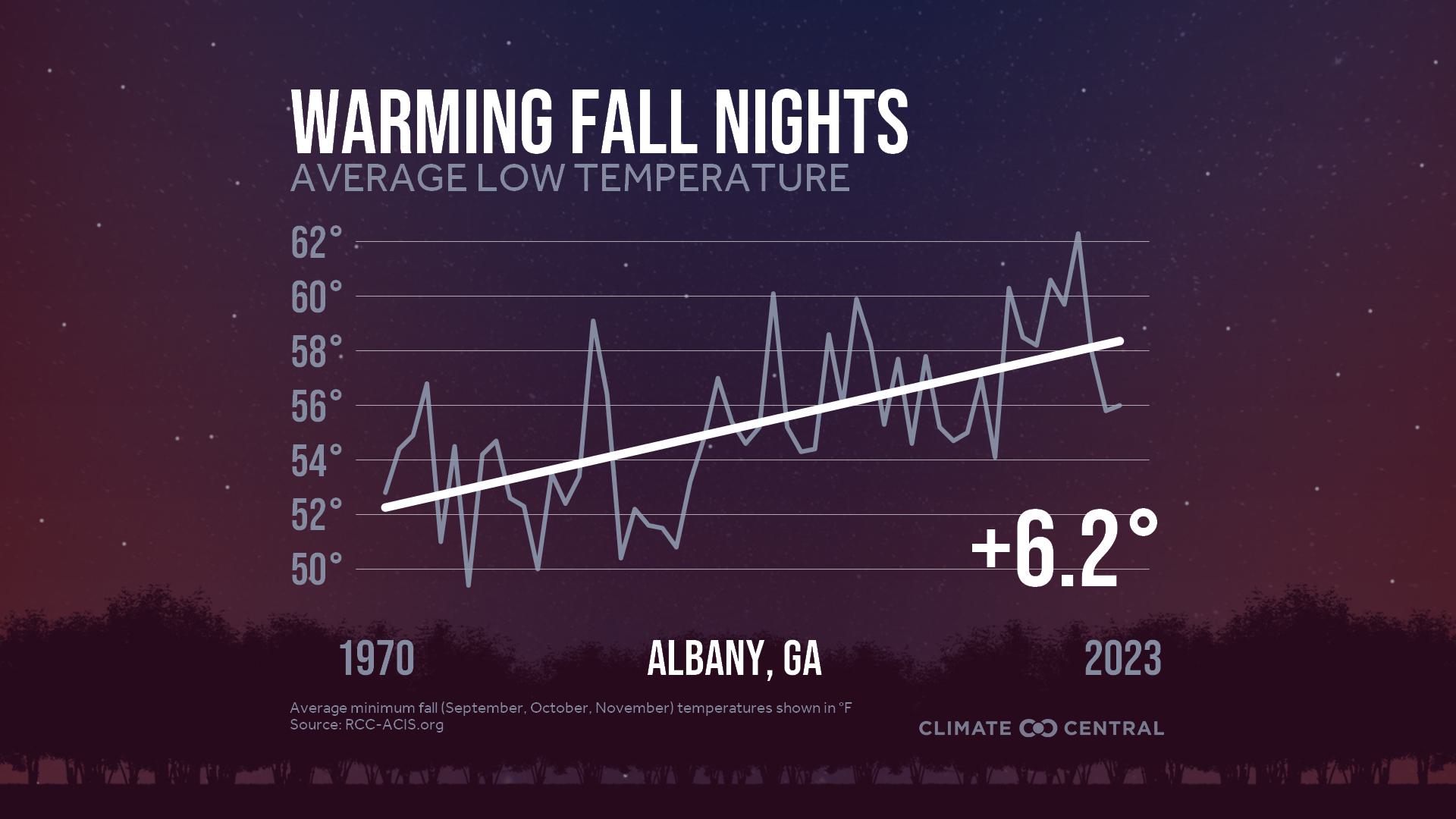
Key concepts:
- Foliage depends on temperature, day length, and rainfall — as well as other conditions including extreme weather events.
- Cool fall nights can boost color, but they have warmed 2.7°F (1970–2023) in 212 U.S. locations.
- Warmer falls can delay or shorten peak foliage.
More warm fall days
Fall (September-November) has warmed nationwide since 1970.
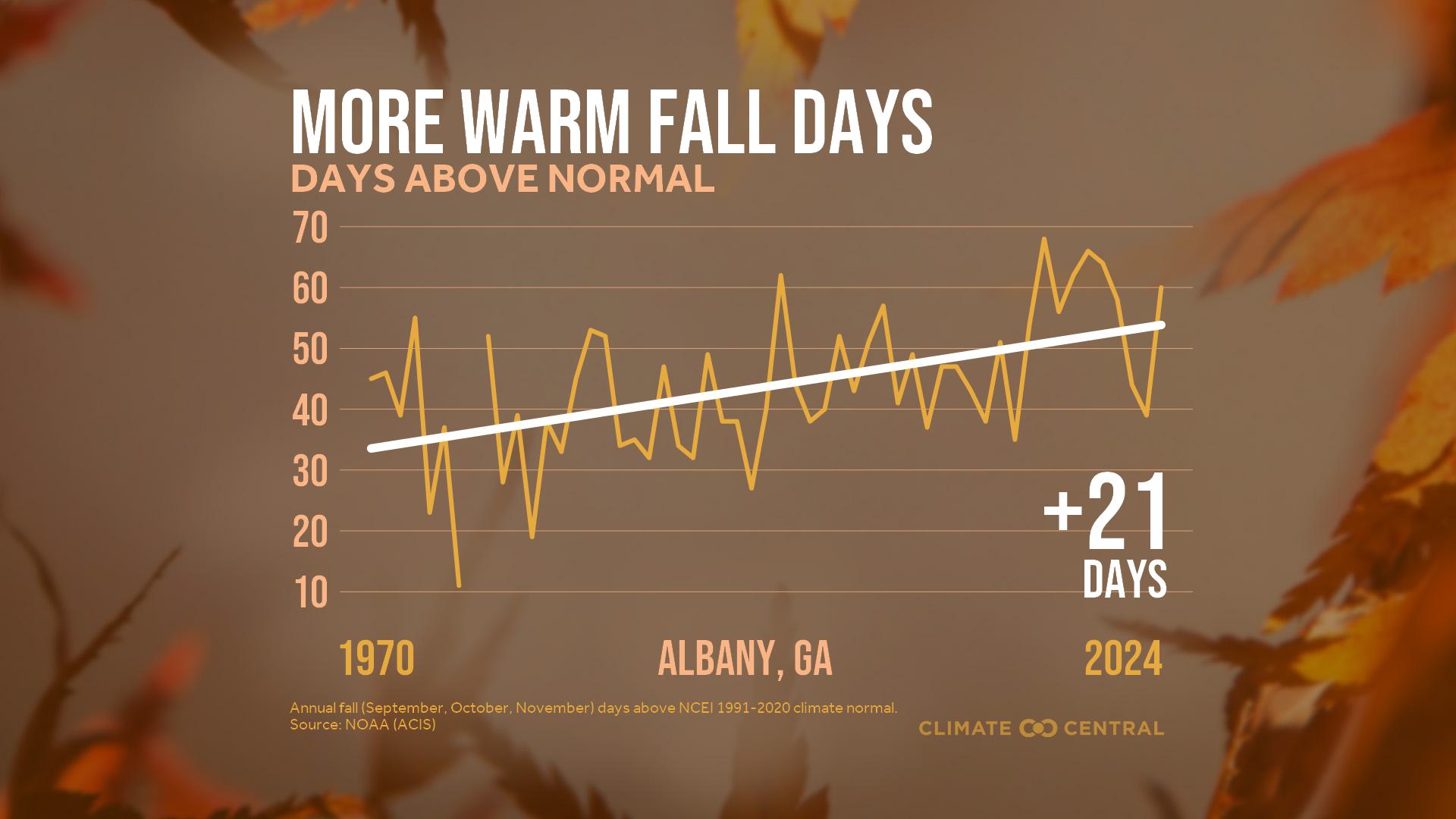
Key concepts:
- Fall (September - November) has warmed nationwide since 1970.
- Warming is nationwide, strongest in the Southwest.
- Hotter falls extend risks from heat, wildfire, allergies, and more.
More intense hurricanes
Warmer oceans from climate change fuel stronger hurricanes.
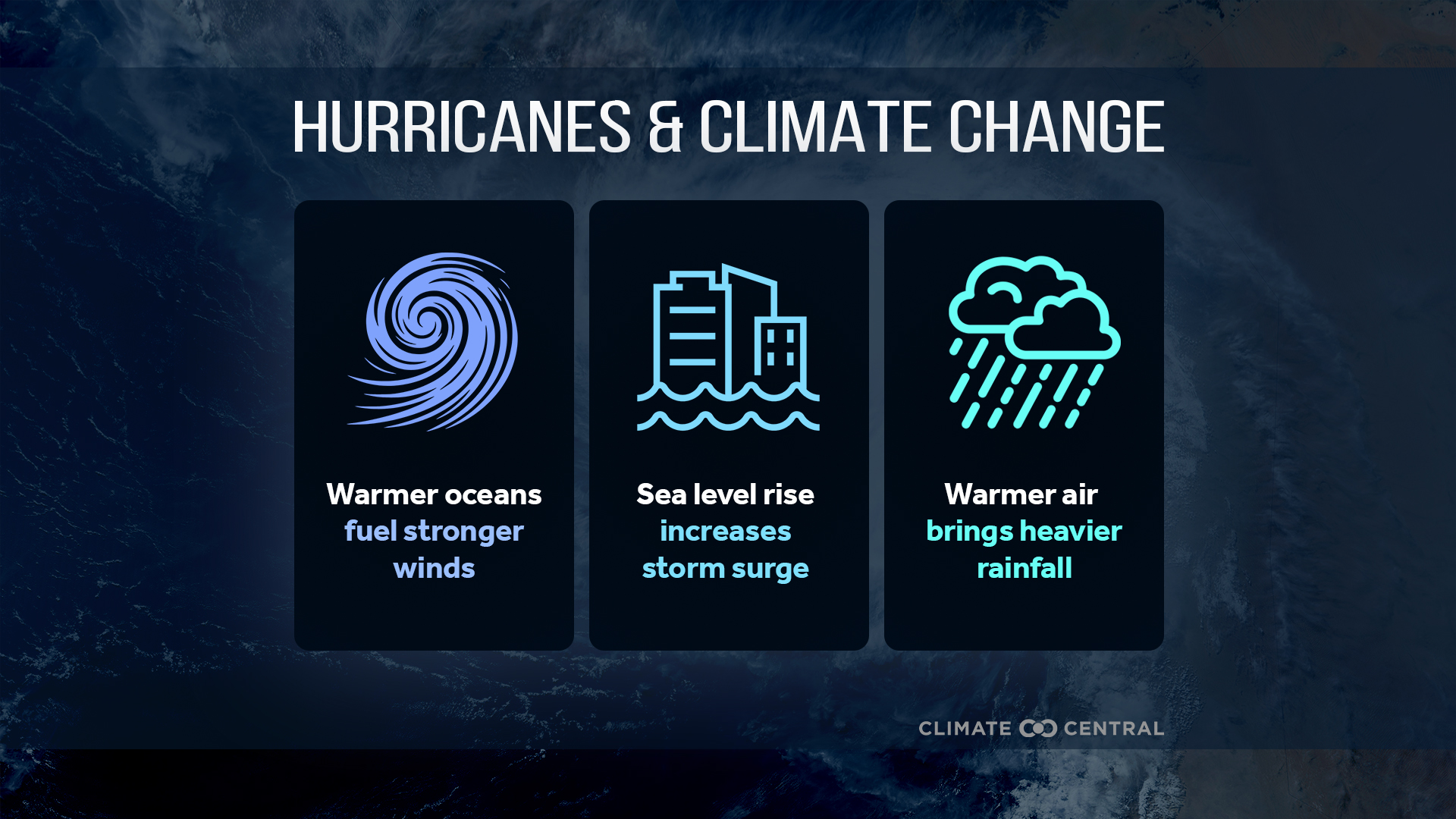
Key concepts:
- Warmer oceans from climate change fuel stronger Atlantic hurricanes with heavier rain and higher storm surge.
- Rising seas amplify storm surge, increasing risks for coastal residents.
- Warmer air holds more moisture, driving heavier downpours and flooding.
Impacts to food prices
Extreme events fueled by climate change can damage crops, reduce yields, and disrupt supply chains.
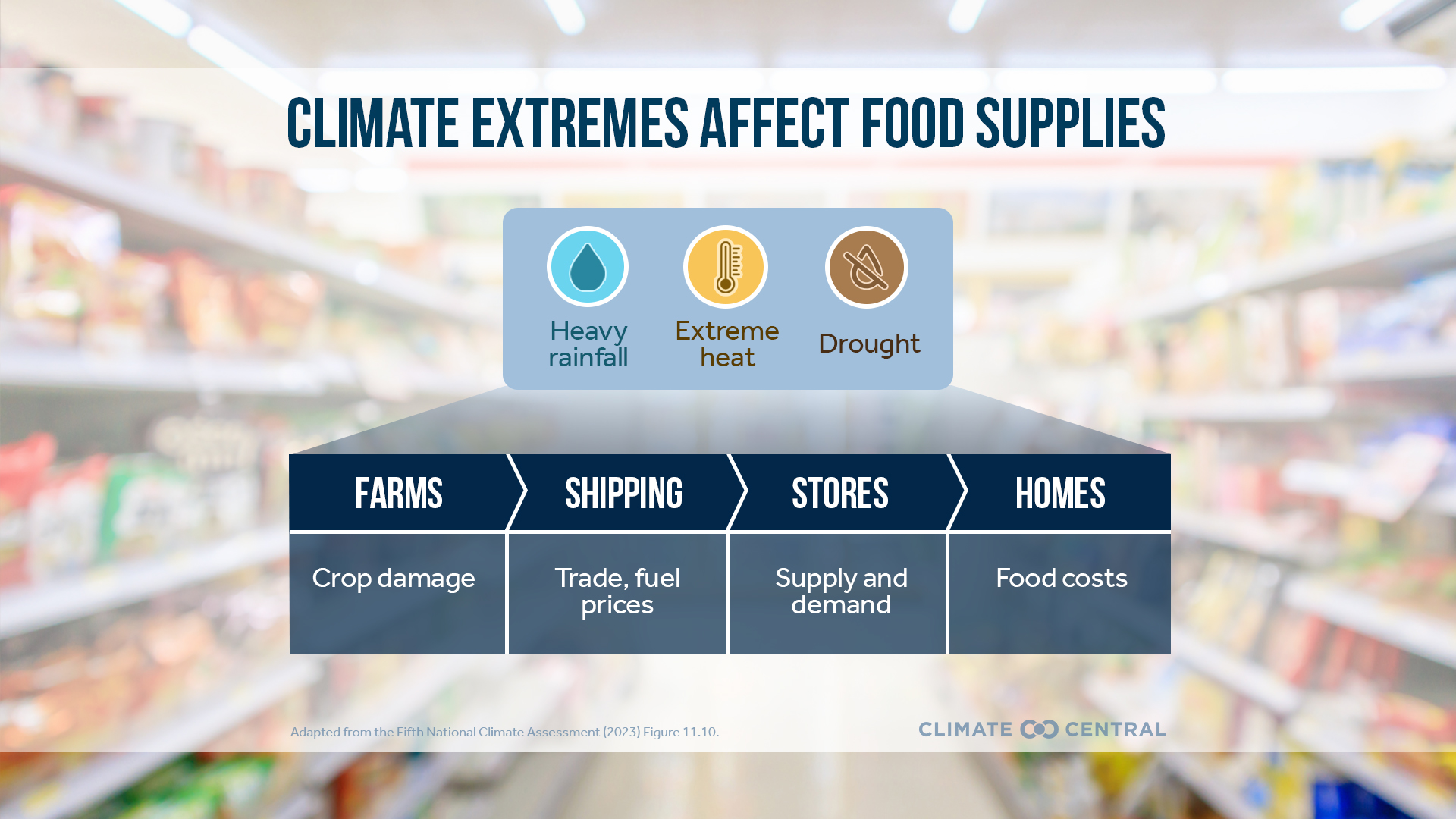
Key concepts:
- Food and climate change are closely linked. Food systems account for about one-quarter of all heat-trapping pollution.
- Meanwhile, extreme events fueled by climate change can damage crops, reduce yields, and disrupt supply chains — all of which can drive food prices higher.
- The availability, quality, and affordability of food reflect a complex set of climatic and socioeconomic factors. Emerging research is providing insight into the role of climate change.
More graphics about Albany and climate change
Browse climate-related graphics for all seasons localized for Albany, available for download and use consistent with our Terms of use.