Climate Shift Index Alert•December 19, 2025
Holiday U.S. warmth boosted by climate change
The U.S. has had a fairly chilly December so far, but things are heating up for the holidays. Christmas is expected to be exceptionally warm across a majority of the United States, particularly the Great Plains.
A Climate Central analysis shows that this unusual holiday warmth, running 20°F to 35°F above average, is at least two to three times more likely to occur due to human-caused carbon pollution.
Note: This event may continue beyond December 25, 2025. Use the Global Climate Shift Index map to stay updated on heat in your region.
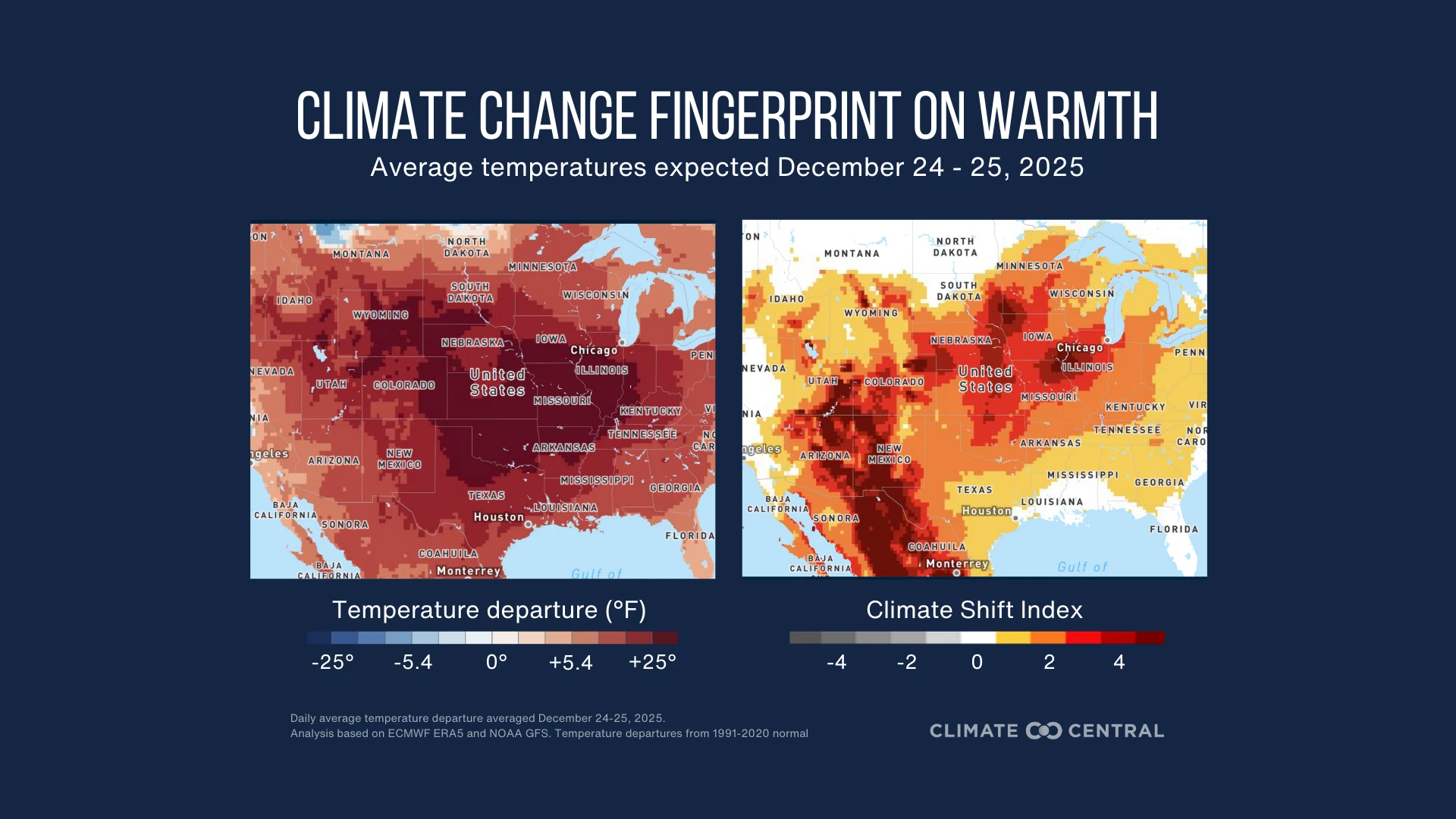
How unusual is the forecasted heat?
Above-average temperatures are forecast across much of the country during the holiday, but the core of the warmth — where departures from normal will be the largest — is anticipated to extend from the Front Range of the Rockies into the Central Plains and Upper Midwest.
Over Christmas Eve and Christmas Day, daily high temperatures in these regions are forecast to range between 20°F and 35°F above the 1991-2020 climate normals.
Much of the western and eastern U.S. is also expected to experience unusual warmth, 5°F to 15°F above average.
Holiday high temperatures are anticipated to reach the 60s to 80s from the Plains to the Gulf Coast. For many, this warmth will challenge or break daily high temperature records.
On Christmas morning, low temperatures are expected to range from 40°F to the mid-60s, or up to 25°F above average for late December.
How has climate change influenced this heat?
Climate Shift Index (CSI) levels of 3 are forecast across the Central and Northern Plains, Upper Midwest, and the Southwest, meaning human-caused climate change made this warmth at least 3 times more likely.
CSI levels of 5 — the highest possible — are forecast in portions of Missouri and throughout the Southwest and Mexico, signaling an exceptional climate-influenced event.
🎅 What does this mean for Mr. Claus? 🎅
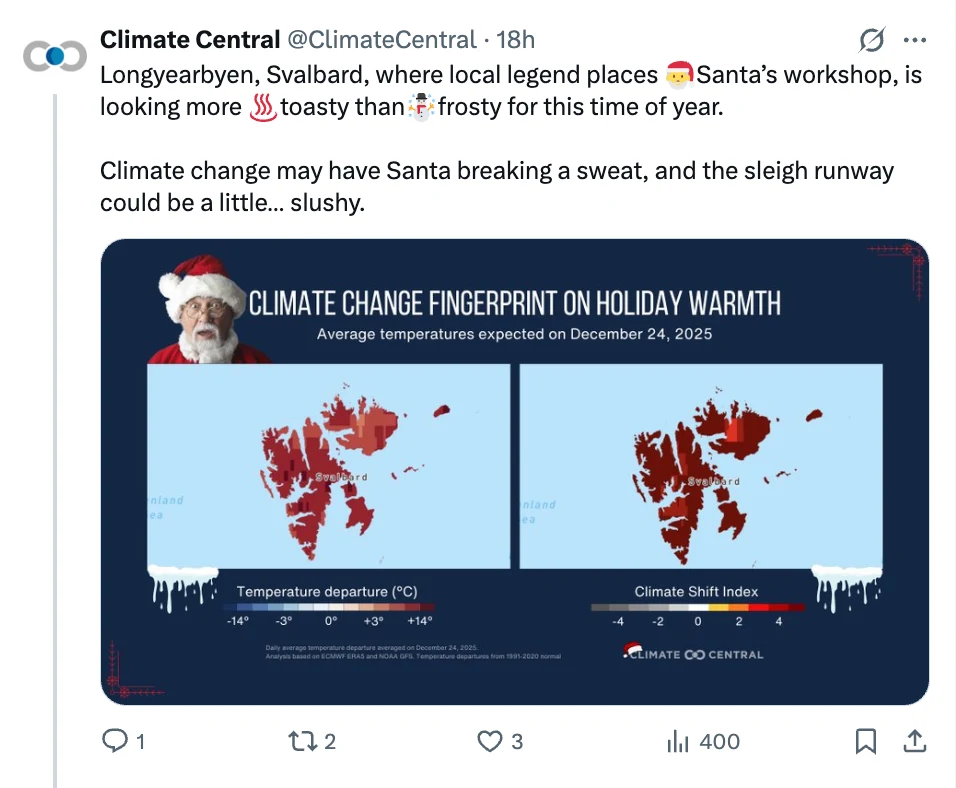
Share Santa's climate update here.
To request an interview with a Climate Central scientist, please contact Abbie Veitch at aveitch@climatecentral.org.
How do we know climate change is influencing this heat?
The Climate Shift Index uses peer-reviewed methodology and real-time data to estimate how climate change has increased the likelihood of a particular daily temperature.
Reporting resources
Bring this high-resolution data into your on-air broadcasts. → Access the Climate Shift index in KML format
Winter has warmed in 98% of 244 U.S. Cities. → Explore the Data
For an in-depth guide about how to report on attribution science and extreme weather types → World Weather Attribution’s reporting guide
For the latest research-backed messaging to use while reporting on climate change → Potential Energy’s Guide to Reporting on Unnatural Disasters