Climate change in Arkansas
Climate change is affecting locations like Arkansas in a variety of ways. In winter, these impacts include fewer freezing nights, more frequent weather-related power outages, and more unusually warm days.
Explore these pages to learn how people in Arkansas are at risk in a warming world.
Since 1970, average annual temperatures in Arkansas have gotten 2.5°F warmer, reflecting an overall warming trend.
Warming puts people and ecosystems at risk from more frequent and intense extreme weather.
Overall, the contiguous U.S. is about 2.8°F warmer today than in 1970, based on average temperatures.
Data source: NCEI Climate at a Glance
Since 1970, Arkansas' annual precipitation has increased by 4.1 inches.
Climate change is supercharging the water cycle and bringing heavier precipitation extremes across the U.S.
For every 1°F of warming, the air can hold 4% more moisture, increasing the chances of heavier downpours that contribute to flash flooding hazards.
Data source: NCEI Climate at a Glance
Arkansas' climate threats in include:
During the past 20 years, Arkansas experienced 39 more billion-dollar disasters from severe storms compared to the previous 20 years.
As the planet warms, extreme weather events are becoming more frequent and intense, resulting in devastating losses.
This data shows how the total number of severe storms with at least one billion dollars in damages has changed from 1980-1999 to 2005-2024.
Data source: NCEI U.S. Billion-Dollar Weather and Climate Disasters
Since 1970, average winter temperatures in Arkansas have gotten 3.8°F warmer, reflecting an overall warming trend.
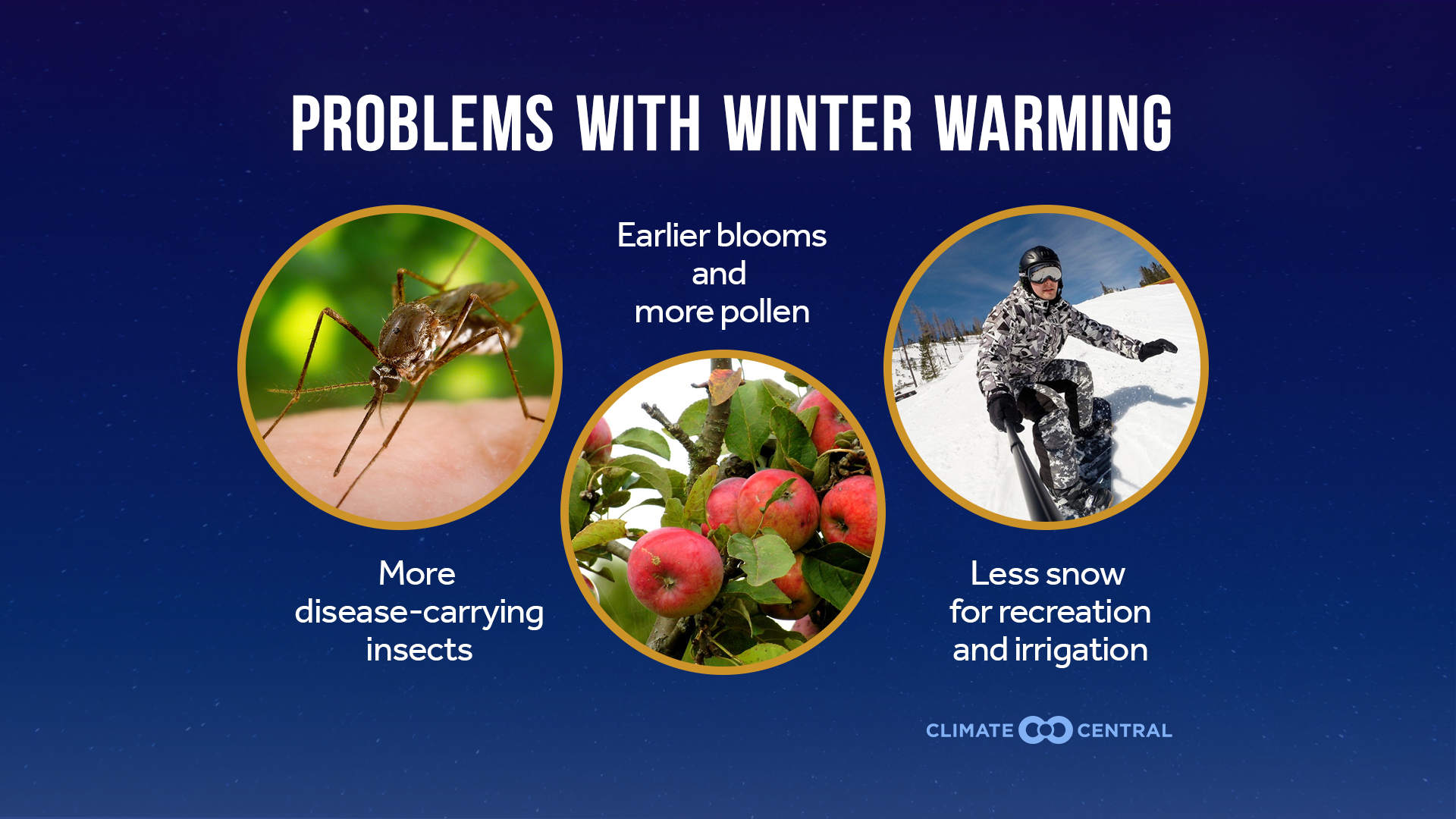
Higher temperatures during the colder season can impact fruit and nut trees, human health, and winter sports.
Winter is the fastest warming season in Arkansas since 1970.
Data source: NCEI Climate at a Glance
Explore some ways climate change is affecting Arkansas in winter
Fewer freezing nights
The coldest nights of the year are warming
Key concepts:
- The coldest nights of the year are warming across the U.S.
- 91% of locations analyzed have fewer freezing nights since 1970.
- This is part of a larger trend of especially rapid warming in cool regions and seasons.
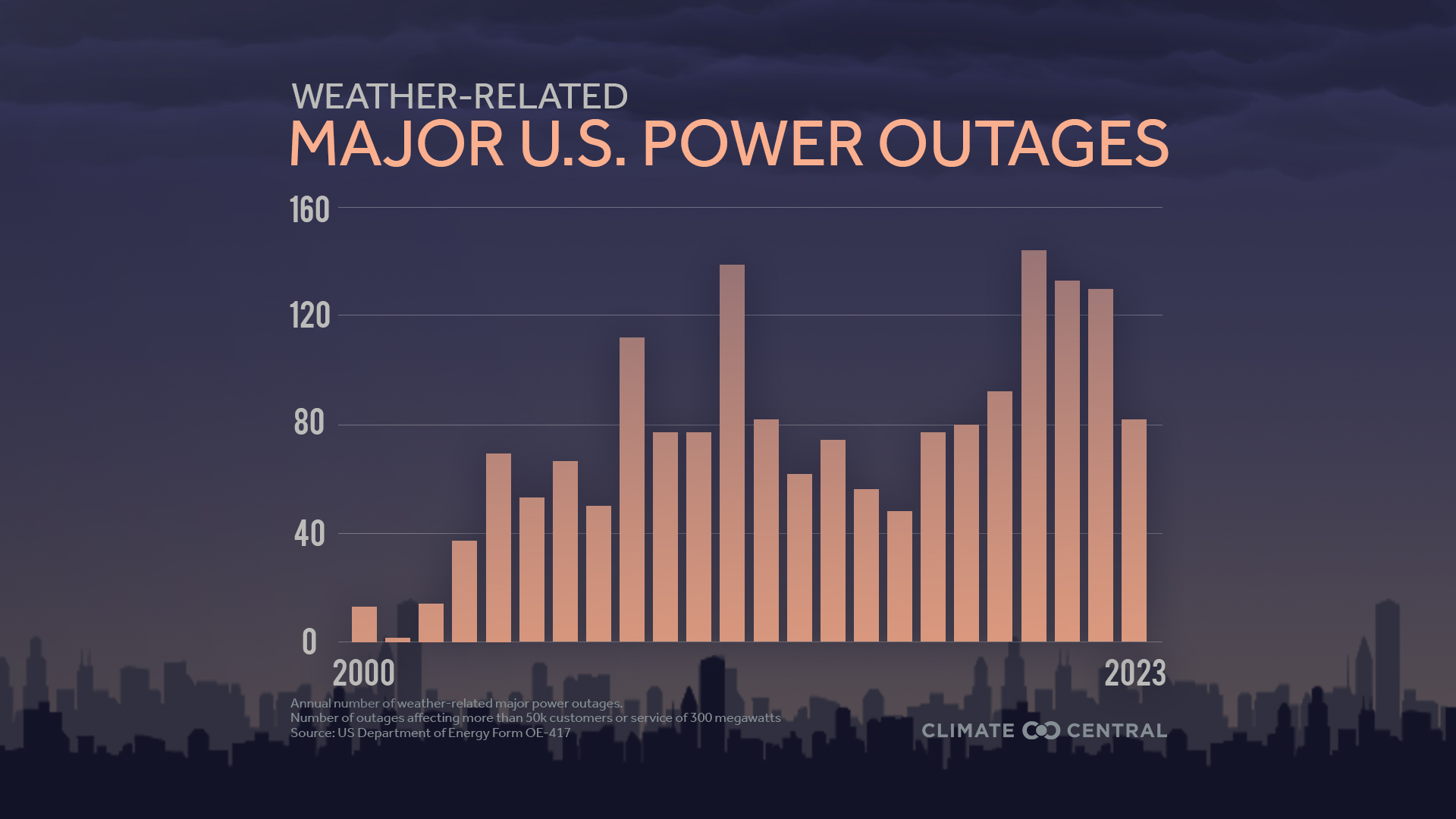
More weather-related power outages
Extreme weather events put stress on aging energy infrastructure.
Key concepts:
- From 2000–2023, 80% of major U.S. power outages were weather-related.
- Causes included severe weather (58%), winter storms (23%), tropical cyclones (14%).
- Hardest-hit regions included Southeast, South, Northeast, and Ohio Valley.
More warm winter days
Winter has warmed nationwide since 1970

Key concepts:
- Winter is the fastest-warming season for most of the U.S. — affecting snowfall, water supplies, winter sports, spring allergies, summer fruits, and more.
- From 1970 to 2025, winters have warmed in 98% of the 244 U.S. cities analyzed by Climate Central — by 3.9°F on average.
- Most cities (88%) now experience at least seven more warmer-than-normal winter days than they did in the early 1970s.
- In our warming world, the coldest days aren’t as cold and cold snaps are shrinking.
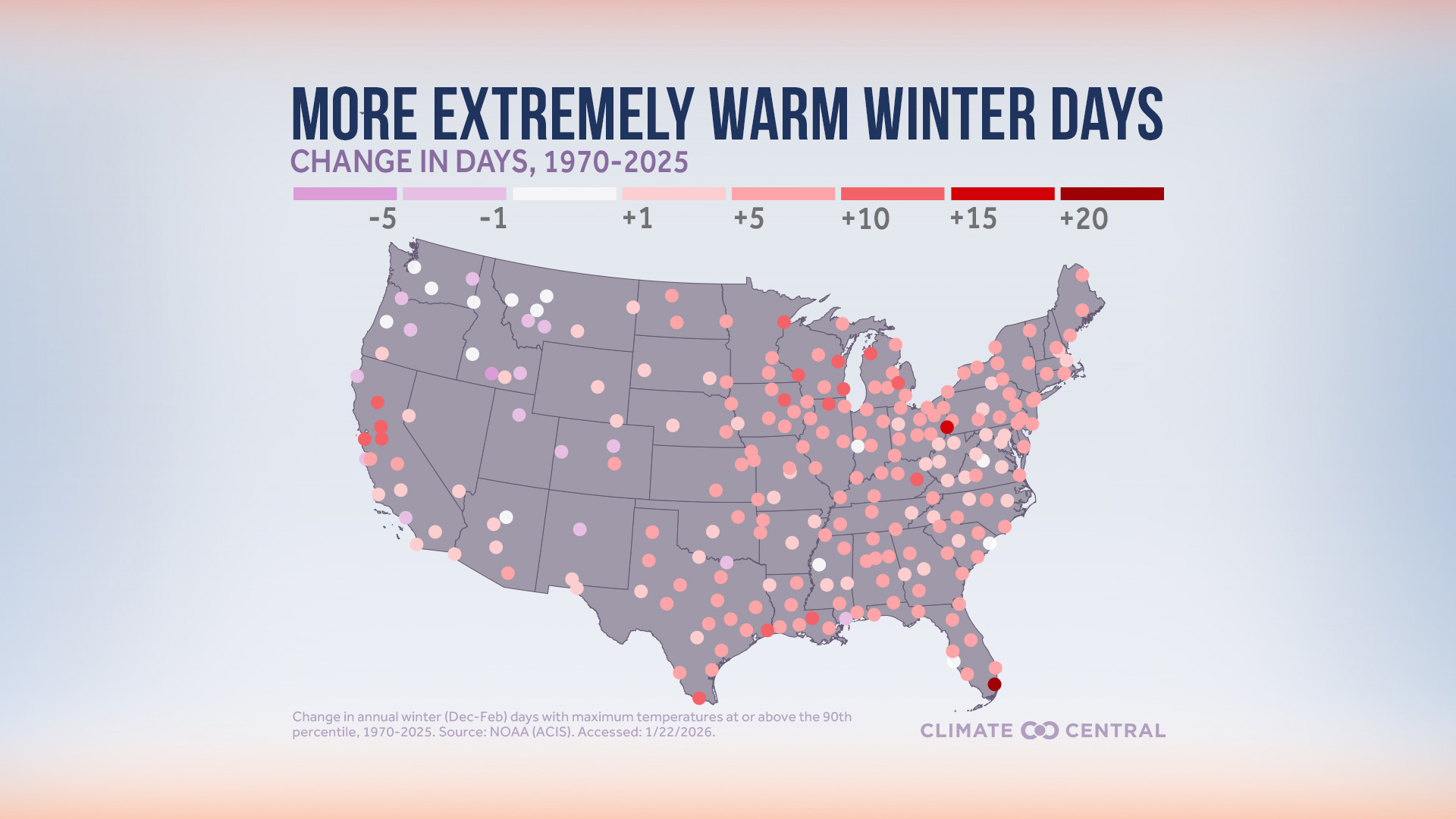
More extreme winter warmth
There are more extremely warm winter days now compared to the 1970s.
Key concepts:
- Long-term trends show that winter is warming quickly and the warmest days of the season now happen more often.
- Most (86%) of the 244 U.S. cities analyzed by Climate Central now experience more extremely warm winter days than in the 1970s — six more days on average.
- Cities across the Upper Midwest have seen the sharpest rise in extremely warm winter days, with eight more such days now than during the 1970s.
- Warming winters have year-round effects on seasonal allergies, winter sports, fruit and nut crops, water supplies, and more.
Shorter winters
The coldest time of year is shrinking.

Key concepts:
- Winters are getting shorter in 195 (80%) of 245 major U.S. cities.
- On average, the coldest time of year is now nine days shorter than during 1970-1997.
- The shortening winter season is especially pronounced across the Southeast, Northeast, Upper Midwest, and South.
- Shorter, warmer winters have direct effects on winter recreation — and lingering effects on health, water supplies, ecosystems, and agriculture throughout the year.
More graphics about Arkansas and climate change
Browse climate-related graphics for all seasons localized for Arkansas, available for download and use consistent with our Terms of use.