'%3e%3cpath%20d='M19.026%2018.7732C17.429%2020.0902%2015.832%2020.8802%2013.57%2020.8802C9.71101%2020.8802%206.783%2017.7202%206.783%2013.6392V13.5072C6.783%209.42616%209.71101%206.26616%2013.57%206.26616C15.566%206.26616%2017.163%206.92416%2019.026%208.50416C20.091%206.92416%2021.555%205.60716%2023.418%204.81716L23.284%204.68616C20.623%202.05316%2017.562%200.868164%2013.57%200.868164C6.25101%200.868164%200.662003%206.26616%200.662003%2013.5082V13.6382C0.662003%2017.0622%201.993%2020.2222%204.255%2022.5922C6.65%2024.9622%209.844%2026.2782%2013.304%2026.2782C17.429%2026.2782%2020.224%2025.0932%2023.018%2022.3282C21.421%2021.4072%2019.958%2020.2222%2019.026%2018.7732ZM40.318%201.00016C36.458%201.00016%2033.132%202.44816%2030.736%204.95016C32.599%205.74016%2034.063%207.05616%2035.128%208.63616C36.325%207.32016%2038.188%206.39816%2040.318%206.39816C44.31%206.39816%2047.37%209.55816%2047.37%2013.6392V13.7712C47.37%2017.8522%2044.31%2020.8812%2040.451%2020.8812C38.321%2020.8812%2036.591%2020.0912%2035.261%2018.6422C34.196%2020.3542%2032.599%2021.6712%2030.736%2022.3292C33.132%2024.6992%2036.458%2026.1472%2040.318%2026.1472C47.636%2026.1472%2053.492%2020.6172%2053.492%2013.5072C53.359%206.39916%2047.77%201.00016%2040.318%201.00016Z'%20fill='%23FBFCFC'/%3e%3cpath%20d='M19.559%2013.6402C19.559%209.55816%2022.885%206.26716%2027.011%206.26716C31.136%206.26716%2034.463%209.55816%2034.463%2013.6402C34.463%2017.7212%2031.136%2021.0132%2027.011%2021.0132C22.885%2021.0132%2019.559%2017.7212%2019.559%2013.6402Z'%20fill='%23FBFCFC'/%3e%3cpath%20d='M27.011%2021.0126C22.885%2021.0126%2019.559%2017.7206%2019.559%2013.6396C19.559%209.5576%2022.885%206.2666%2027.011%206.2666C27.011%206.2666%2023.817%209.8206%2023.817%2013.6396C23.817%2017.4576%2027.011%2021.0126%2027.011%2021.0126Z'%20fill='%23DCDDDE'/%3e%3c/g%3e%3cdefs%3e%3cclipPath%20id='clip0_11268_85798'%3e%3crect%20width='54'%20height='27'%20fill='white'/%3e%3c/clipPath%3e%3c/defs%3e%3c/svg%3e)
Climate change in Arizona
Climate change is affecting locations like Arizona in a variety of ways. In fall, these impacts include increased cooling demand, changes to fall foliage, and more frequent fire weather.
Explore these pages to learn how people in Arizona are at risk in a warming world.
Since 1970, average annual temperatures in Arizona have gotten 3.4°F warmer, reflecting an overall warming trend.
Warming puts people and ecosystems at risk from more frequent and intense extreme weather.
Overall, the contiguous U.S. is about 2.8°F warmer today than in 1970, based on average temperatures.
Data source: NCEI Climate at a Glance
Since 1970, Arizona's annual precipitation has decreased by 2.7 inches.
Climate change is supercharging the water cycle and bringing heavier precipitation extremes across the U.S.
For every 1°F of warming, the air can hold 4% more moisture, increasing the chances of heavier downpours that contribute to flash flooding hazards.
Data source: NCEI Climate at a Glance
Arizona's climate threats in include:
Since 1970, average fall temperatures in Arizona have gotten 3.9°F warmer, reflecting an overall warming trend.
Fall warming means that risky heat, fire weather, and allergies linger later into the year.
Fall is the fastest warming season in Arizona since 1970.
Data source: NCEI Climate at a Glance
About 90% of Arizona is currently in drought or abnormally dry.
Rising temperatures are worsening the risk of drought in parts of the U.S.
Droughts can lead to crop failure or pasture losses, impact water supplies, affect public health, degrade ecosystems, and increase the amount of fuel for wildfires by drying grasses and forests.
The map shows the percentage of land area that is abnormally dry (category D0) or in drought (categories D1-4). This is according to the U.S. Drought Monitor's drought classification scale.
Data source: U.S. Drought Monitor
Explore some ways climate change is affecting Arizona in fall
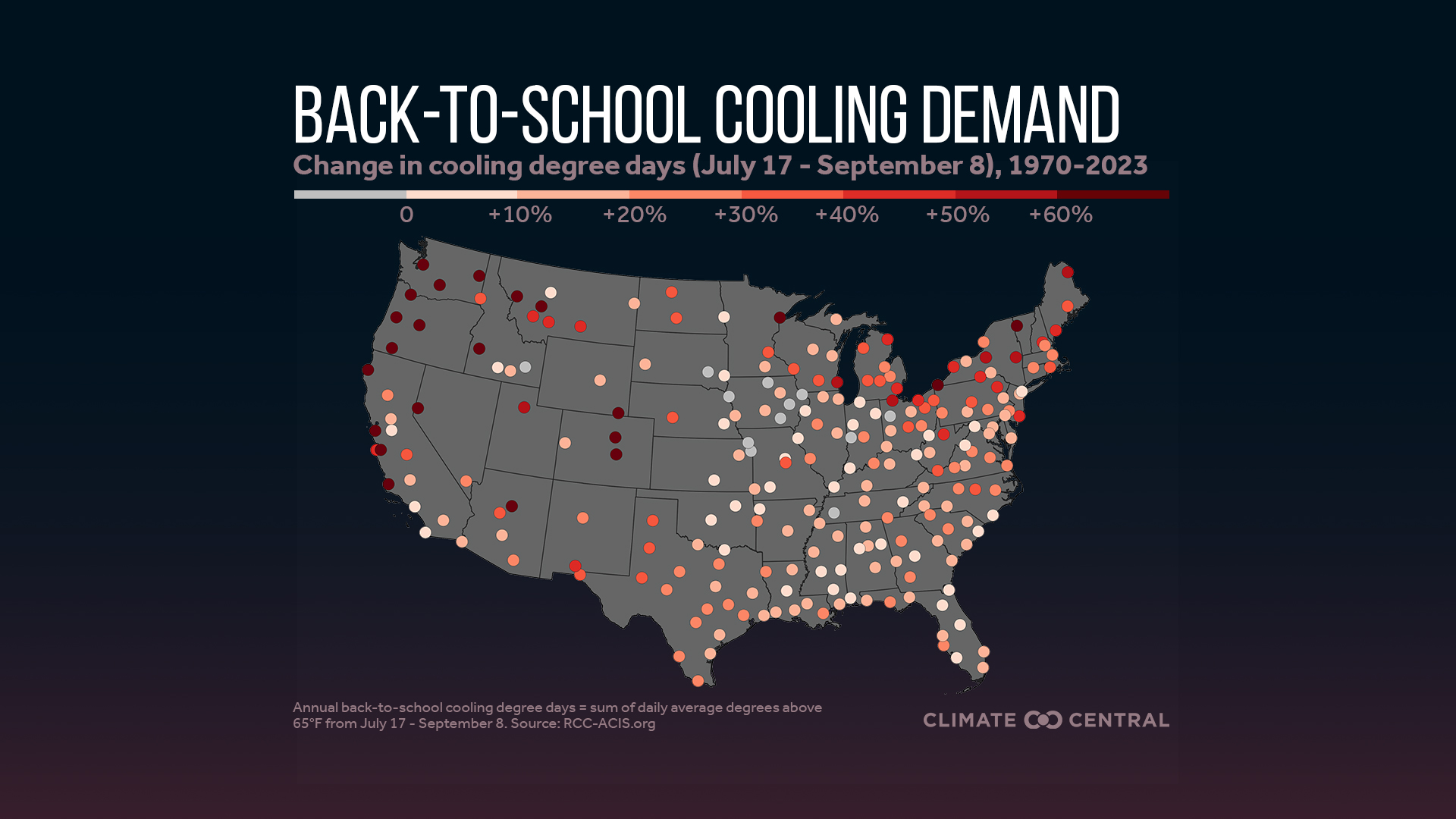
Higher cooling demand for schools
Hotter summers and longer warm seasons make cooling schools a growing challenge.
Key concepts:
- Hotter summers and longer warm seasons make cooling schools a growing challenge.
- Cooling is essential for student and staff health and safety.
- Since 1970, cooling demand during back-to-school season rose in 95% of U.S. locations analyzed.
- Rising demand means schools face costly upgrades to keep classrooms safe and comfortable.
Impacts to fall color
Conditions that trigger fall color are shifting with climate change.
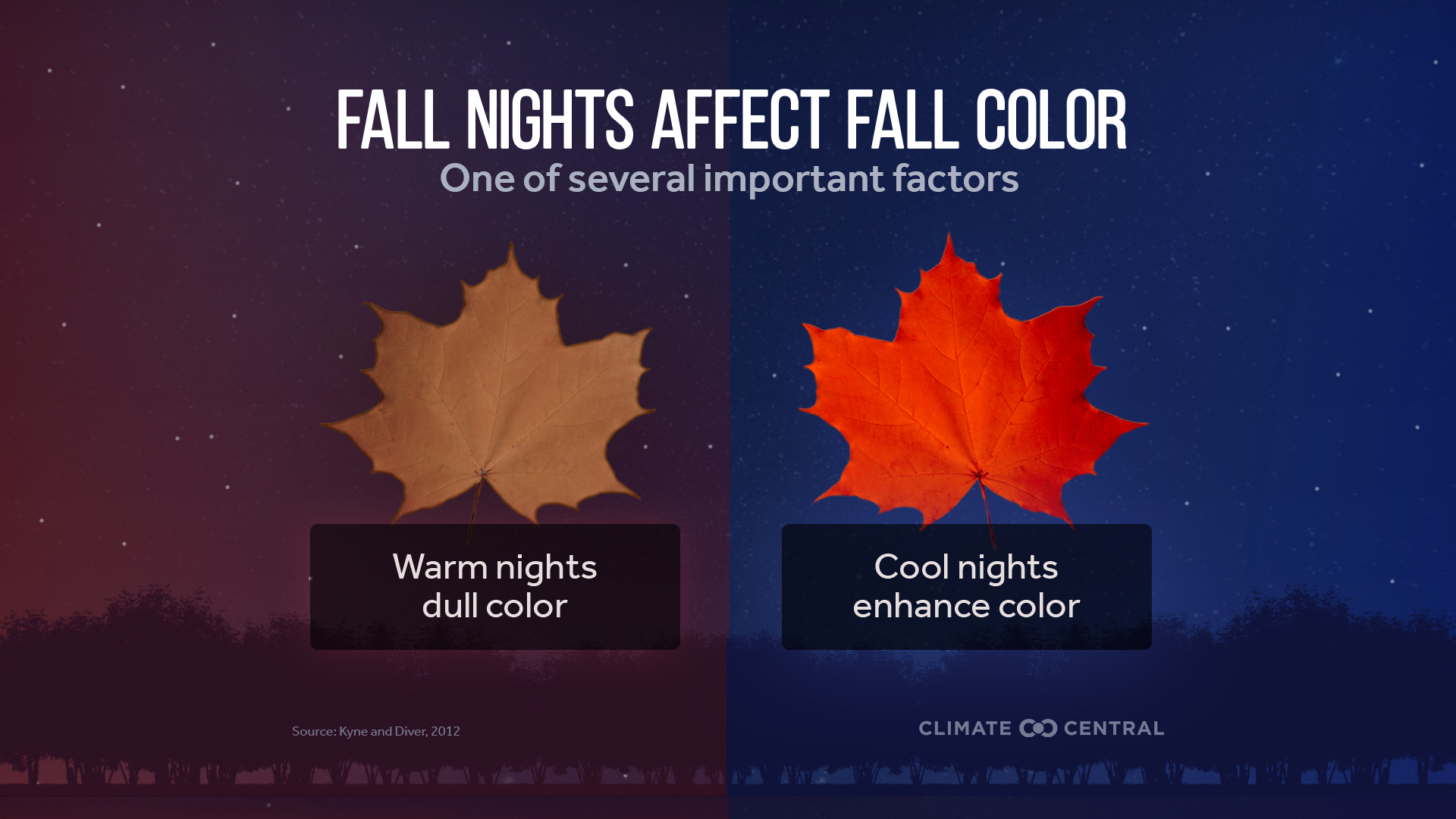
Key concepts:
- Foliage depends on temperature, day length, and rainfall — as well as other conditions including extreme weather events.
- Cool fall nights can boost color, but they have warmed 2.7°F (1970–2023) in 212 U.S. locations.
- Warmer falls can delay or shorten peak foliage.
More fire weather
Wildfire seasons are lengthening and intensifying.
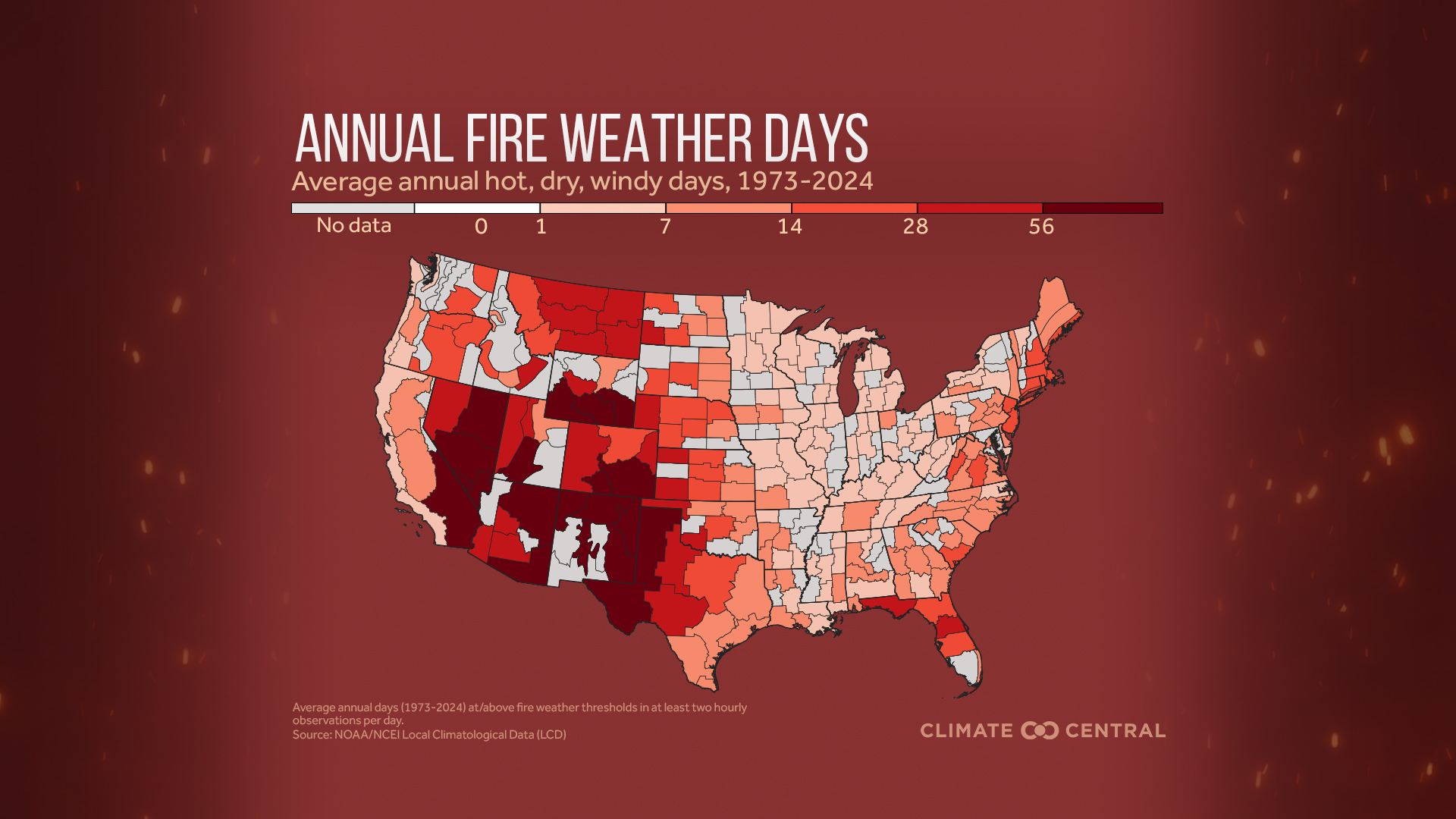
Key concepts:
- Climate Central analyzed U.S. fire weather (hot, dry, windy conditions) from 1973–2024.
- Wildfire seasons are lengthening and intensifying, especially in the West.
- Fire weather is rising most in spring nationwide
Worsening drought
Warmer, thirstier air worsens drought
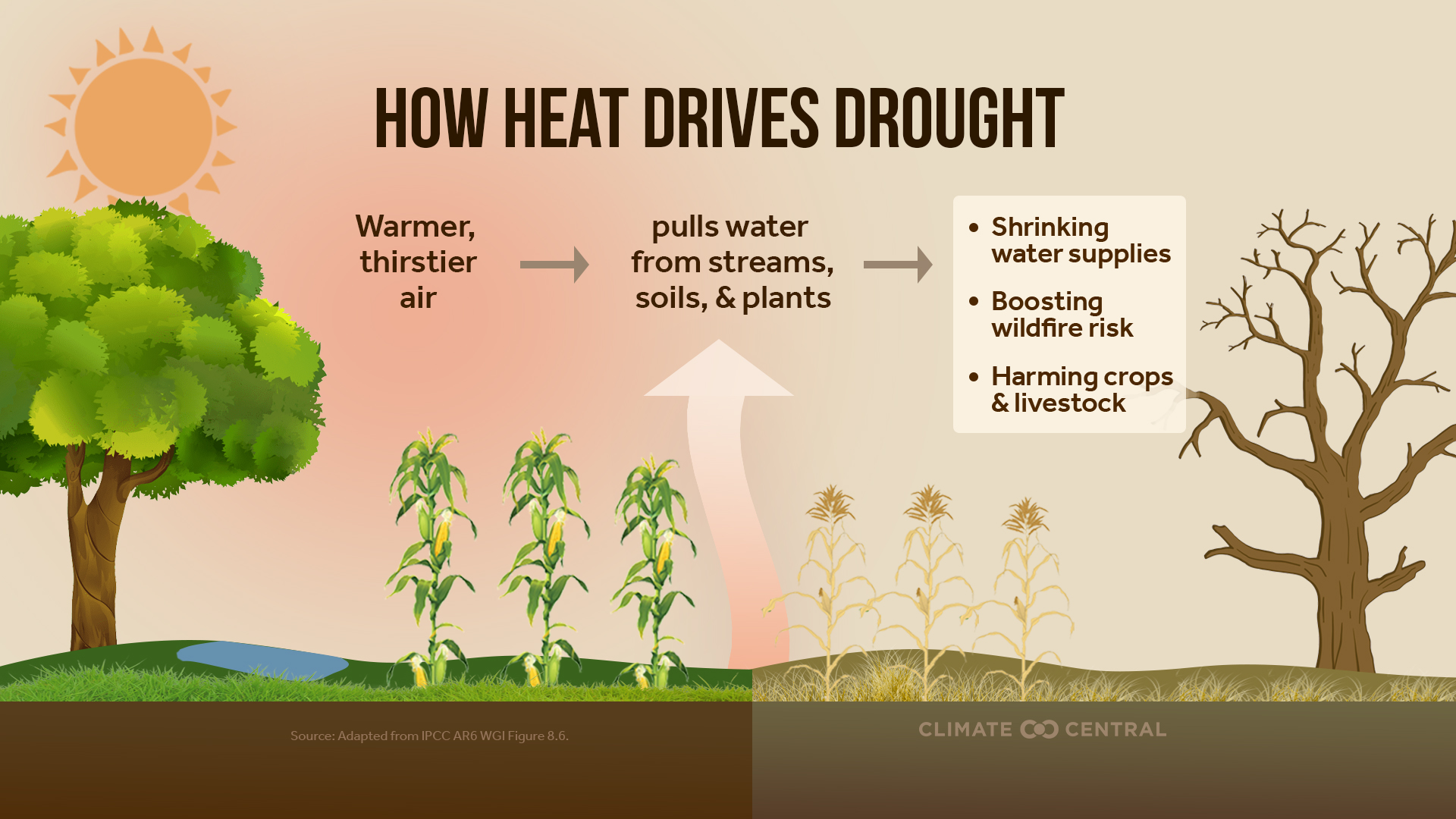
Key concepts:
- Heat-trapping pollution is warming the planet and changing the dynamics of drought — and its effects on water security, food supplies, wildfire, and ecosystems.
- Since the early 20th century, the western U.S. has become drier and the eastern U.S. has become wetter.
- As temperatures rise, the atmosphere gets thirstier and pulls more water from streams, soils, and plants — causing or worsening drought and fueling wildfire risk.
- Emerging research shows that, in our warming climate, the atmosphere’s growing demand for water is an increasingly important cause of drought in the western U.S. and around the globe.
More warm fall days
Fall (September-November) has warmed nationwide since 1970.
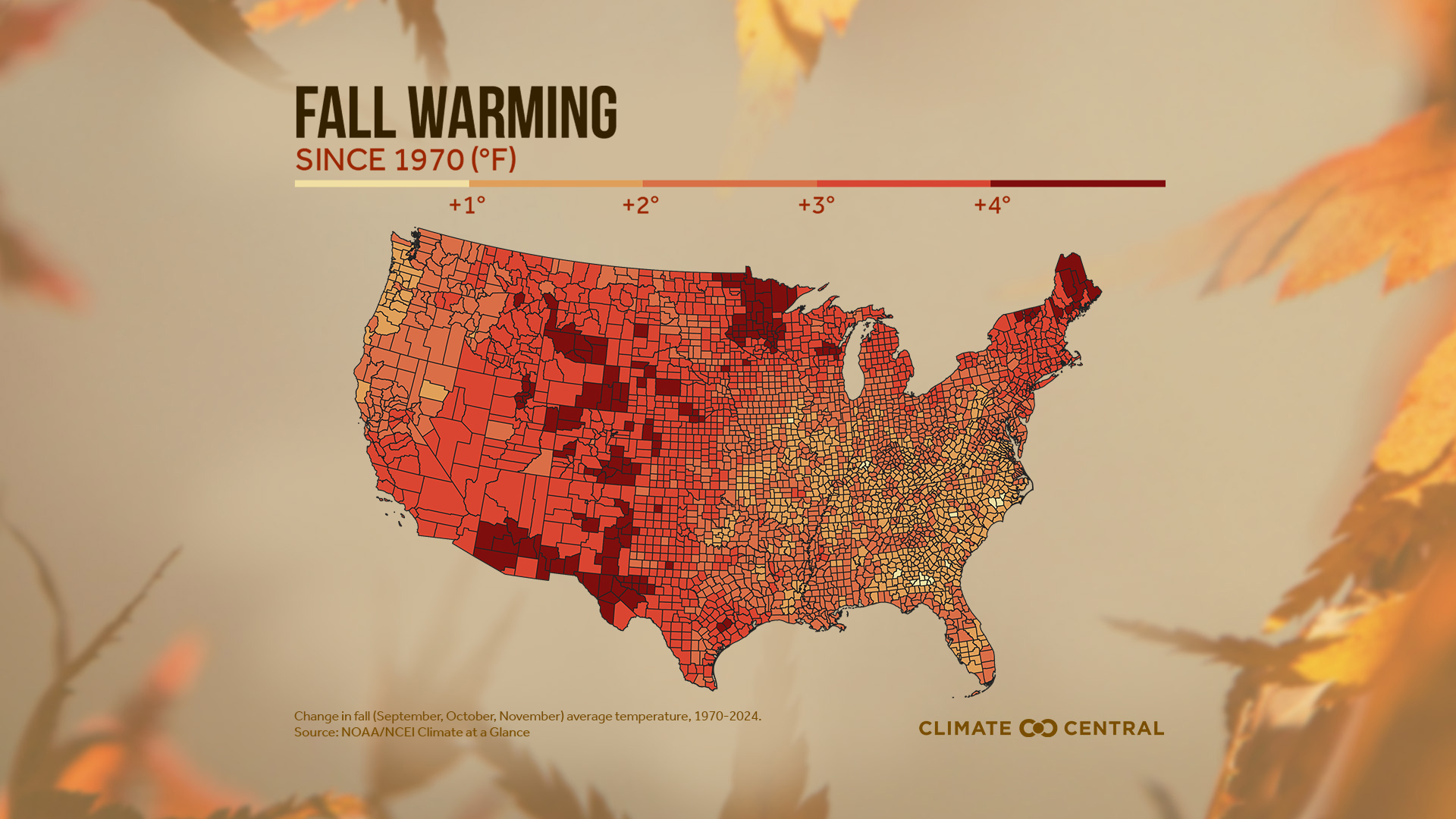
Key concepts:
- Fall (September - November) has warmed nationwide since 1970.
- Warming is nationwide, strongest in the Southwest.
- Hotter falls extend risks from heat, wildfire, allergies, and more.
Impacts to food prices
Extreme events fueled by climate change can damage crops, reduce yields, and disrupt supply chains.
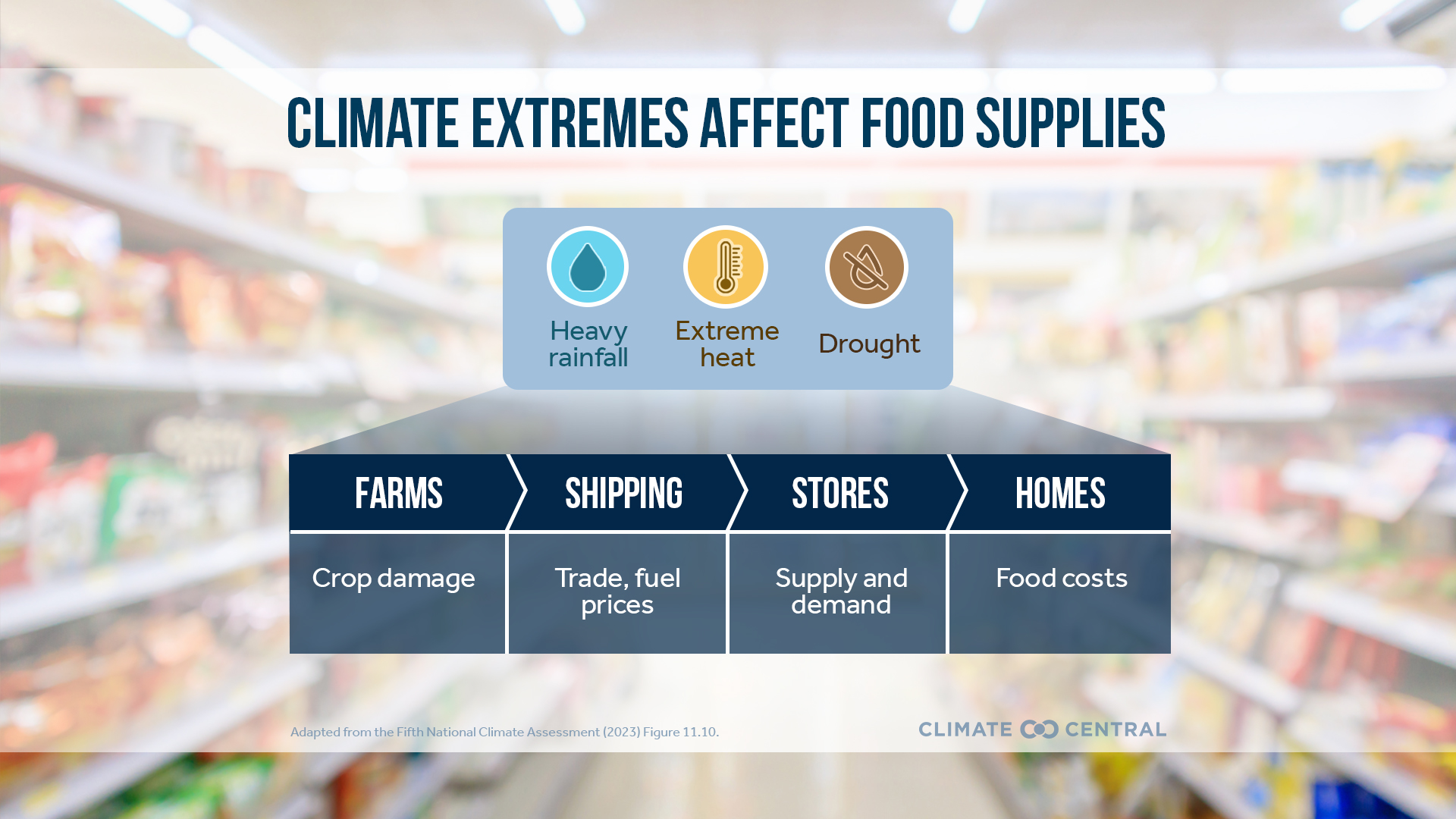
Key concepts:
- Food and climate change are closely linked. Food systems account for about one-quarter of all heat-trapping pollution.
- Meanwhile, extreme events fueled by climate change can damage crops, reduce yields, and disrupt supply chains — all of which can drive food prices higher.
- The availability, quality, and affordability of food reflect a complex set of climatic and socioeconomic factors. Emerging research is providing insight into the role of climate change.
More graphics about Arizona and climate change
Browse climate-related graphics for all seasons localized for Arizona, available for download and use consistent with our Terms of use.