Climate change in San Antonio, Texas
Climate change is affecting locations like San Antonio in a variety of ways. In summer, these impacts include increased health risks from extreme heat, more intense hurricanes, and greater health risks from humid heat.
Explore these pages to learn how people in San Antonio are at risk in a warming world.
Since 1970, average annual temperatures in San Antonio have gotten 3.8°F warmer, reflecting an overall warming trend.
Warming puts people and ecosystems at risk from more frequent and intense extreme weather.
Overall, the contiguous U.S. is about 2.8°F warmer today than in 1970, based on average temperatures.
Data source: NOAA ACIS
Since 1970, San Antonio's annual precipitation has decreased by 6.2 inches.
Climate change is supercharging the water cycle and bringing heavier precipitation extremes across the U.S.
For every 1°F of warming, the air can hold 4% more moisture, increasing the chances of heavier downpours that contribute to flash flooding hazards.
Data source: NOAA ACIS
As of October 15, 2026, San Antonio has experienced 69 days this year with temperatures made twice as likely by climate change.
This is according to the Climate Shift Index (CSI), which quantifies the influence of human-caused climate change on daily average temperatures. Temperatures on these days had a CSI level 2 or higher, which indicates local temperatures were at least two times more likely due to climate change.
The CSI ranges from -5 to +5. Positive levels indicate temperatures made more likely due to climate change (while negative scores indicate conditions made less likely).
Data source: Climate Shift Index
San Antonio's climate threats in include:
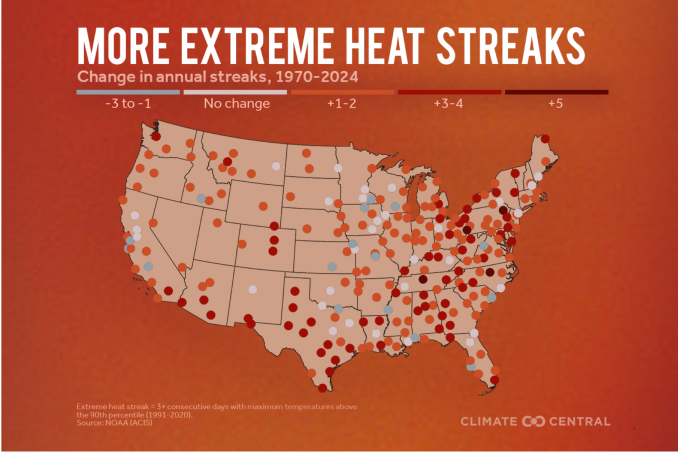
San Antonio has experienced 32 more extremely hot days (with temperatures above 93.8°F) since 1970.
More frequent and intense extreme heat — the deadliest type of weather in the U.S. — is a direct result of a warming planet.
Extremely hot days are defined as days with maximum temperatures hotter than 95% of local temperatures from 1991-2020.
Data source: NOAA ACIS
Between 1980 and 2025, Texas experienced 16 billion-dollar hurricanes.
As the planet warms, extreme weather events are becoming more frequent and intense, resulting in devastating losses.
Tropical cyclones (which include hurricanes and tropical storms) are the most costly extreme weather events in the U.S.
This data shows the total number of hurricanes with at least one billion dollars in damages that occurred during 1980-2025.
Data source: U.S. Billion Dollar Weather and Climate Disasters
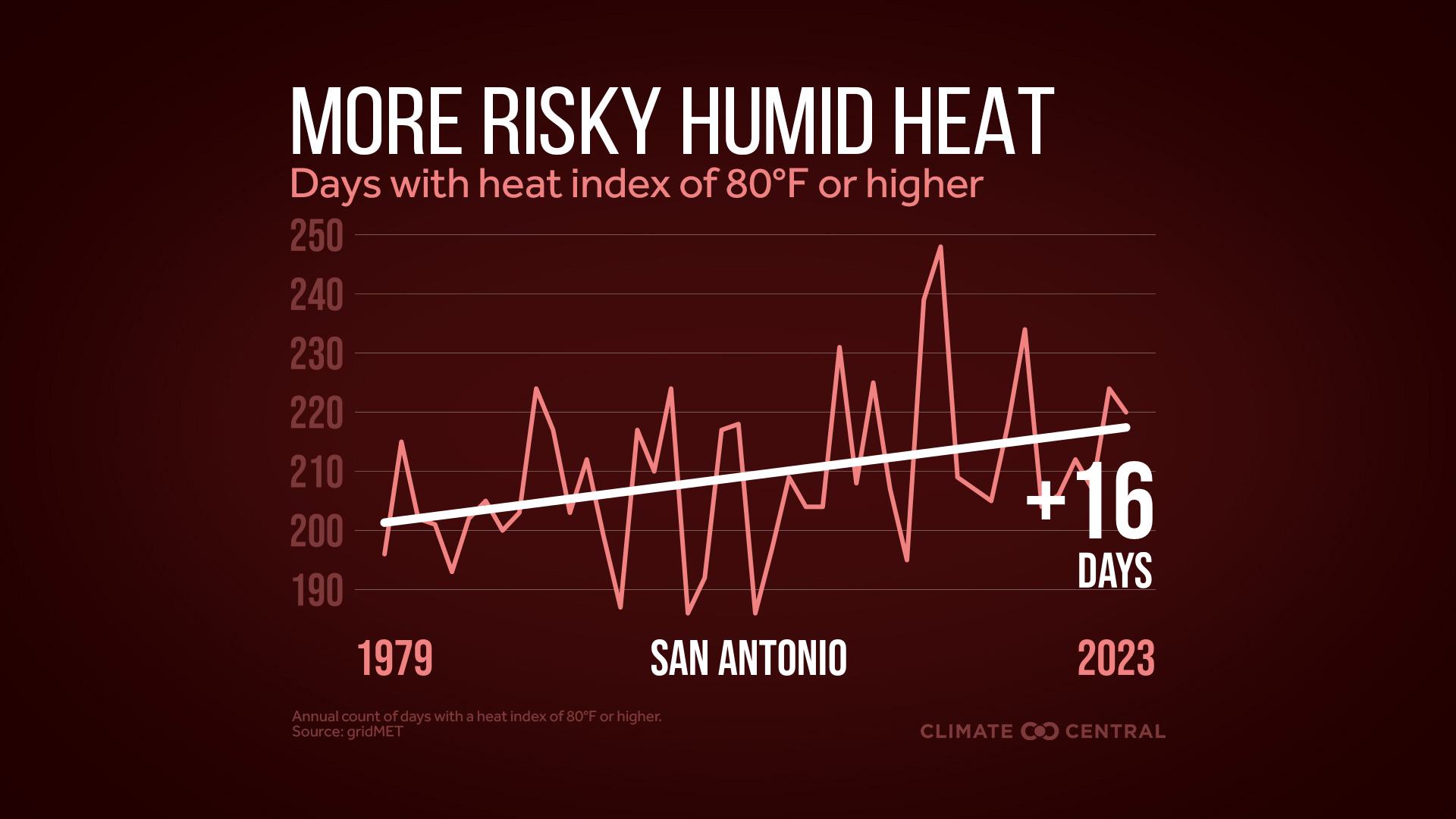
Since 1979, San Antonio has experienced 22 more days with a heat index above 90°F.
Heat is dangerous. When high temperatures are combined with high humidity, the health risks multiply.
The heat index incorporates relative humidity and is more useful than air temperature alone in determining heat-related health risks.
Data source: gridMET
Explore some ways climate change is affecting San Antonio in summer
More risks for pregnancy
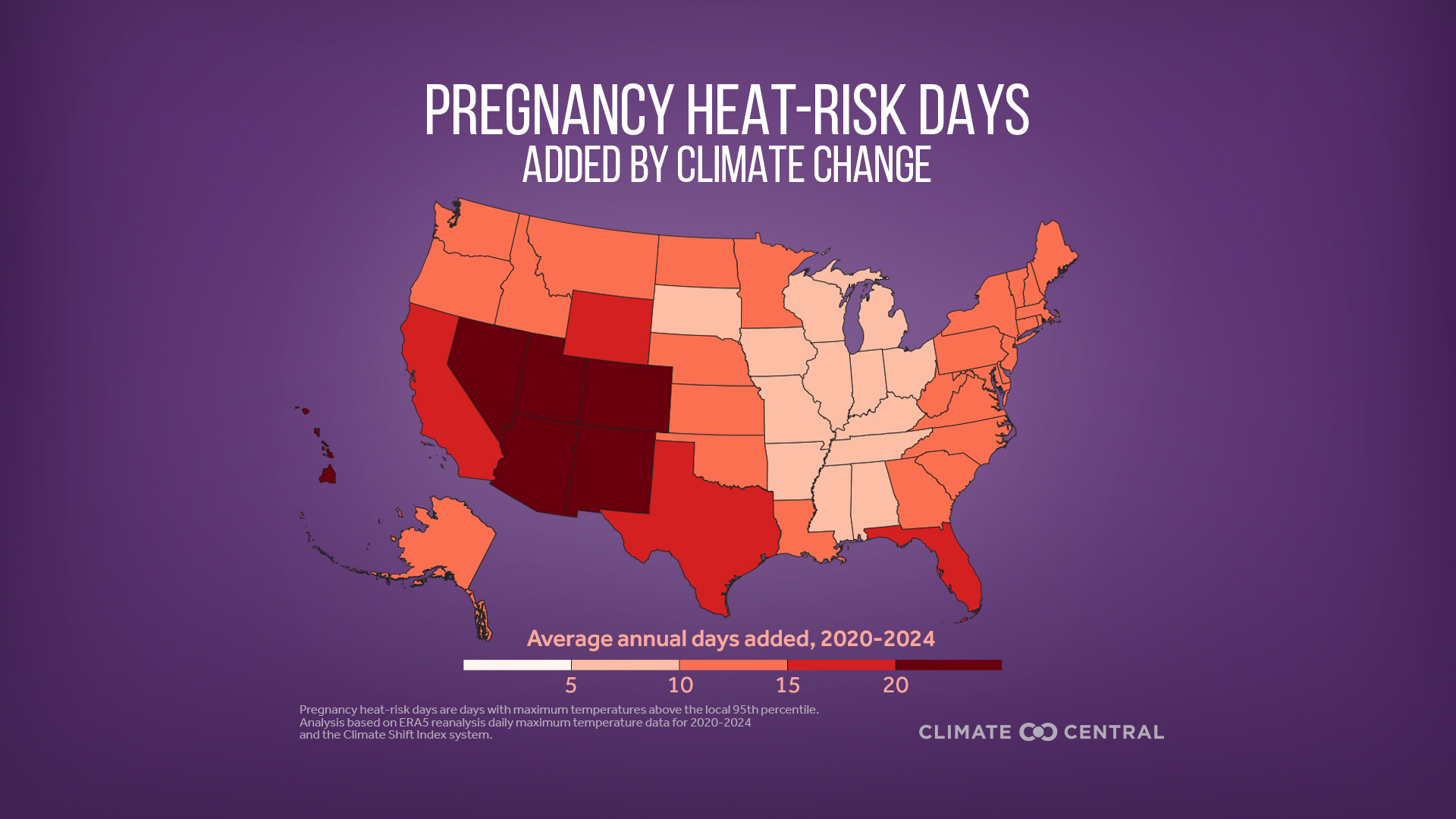
Climate change has doubled pregnancy heat-risk days worldwide (2020-2024).
Key concepts:
- Climate change has doubled pregnancy heat-risk days (extremely hot days associated with increased risk of preterm birth) worldwide (2020–2024).
- All U.S. states and D.C. now see at least a week more of pregnancy heat-risk days each year.
- Climate change-related extreme weather events also put pregnant people at risk from air pollution, flooding, infrastructure damages, and prenatal stress.
More record heat
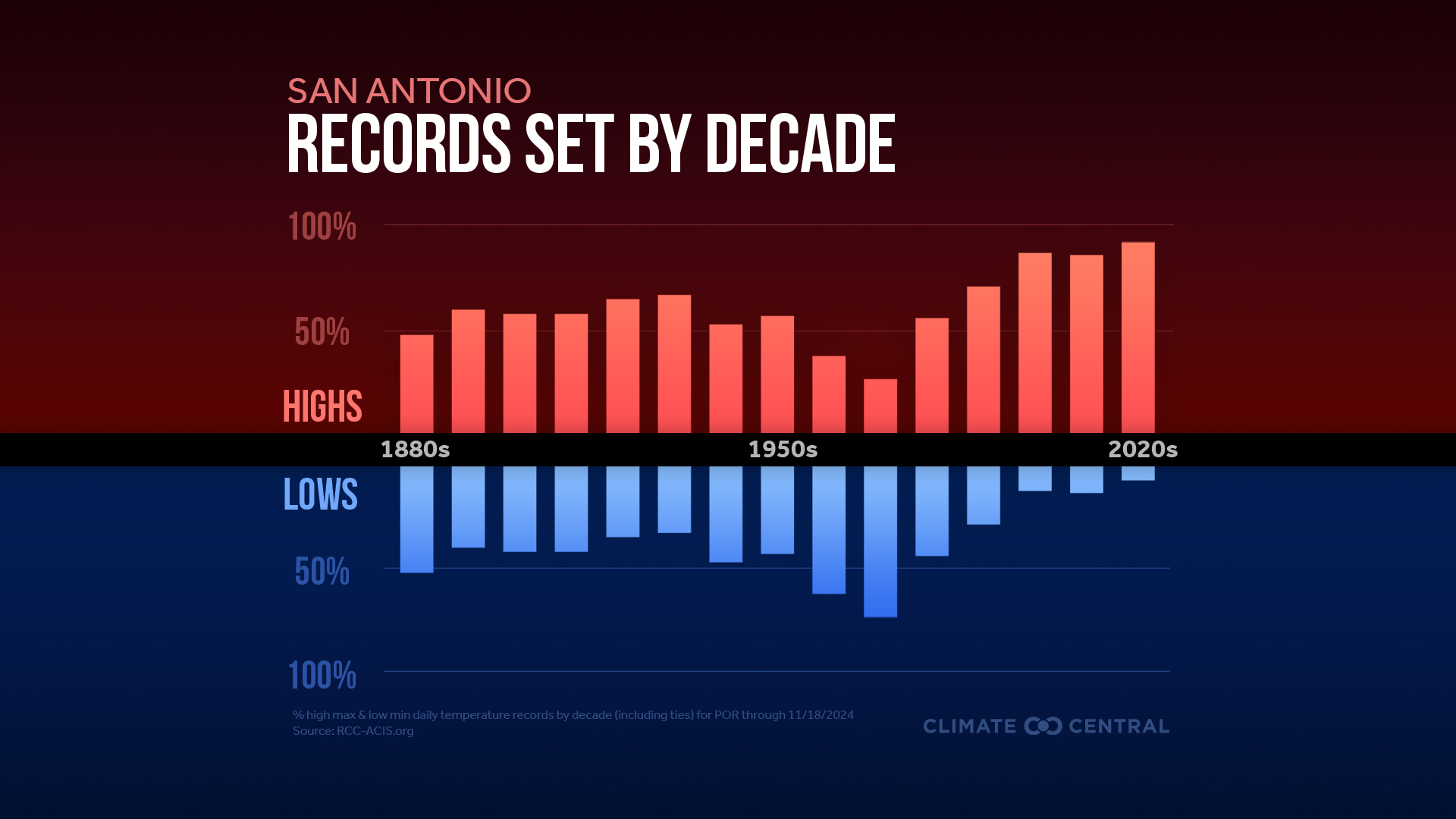
Daily heat records have outnumbered daily cold records in recent years.
Key concepts:
- Climate Central analyzed daily temperature records for each calendar day over the entire period of record at 247 U.S. locations.
- Most local U.S. observations align with the global trend: more daily heat records and fewer daily cold records.
- This growing gap between historic heat and historic cold over the past 50 years is an indicator of climate change.
More intense hurricanes
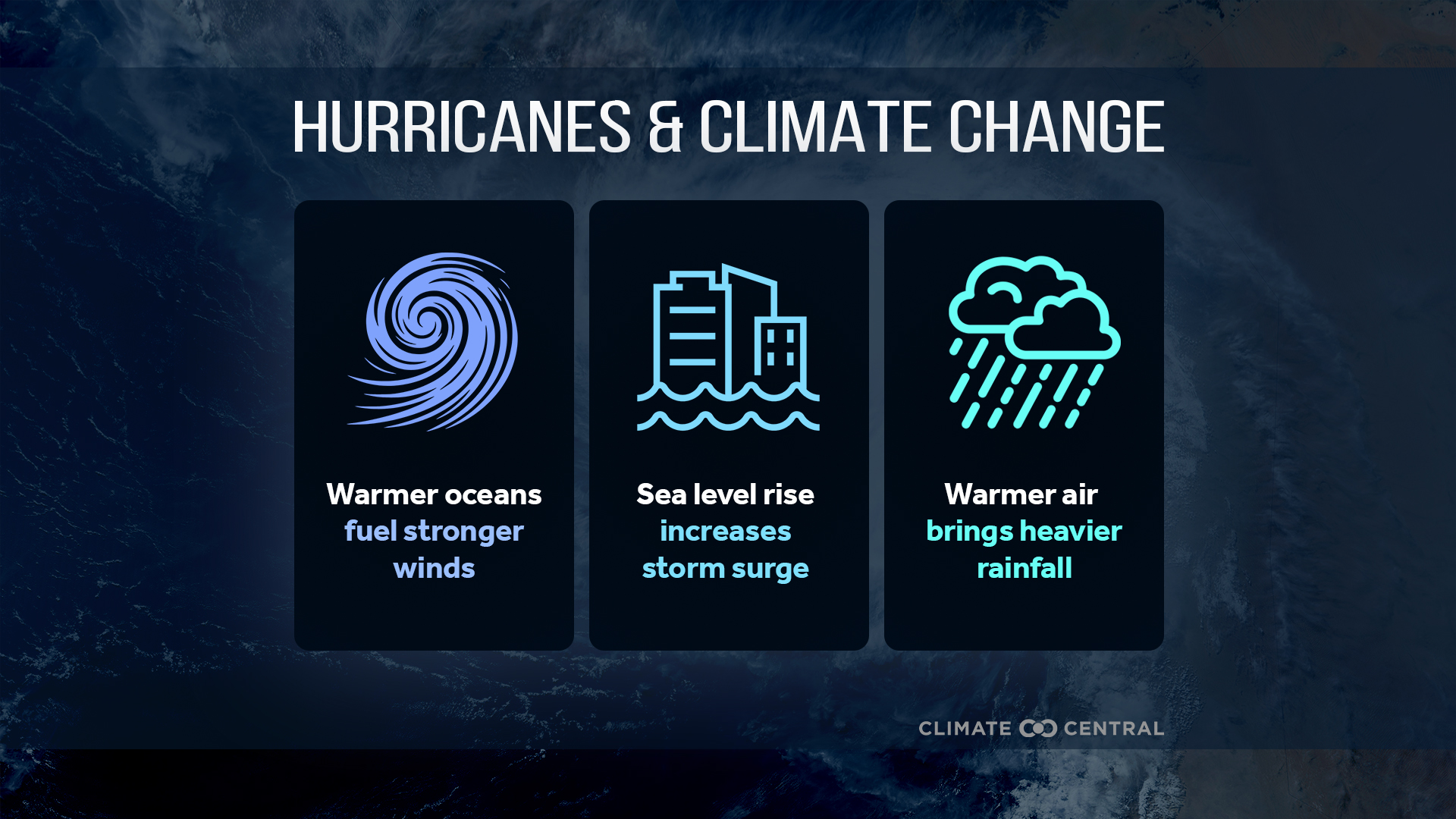
Warmer oceans from climate change fuel stronger hurricanes.
Key concepts:
- Warmer oceans from climate change fuel stronger Atlantic hurricanes with heavier rain and higher storm surge.
- Rising seas amplify storm surge, increasing risks for coastal residents.
- Warmer air holds more moisture, driving heavier downpours and flooding.
More dangerous heat
Climate change is driving hotter, longer, and more frequent extreme heat.
Key concepts:
- Climate change is driving hotter, longer, and more frequent extreme heat — the deadliest U.S. weather hazard.
- Heat combined with humidity multiplies health risks.
- Rising humidity slows sweat evaporation, straining the body’s cooling system and causing dangerous heat stress.
Hotter summers
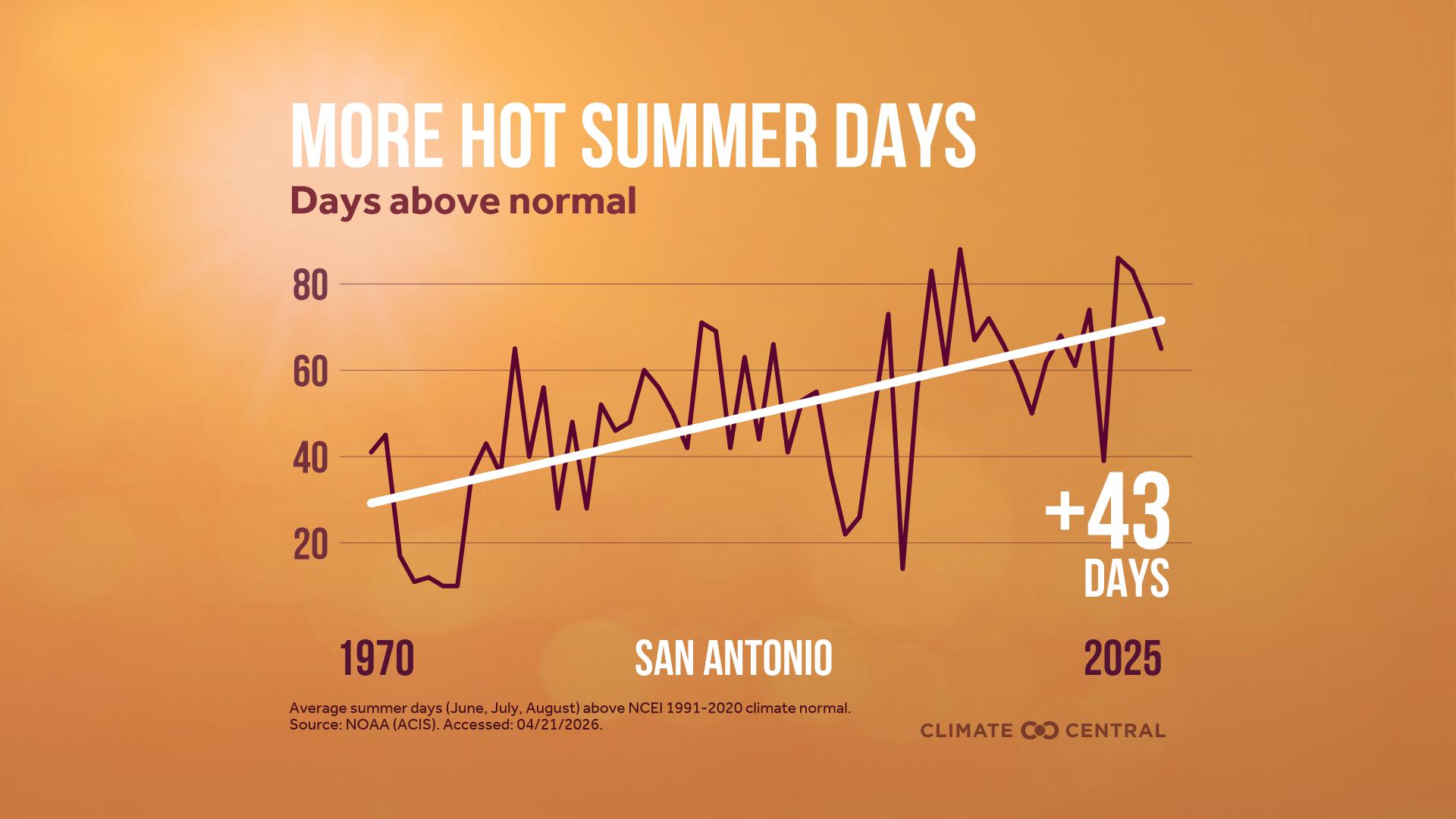
Hotter summers bring more dangerous heat, higher energy bills, and worse wildfire.
Key concepts:
Summers have warmed since 1970 in 97% of 243 U.S. cities analyzed.
Human-caused climate change is the leading driver of summer warming trends in 221 (91%) of these cities.
Nearly every city analyzed now experiences more hotter-than-normal summer days than during the early 1970s — 22 more such days, on average.
Hotter summers can amplify urban heat and lead to heat-related illness, higher energy bills, and worse wildfire risk.
More graphics about San Antonio and climate change
Browse climate-related graphics for all seasons localized for San Antonio, available for download and use consistent with our Terms of use.