'%3e%3cpath%20d='M19.026%2018.7732C17.429%2020.0902%2015.832%2020.8802%2013.57%2020.8802C9.71101%2020.8802%206.783%2017.7202%206.783%2013.6392V13.5072C6.783%209.42616%209.71101%206.26616%2013.57%206.26616C15.566%206.26616%2017.163%206.92416%2019.026%208.50416C20.091%206.92416%2021.555%205.60716%2023.418%204.81716L23.284%204.68616C20.623%202.05316%2017.562%200.868164%2013.57%200.868164C6.25101%200.868164%200.662003%206.26616%200.662003%2013.5082V13.6382C0.662003%2017.0622%201.993%2020.2222%204.255%2022.5922C6.65%2024.9622%209.844%2026.2782%2013.304%2026.2782C17.429%2026.2782%2020.224%2025.0932%2023.018%2022.3282C21.421%2021.4072%2019.958%2020.2222%2019.026%2018.7732ZM40.318%201.00016C36.458%201.00016%2033.132%202.44816%2030.736%204.95016C32.599%205.74016%2034.063%207.05616%2035.128%208.63616C36.325%207.32016%2038.188%206.39816%2040.318%206.39816C44.31%206.39816%2047.37%209.55816%2047.37%2013.6392V13.7712C47.37%2017.8522%2044.31%2020.8812%2040.451%2020.8812C38.321%2020.8812%2036.591%2020.0912%2035.261%2018.6422C34.196%2020.3542%2032.599%2021.6712%2030.736%2022.3292C33.132%2024.6992%2036.458%2026.1472%2040.318%2026.1472C47.636%2026.1472%2053.492%2020.6172%2053.492%2013.5072C53.359%206.39916%2047.77%201.00016%2040.318%201.00016Z'%20fill='%23FBFCFC'/%3e%3cpath%20d='M19.559%2013.6402C19.559%209.55816%2022.885%206.26716%2027.011%206.26716C31.136%206.26716%2034.463%209.55816%2034.463%2013.6402C34.463%2017.7212%2031.136%2021.0132%2027.011%2021.0132C22.885%2021.0132%2019.559%2017.7212%2019.559%2013.6402Z'%20fill='%23FBFCFC'/%3e%3cpath%20d='M27.011%2021.0126C22.885%2021.0126%2019.559%2017.7206%2019.559%2013.6396C19.559%209.5576%2022.885%206.2666%2027.011%206.2666C27.011%206.2666%2023.817%209.8206%2023.817%2013.6396C23.817%2017.4576%2027.011%2021.0126%2027.011%2021.0126Z'%20fill='%23DCDDDE'/%3e%3c/g%3e%3cdefs%3e%3cclipPath%20id='clip0_11268_85798'%3e%3crect%20width='54'%20height='27'%20fill='white'/%3e%3c/clipPath%3e%3c/defs%3e%3c/svg%3e)
Climate change in Illinois
Climate change is affecting locations like Illinois in a variety of ways. In fall, these impacts include increased cooling demand, more extreme rainfall, and changes to fall foliage.
Explore these pages to learn how people in Illinois are at risk in a warming world.
Since 1970, average annual temperatures in Illinois have gotten 2.6°F warmer, reflecting an overall warming trend.
Warming puts people and ecosystems at risk from more frequent and intense extreme weather.
Overall, the contiguous U.S. is about 2.8°F warmer today than in 1970, based on average temperatures.
Data source: NCEI Climate at a Glance
Since 1970, Illinois' annual precipitation has increased by 2 inches.
Climate change is supercharging the water cycle and bringing heavier precipitation extremes across the U.S.
For every 1°F of warming, the air can hold 4% more moisture, increasing the chances of heavier downpours that contribute to flash flooding hazards.
Data source: NCEI Climate at a Glance
Illinois' climate threats in include:
Since 1970, average fall temperatures in Illinois have gotten 2.4°F warmer, reflecting an overall warming trend.
Fall warming means that risky heat, fire weather, and allergies linger later into the year.
Data source: NCEI Climate at a Glance
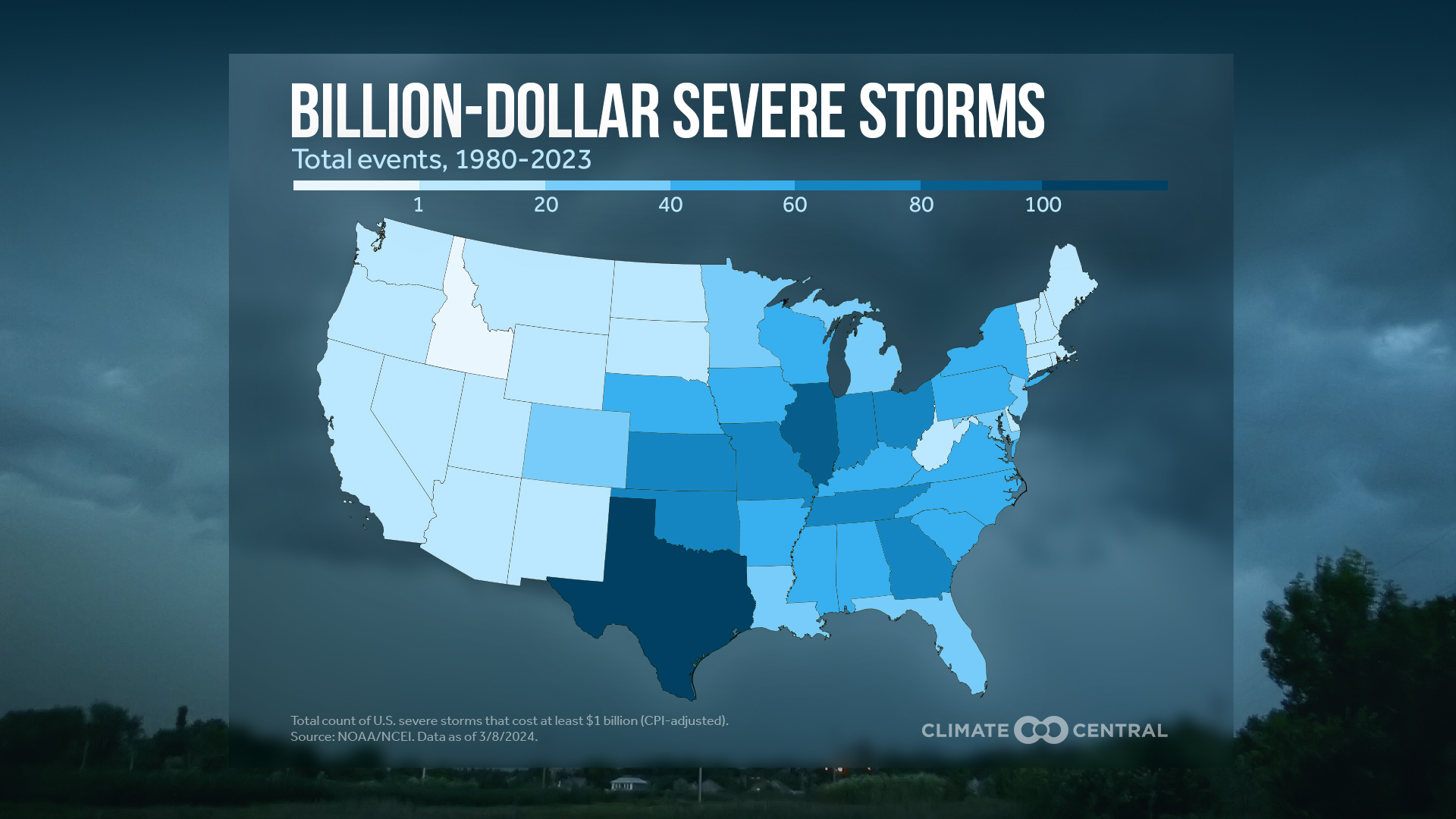
During the past 20 years, Illinois experienced 67 more billion-dollar disasters from severe storms compared to the previous 20 years.
As the planet warms, extreme weather events are becoming more frequent and intense, resulting in devastating losses.
This data shows how the total number of severe storms with at least one billion dollars in damages has changed from 1980-1999 to 2005-2024.
Data source: NCEI U.S. Billion-Dollar Weather and Climate Disasters
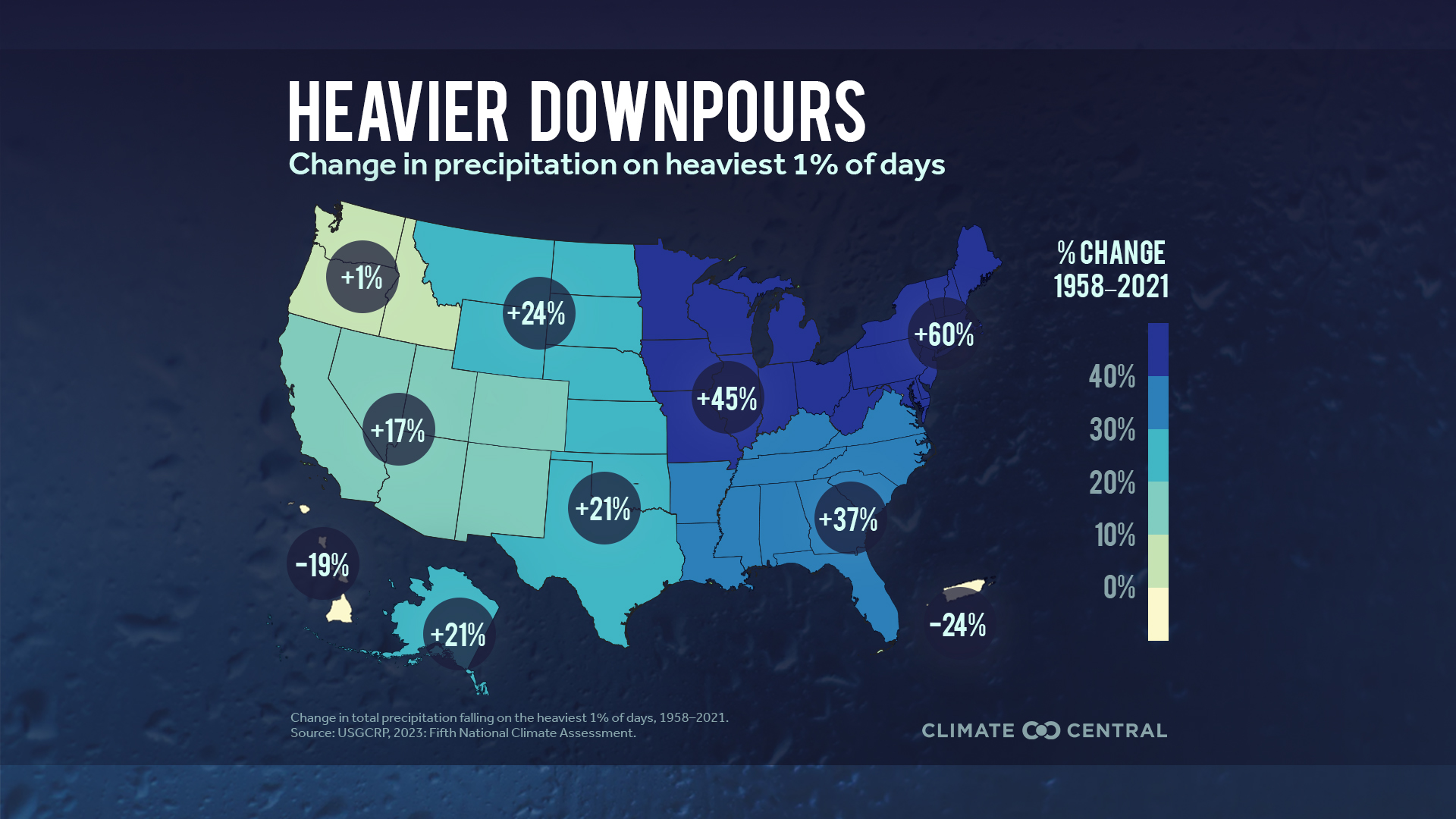
The amount of rainfall during the heaviest rain events each year in the Midwest has increased by 45% since 1958.
Climate change is supercharging the water cycle, bringing heavier precipitation extremes across the U.S.
This chart shows how the amount of rainfall during the top 1% heaviest rain events each year in the Midwest increased between 1958 to 2021.
Data source: Fifth National Climate Assessment
Explore some ways climate change is affecting Illinois in fall
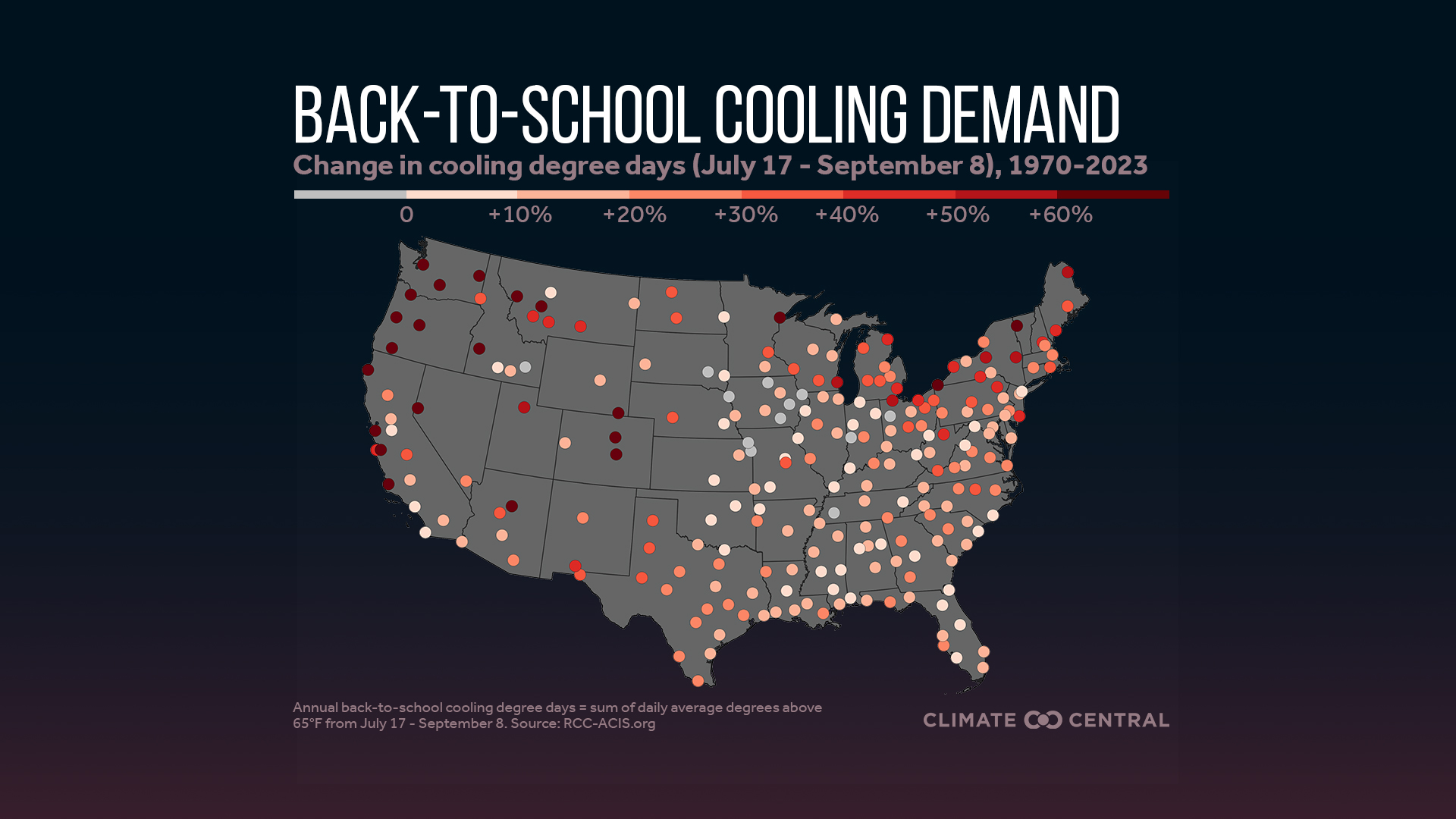
Higher cooling demand for schools
Hotter summers and longer warm seasons make cooling schools a growing challenge.
Key concepts:
- Hotter summers and longer warm seasons make cooling schools a growing challenge.
- Cooling is essential for student and staff health and safety.
- Since 1970, cooling demand during back-to-school season rose in 95% of U.S. locations analyzed.
- Rising demand means schools face costly upgrades to keep classrooms safe and comfortable.
Heavier downpours
Climate change is supercharging the water cycle, driving heavier rainfall and flood risk.
Key concepts:
- Climate change is supercharging the water cycle, driving heavier rainfall and flood risk.
- From 1958–2021, extreme precipitation days grew in every region, led by the Northeast (+60%) and Midwest (+45%).
- Intensification will continue with future warming.
- Short bursts of extreme rain threaten people, ecosystems, and infrastructure nationwide.
Impacts to fall color
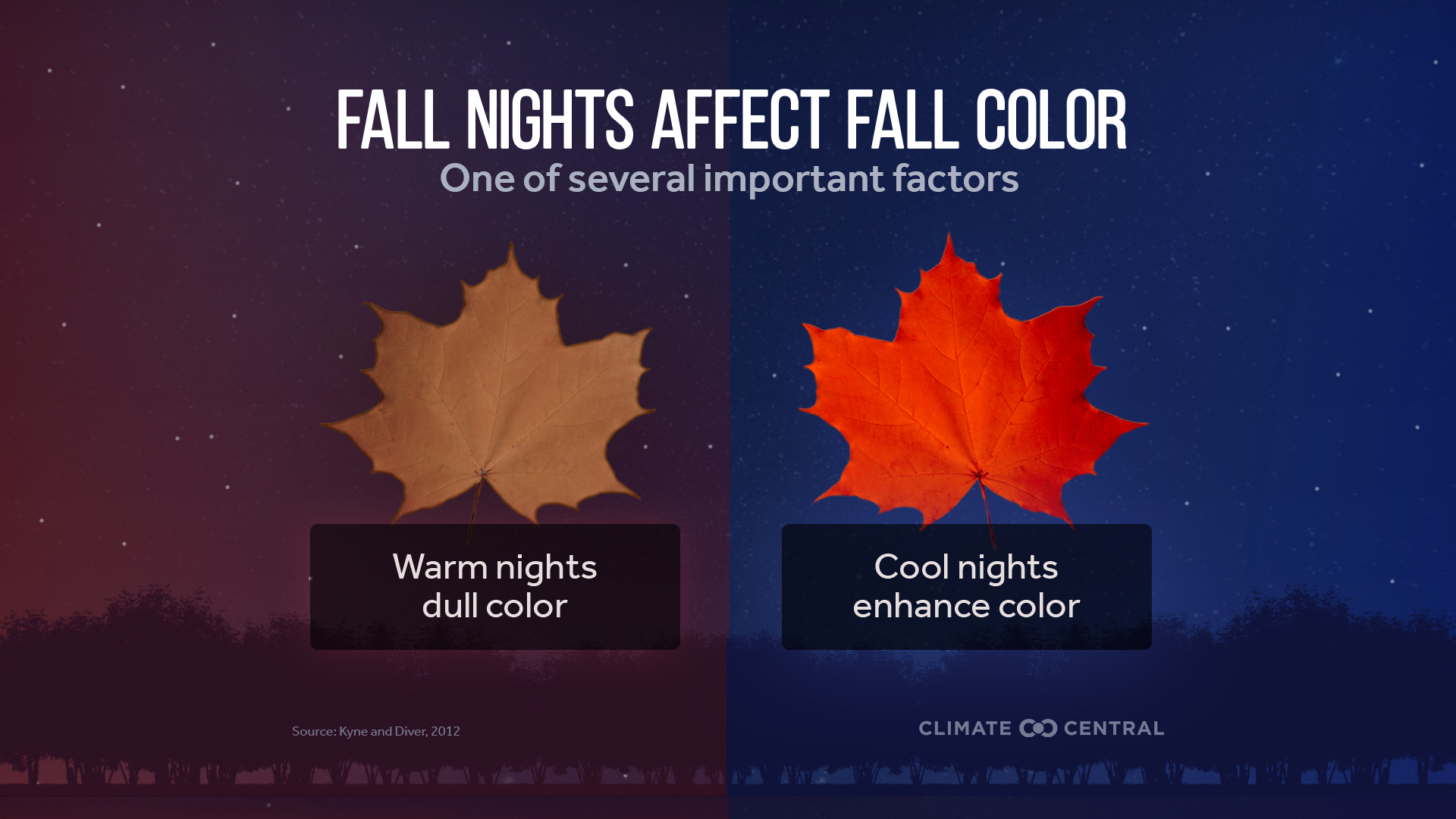
Conditions that trigger fall color are shifting with climate change.
Key concepts:
- Foliage depends on temperature, day length, and rainfall — as well as other conditions including extreme weather events.
- Cool fall nights can boost color, but they have warmed 2.7°F (1970–2023) in 212 U.S. locations.
- Warmer falls can delay or shorten peak foliage.
Changes in severe storms
Certain conditions favorable to thunderstorms and tornadoes are occurring more often
Key concepts:
- Severe storms make up half of U.S. billion-dollar disasters since 1980.
- Climate change is shifting storm conditions into new seasons and regions.
Impacts to food prices
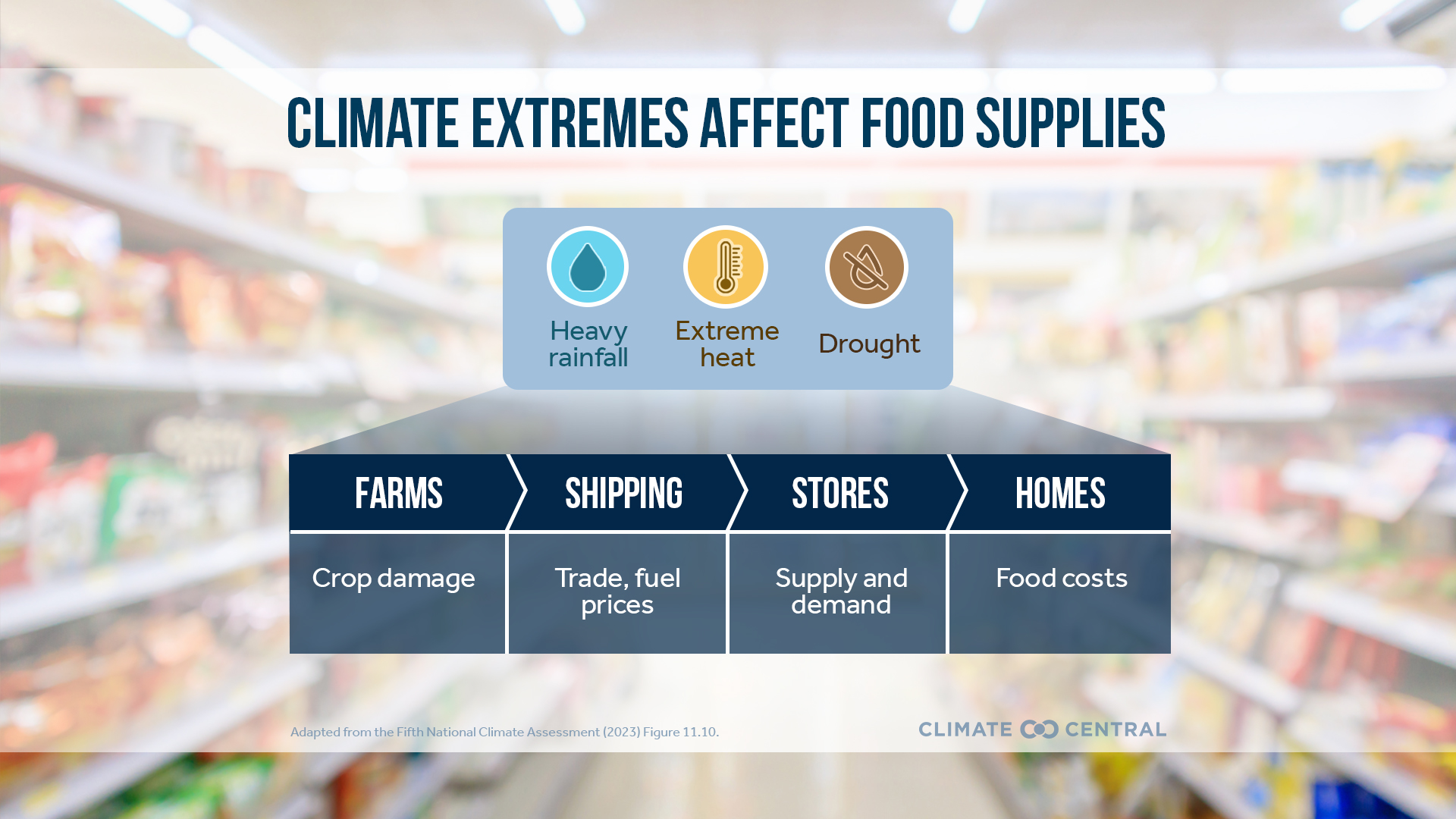
Extreme events fueled by climate change can damage crops, reduce yields, and disrupt supply chains.
Key concepts:
- Food and climate change are closely linked. Food systems account for about one-quarter of all heat-trapping pollution.
- Meanwhile, extreme events fueled by climate change can damage crops, reduce yields, and disrupt supply chains — all of which can drive food prices higher.
- The availability, quality, and affordability of food reflect a complex set of climatic and socioeconomic factors. Emerging research is providing insight into the role of climate change.
More graphics about Illinois and climate change
Browse climate-related graphics for all seasons localized for Illinois, available for download and use consistent with our Terms of use.